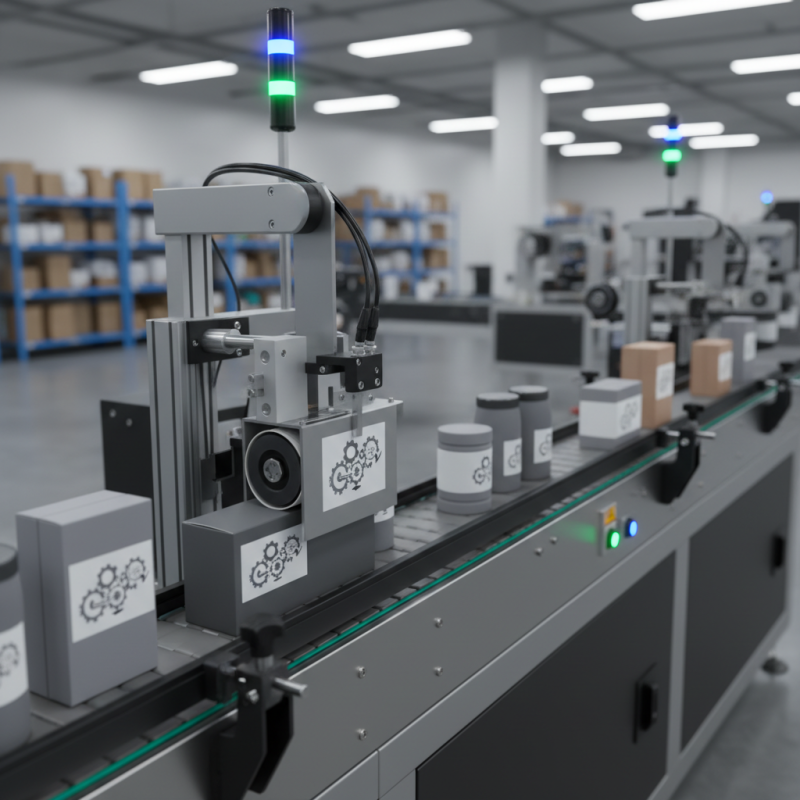
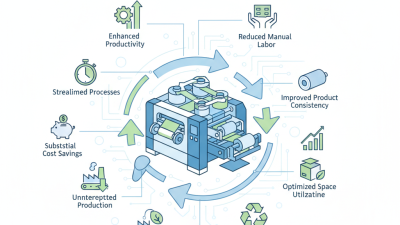
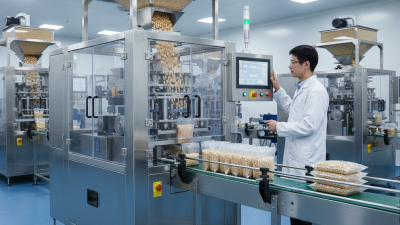
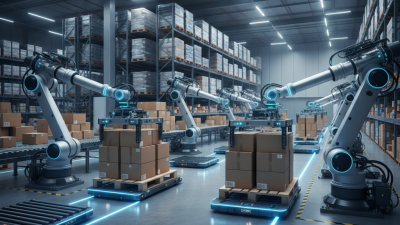
In today's fast-paced business world, efficiency is key. An Automatic Labeller can save you time and reduce errors in product labeling. Imagine a production line where labels are applied perfectly, every time. This technology streamlines processes and minimizes labor costs.
Businesses face challenges like inconsistent labeling and high operational costs. Manual labeling often leads to mistakes and wasted resources. Investing in an Automatic Labeller helps address these issues. Your employees can focus on essential tasks instead of tedious labeling.
However, some companies may hesitate to adopt this innovation. Concerns about costs and integration with existing systems arise. Yet, the long-term benefits outweigh initial doubts. Exploring solutions like an Automatic Labeller can transform your operations for the better. It’s an important step toward improved efficiency and productivity.
In today’s fast-paced business world, efficiency is key. An automatic labeller can improve workflows significantly. It speeds up the labeling process, reducing human error. Imagine a factory floor where every product receives a perfect label, every time. With machines handling this task, employees can focus on more complex operations.
Cost savings are another benefit. While the initial investment might seem high, the long-term savings can be impressive. Businesses can save on labor costs and reduce the risk of rework from labeling mistakes.
However, relying solely on machines does have its challenges. Regular maintenance is essential to avoid downtime.
Moreover, some might feel that automated systems lack the personal touch. Yet, with the right balance, you can have both efficiency and a human-centered approach. It’s about finding what works best for your business. Embracing technology does require a shift in mindset, but the benefits are hard to ignore.

Automatic labellers are essential tools in various industries. Their applications span from food and beverage to pharmaceuticals. In the food industry, for instance, over 70% of products require labels that meet strict regulatory standards. These labels include information about ingredients, allergens, and nutritional content. Automatic labellers ensure accuracy and compliance, minimizing errors that could lead to product recalls.
In the pharmaceutical sector, automatic labellers are crucial as well. According to data, 60% of medication errors are linked to labeling mistakes. Automatic labellers improve the precision of these labels, making sure that patients receive the right dosage and information. They also allow for better tracking of products through barcodes and QR codes, enhancing supply chain efficiency.
However, not all automatic labellers perform equally. Some struggle with label adhesion on irregular surfaces. Inconsistent application can lead to waste and increased operational costs. It's essential for businesses to assess their specific needs before investing in labelling technology. Regular evaluations can help identify areas for improvement, leading to enhanced performance and greater customer satisfaction. Technology should continuously adapt to manufacturing challenges.
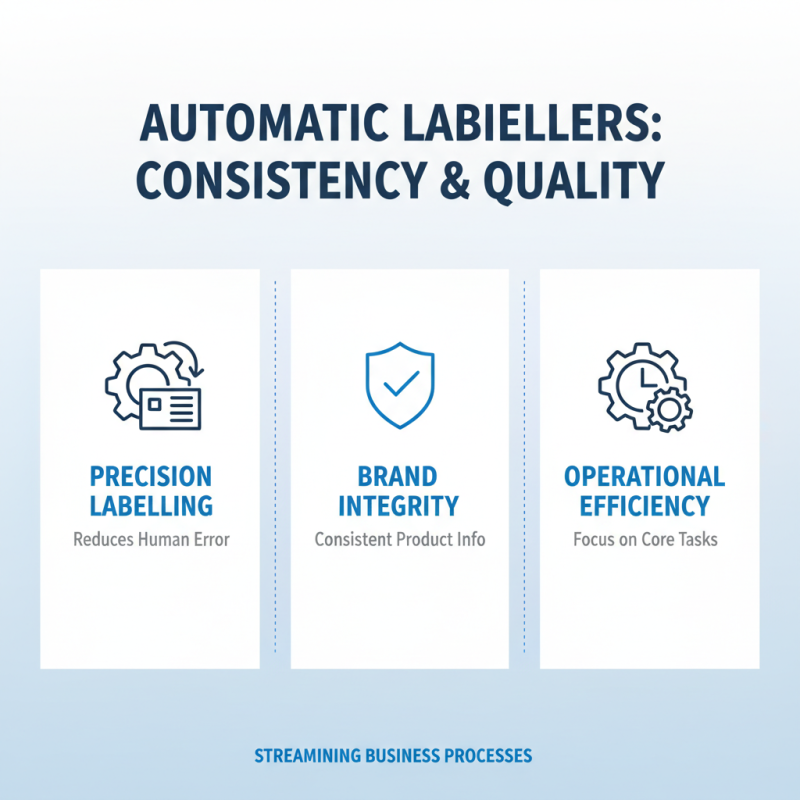
Automatic labellers play a crucial role in maintaining product consistency and quality. They apply labels with precision, ensuring that every item is accurately marked. This reduces human error, which can lead to mislabeling. Inconsistent labeling can confuse customers and compromise brand integrity. By streamlining the labeling process, businesses can focus on other critical areas.
Quality control is enhanced through automatic labellers. These machines can detect uneven applications and correct them in real-time. For instance, if a label is slightly askew, the system can adjust immediately. This quick response minimizes waste and frustration. However, relying solely on machines might overlook certain nuances that an experienced worker would catch. Balancing automation with human oversight could lead to better results.
Moreover, using an automatic labeller can create challenges. Workers might feel uncertain about their roles. Training is essential to ensure that staff understand the technology. There's a risk of disconnect between technology and people, which can strain workplace dynamics. Regular feedback from employees can help identify areas for improvement, ensuring that the technology complements human efforts instead of replacing them.
Implementing automatic labellers can significantly enhance cost-effectiveness within various business operations. According to a report by Smithers, businesses can see a reduction in labor costs by up to 30% when shifting from manual labelling to automated systems. This cost-saving potential becomes crucial for many small to medium enterprises operating on thin margins.
Automatic labellers not only cut labor expenses but also improve consistency. A study from Freedonia Group indicates that uniform labelling can reduce product returns by 15%. Quality issues often arise from manual processes. Flaws in labels can lead to compliance violations which are costly to fix.
While the initial investment in automatic labellers may seem daunting, many companies recover costs quickly. Automating operations can lead to a payback period of just one to two years. However, not all businesses are fully ready for such a transition. Issues with installation and integration with existing systems can lead to delays. Businesses should carefully assess their specific needs and workflows before making a decision.
When choosing the right automatic labeller for your business needs, it's essential to understand the specific demands of your product line. Industry research shows that the global labeling equipment market is expected to reach $5.73 billion by 2027. This growth highlights the increasing reliance on automation in manufacturing processes. An efficient labelling solution can reduce errors and improve accuracy, but selecting the wrong model may lead to inefficiencies.
Consider the type of labels needed. A food and beverage company may require waterproof labels. In contrast, pharmaceuticals may prioritize tamper-evident features. According to a report by Smithers, 78% of companies that adopted automated labelling saw a decrease in operational costs within the first year. However, companies must reflect on their actual needs. Investing in a complex system for simple tasks can waste resources.
Evaluate production speed too. Some automatic labellers operate at rates of 300 labels per minute. This speed suits high-volume producers. But for smaller operations, less complex machines might suffice. Balancing speed and budget is crucial. Assessing future scalability is equally important. An automatic labeller that can't adapt to growth can hinder progress. Therefore, taking time to analyze your business requirements is vital for long-term success.