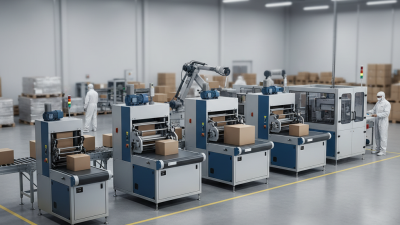
2026 Best Automated Shrink Wrap Machines for Your Business?
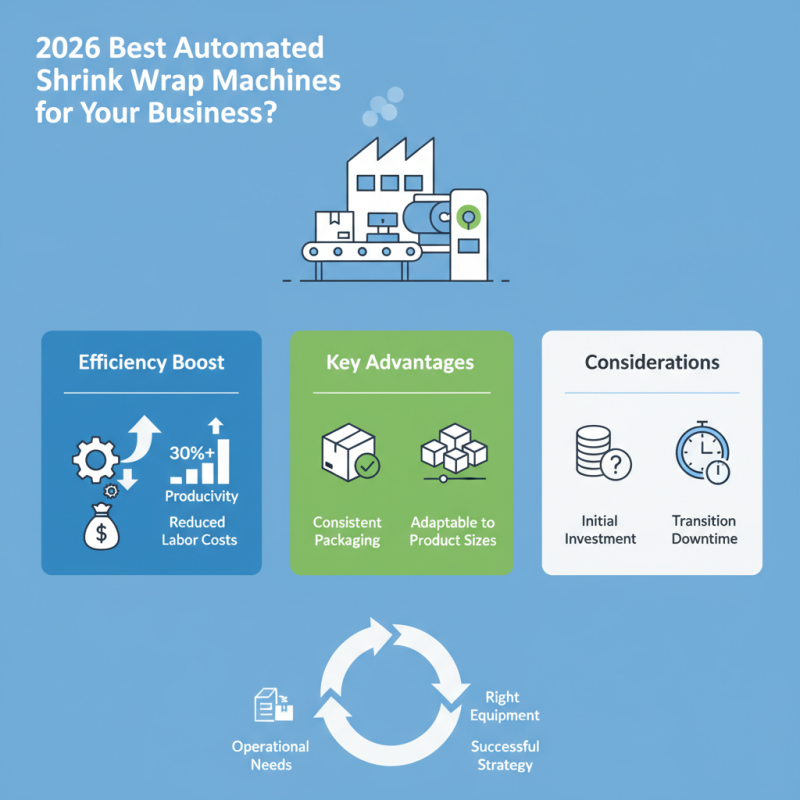
In today's fast-paced business environment, efficiency is critical. Automated Shrink Wrap Machines play a vital role in optimizing packaging processes. Research shows that the use of automated systems can increase productivity by over 30%, greatly reducing labor costs. John Simmons, a leading expert in packaging technologies, once stated, "Investing in automated solutions can redefine your operation's efficiency."
Many businesses still rely on manual wrap systems, which can be inconsistent. This inconsistency can lead to product damage and increased costs. With automated systems, companies can ensure a uniform package every time. Additionally, advanced features in modern Automated Shrink Wrap Machines allow for variable speed adjustments. This flexibility helps cater to diverse product sizes and shapes, ensuring no opportunity for errors is left unattended.
However, the transition to automation is not without its challenges. Companies must consider the initial investment and potential downtime during the switch. While automated shrink wrap technology can streamline processes, the choice of equipment must align with specific operational needs. Employing the right solution can be the key to a successful and efficient packaging strategy.
Types of Automated Shrink Wrap Machines Available in 2026
In 2026, the market for automated shrink wrap machines continues to diversify. Various types cater to different business needs. High-output machines are ideal for large operations, capable of sealing hundreds of packages per hour. Many manufacturers report that these machines increase productivity by up to 30%. A notable trend is the rise of compact machines, suitable for smaller spaces or lower-volume tasks.
Another category is the semi-automated machines. These machines often require some manual intervention. However, they are much more affordable for businesses just starting out. Reports suggest that about 40% of small businesses prefer this option due to its balance between cost and efficiency. Still, companies must evaluate their specific production needs.
Despite advancements, some users report challenges. For instance, the consistency of seal quality can vary, depending on the film and machine settings. Achieving the perfect seal often involves trial and error. Businesses may find themselves re-adjusting settings more than expected. Investing in training for staff can mitigate these issues. Embracing automation has its hurdles. The key is understanding which type of machine aligns with your operational goals.
Key Features to Look for in Automated Shrink Wrap Machines
When investing in an automated shrink wrap machine, it’s crucial to prioritize key features. Start with
speed and efficiency. Look for machines that can complete tasks quickly
and maintain a steady output. An efficient model can package hundreds of items in an hour. This capability can boost your
productivity significantly, but be wary—it may lead to breakdowns if overloaded.
Consider flexibility in packaging sizes. Some machines can handle various product dimensions without needing extensive
adjustments. This adaptability saves time during transitions. A reliable control system is another vital feature. Intuitive
interfaces minimize training needs and reduce the risk of operator errors. However, remember that complex systems might have
steep learning curves.
Durability is essential. Machines should withstand daily operations without
frequent repairs. Materials used should be sturdy, but heavy machinery can strain your budget. Evaluate maintenance
requirements before committing. Finally, reflect on your specific needs. Generic solutions
might not fit unique packaging challenges perfectly. Engaging with the machine before purchase is ideal but not always
possible. Make sure to assess every feature and consider potential flaws.
Top Brands and Models of Shrink Wrap Machines for Businesses
When searching for the best automated shrink wrap machines, consider the top models available. These machines are designed to improve packaging efficiency for various businesses. They provide a protective layer around products, which can be essential for shipping and storage. Some machines offer unique features, like adjustable temperature settings or advanced sealing technology.
One aspect to reflect on is the learning curve. Training staff to use these machines effectively can take time. Additionally, the initial investment might seem high for small businesses. However, the right machine can lead to long-term savings and streamlined operations. Consider performance, durability, and ease of use when evaluating options.
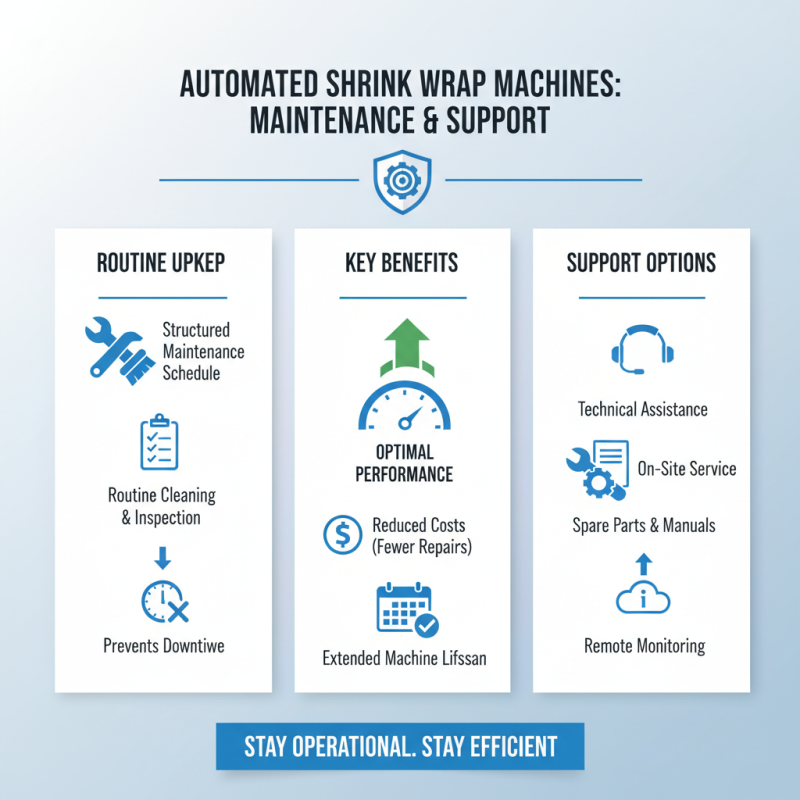
Look for machines that can accommodate different product sizes. Flexibility can enhance packaging workflows. Ensure that the machine you choose meets your production volume needs. Also, maintenance is often overlooked. Regular servicing keeps machines running smoothly and can avoid costly downtime. Balance your needs with the features offered to make an informed decision.
2026 Best Automated Shrink Wrap Machines Performance Comparison
Cost-Effective Solutions: Budgeting for Shrink Wrap Machines
When considering shrink wrap machines, budgeting is crucial. These machines can vary significantly in price. You need to balance cost and features. A high-end machine might save time but could strain your budget. Conversely, a cheaper model may not meet your production needs.
Tips: Evaluate your production volume. Estimate how much you will use the machine. This helps in selecting a cost-effective option that fits your business.
Don’t forget maintenance costs. Many budget models require more upkeep, which can add expenses. It’s essential to read reviews and check user feedback. Look for machines that have solid warranties. This can ultimately save you money in the long run.
Also, consider energy efficiency. A machine that consumes less power could lower your utility bills. Calculate the long-term savings before making a purchase. Remember, choosing the right shrink wrap machine should involve both immediate and future costs. Make a checklist of features you need versus what you want. This can lead to more informed decisions, preventing costly mistakes.
2026 Best Automated Shrink Wrap Machines for Your Business
| Model |
Production Speed (packages/min) |
Film Width (inches) |
Power Consumption (kW) |
Price ($) |
| Model A |
30 |
20 |
2.5 |
5,000 |
| Model B |
45 |
25 |
3.0 |
7,500 |
| Model C |
60 |
30 |
4.0 |
10,000 |
| Model D |
25 |
15 |
2.0 |
4,500 |
| Model E |
50 |
22 |
3.5 |
8,000 |