How to Choose the Right Automatic Case Erector for Your Business Needs?
Choosing the right Automatic Case Erector is crucial for optimizing packaging lines. A recent report by Smithers Pira highlights that the global demand for automated packaging systems is expected to grow by 5.4% annually. This growth is fueled by the need for increased efficiency and reduced labor costs.
Many businesses overlook specific requirements when selecting an Automatic Case Erector. Factors like production speed, case sizes, and automation level are vital. A misalignment with these requirements can lead to inefficiencies. For instance, if the machine cannot handle the intended volume, delays may occur, impacting overall productivity.
Moreover, it's essential to consider the flexibility of your Automatic Case Erector. A machine that limits future adjustments can become a liability. An investment in the right technology today could mean the difference between staying competitive and falling behind. Making the right choice requires careful thought and reflection on your unique operational needs.
Understanding the Functionality of Automatic Case Erectors
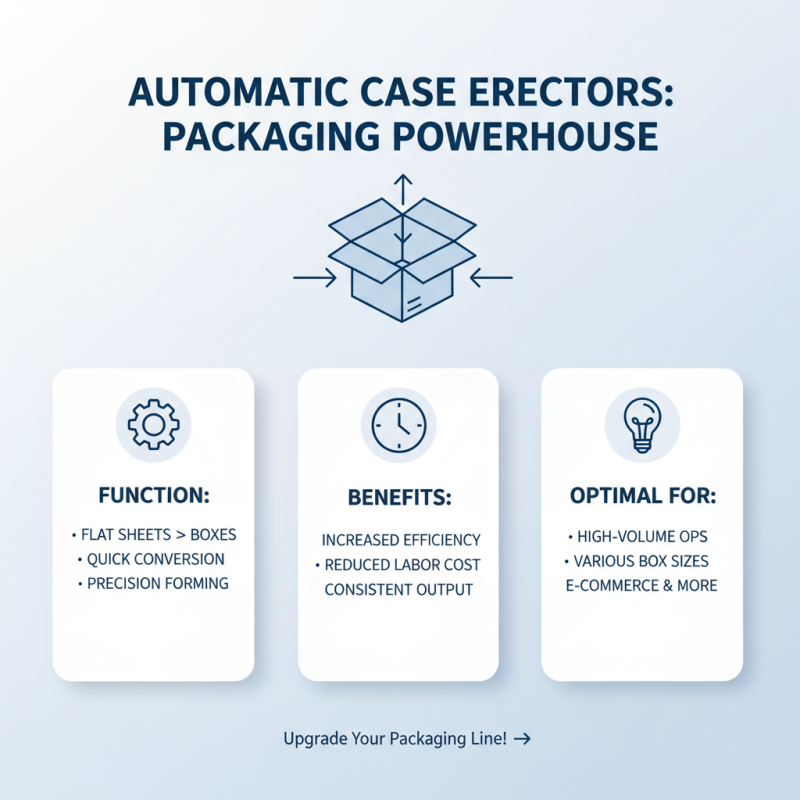
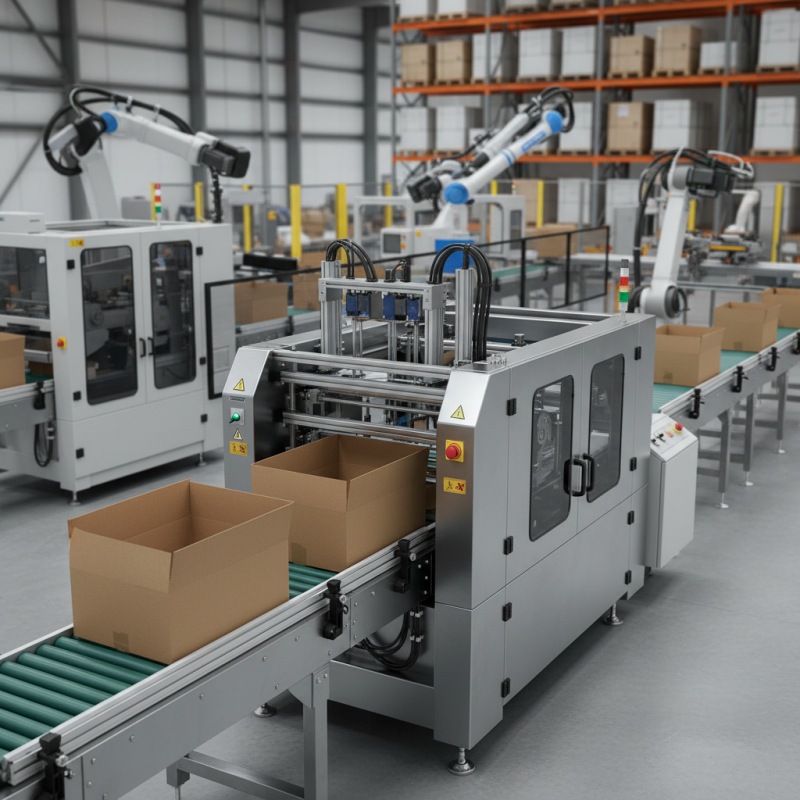
Automatic case erectors are vital for businesses that require efficient packaging solutions. These machines convert flat cardboard sheets into boxes. They can perform this task quickly and with precision. Understanding their functionality helps in making the right choice.
Most automatic case erectors are designed to minimize manual labor. They reduce errors and speed up production lines significantly. Different models offer various features such as adjustable sizes and speed controls. However, one must consider the type of products being packaged. Not all machines handle every material or box size effectively. Some may struggle with heavier items or intricate designs, which is a point of concern for many users.
Looking at the operation, automatic case erectors usually have user-friendly interfaces. Yet, improper setup can lead to malfunction or downtime. Regular maintenance is essential. Users need to develop routines for cleaning and inspecting parts. Otherwise, performance may decline, affecting productivity. This reflection on functionality is crucial when making decisions for your business.
Evaluating Different Types of Automatic Case Erectors Available
Choosing the right automatic case erector can be challenging. Understanding the types available is crucial. There are several designs suited for different production needs. For instance, upright case erectors are popular for their efficiency. They create boxes quickly and are easy to operate.
Another option is the random case erector. This type adjusts to various box sizes automatically. It saves time, but setup may require more attention. Not all businesses have the same needs. High-speed operations may favor continuous feed models. However, these can be quite complex for smaller operations.
Size and weight of cases matter too. Certain models handle larger, heavier boxes. Others focus on lighter, smaller packages. Evaluate your current production line. What are its limitations? Reflect on how an automatic case erector can improve workflow. Choose flexibility but also consider the reliability of the machine.
How to Choose the Right Automatic Case Erector for Your Business Needs? - Evaluating Different Types of Automatic Case Erectors Available
| Type |
Production Speed (Cases/Min) |
Power Consumption (kW) |
Dimensions (L x W x H) |
Suitable For |
| Compact Erector |
15 |
2.0 |
2.5m x 1.5m x 1.8m |
Small Businesses |
| High-Speed Erector |
30 |
3.5 |
3.0m x 2.0m x 2.0m |
Medium to Large Businesses |
| Flexible Erector |
20 |
2.5 |
2.8m x 1.7m x 1.9m |
Variety of Applications |
| Heavy-Duty Erector |
25 |
4.0 |
3.5m x 2.5m x 2.2m |
Large Scale Operations |
| Ergonomic Erector |
18 |
2.2 |
2.6m x 1.6m x 1.8m |
Warehouse and Distribution |
Assessing Your Production Volume and Case Size Requirements
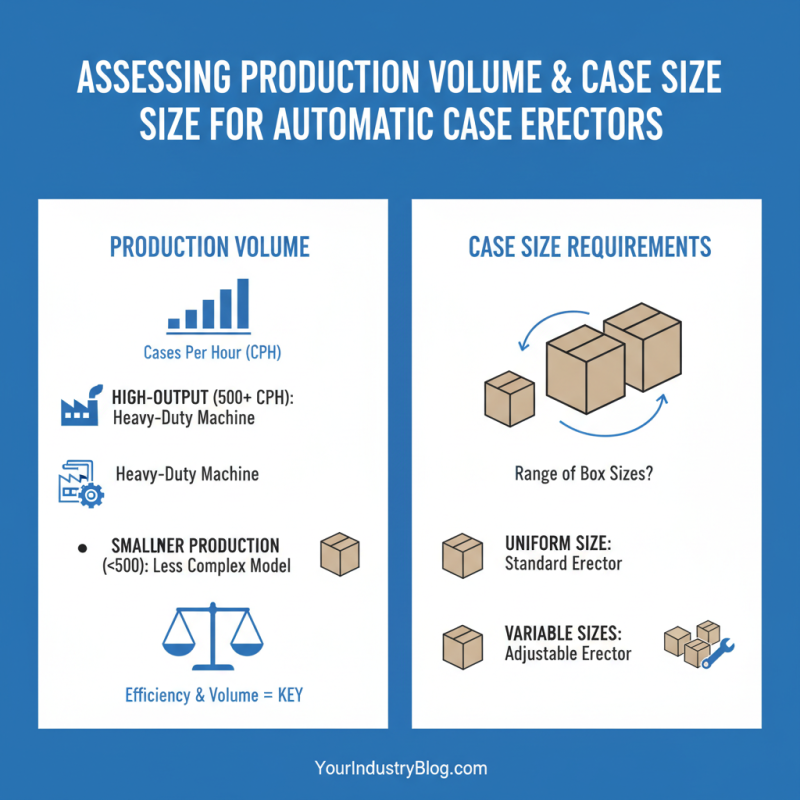
When choosing the right automatic case erector, it’s essential to assess your production volume. High-output operations may require heavy-duty machines. Consider how many cases you need per hour. This will influence the type of erector you should select. For smaller productions, a less complex model could suffice. Balancing efficiency and volume is key.
Case size requirements also play a crucial role. Different products require different case dimensions. Measure the height, width, and depth of your packaging. This ensures the equipment can accommodate your needs. Some erectors are limited in versatility. If your product line changes often, flexibility becomes crucial. Be cautious about underestimating or overestimating your needs. A mismatch can lead to wasted time and resources.
Identifying Key Features and Technology in Automatic Case Erectors
When selecting an automatic case erector, technology plays a crucial role. Various models come equipped with features such as adjustable speed and integration capabilities. Advanced machines can handle different box sizes and materials, allowing flexibility. According to a market analysis by Research and Markets, the automatic case erecting machine market is estimated to grow at a CAGR of 6.2% from 2021 to 2026. This growth indicates a rising demand for versatile and efficient packaging solutions.
Key features to consider include ease of operation and maintenance. Operators prefer systems with user-friendly interfaces. Whether it's touchscreen controls or simple adjustments, usability matters. Additionally, maintenance frequency can impact overall productivity. A machine that requires frequent servicing may hinder workflow. Data from Packaging Strategies highlights that companies can save up to 30% on operational costs by investing in reliable technology.
Another critical aspect is the machine's footprint. Space can be limited in warehouses. A compact design can optimize operations without sacrificing performance. However, some businesses overlook this factor. The balance between size and functionality is vital. Technology should enhance efficiency, not detract from it. Ultimately, assessing these features thoughtfully will lead to better business outcomes.
Budget Considerations and Return on Investment for Your Business
When considering an automatic case erector for your business, budget is crucial. Industry reports suggest that businesses typically allocate 5-7% of their production budget to packaging automation. An initial investment can seem high, but consider the long-term savings. According to a study by the Packaging Machinery Manufacturers Institute (PMMI), companies can achieve a 30-50% increase in efficiency by automating their packaging processes.
**Tip:** Evaluate your current production rates to understand potential improvements. Quantify the benefits of reducing labor costs and minimizing errors. Sometimes, the cheapest option in the short run incurs more expenses over time.
Additionally, calculate the return on investment (ROI) of your new equipment. A high-quality erector can provide ROI within 12-18 months. However, this timeframe relies on accurate forecasts of production demands. Complications can occur if your production needs change unexpectedly, affecting ROI calculations.
**Tip:** Communicate with your team about their needs. Gather feedback to ensure the chosen solution aligns with operational goals. This step may help avoid mismatches that lead to wasted resources.
Budget Considerations and ROI of Automatic Case Erectors
This chart illustrates the budget considerations and return on investment (ROI) for different types of automatic case erectors based on their initial investment costs, expected annual savings, and payback periods. It helps businesses assess which option aligns better with their operational goals.