How to Choose the Right Palletizing Robot Applications for Your Business?
In the ever-evolving landscape of manufacturing, selecting the right Palletizing Robot applications is crucial for optimizing efficiency. Experts believe that choosing a robot tailored to specific tasks can significantly impact productivity. Dr. Emily Chen, an authority in automation solutions, states, "The right Palletizing Robot can transform the way companies handle their goods."
Businesses often face challenges in identifying suitable robot applications. Factors like product type, layout, and workflow should be considered. A heavy-duty robot might be ideal for larger items, while a smaller model suits delicate packages. Ignoring these specifics can lead to inefficient operations.
Many companies deploy robots without thorough research, resulting in unexpected costs and downtime. It's essential to analyze the unique needs of your operation. Learning from industry case studies can help in making informed decisions. As we navigate this complex decision-making, understanding the diverse range of Palletizing Robot applications is vital for success.
Understanding the Key Factors for Selecting Palletizing Robots
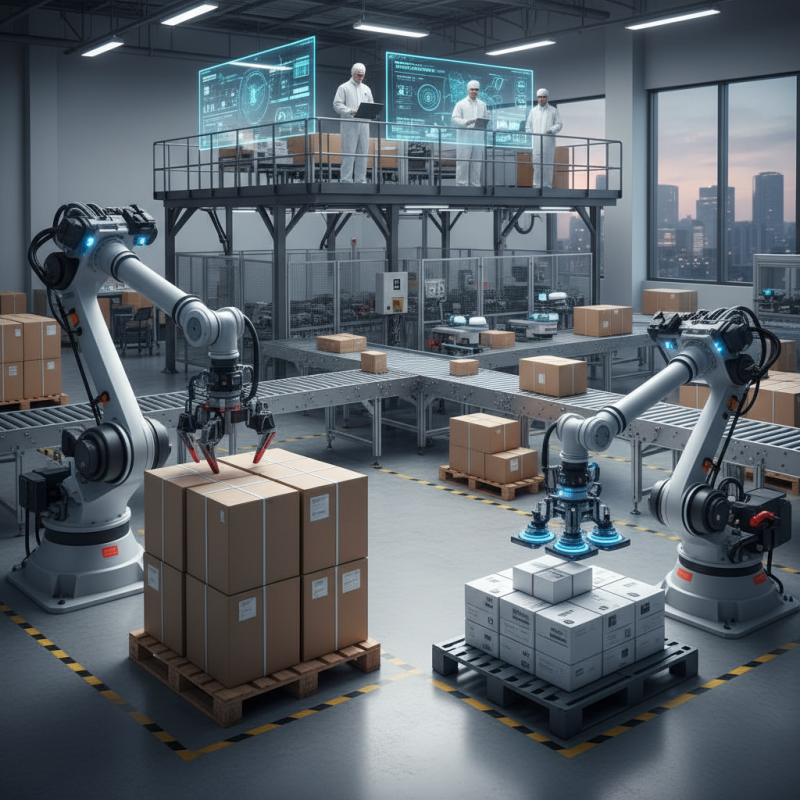
When selecting palletizing robots, several key factors come into play. Assess the volume of your production. A high-output environment may need multiple robots. However, a smaller operation might benefit from a single, versatile unit. Also, consider the payload capacity. What weights will the robot handle? This will determine the type of robot you need.
Next, think about the workspace. The size and layout of your facility matter. Ensure the robot fits well within the space. A cramped area might limit its efficiency. Think about safety too. Robots must be equipped with appropriate safety features. An unsafe setup may lead to accidents, causing downtime and loss.
Lastly, reflect on your current processes. Are they efficient? Sometimes, existing systems might need optimization before introducing automation. Review how the robot will integrate with your operations. Will it cause disruptions? Addressing these questions early can save time and frustration later.
Evaluating Different Types of Palletizing Robots for Various Industries
Choosing the right palletizing robot can be complex. Different industries have unique needs that affect robot selection. For example, the food and beverage sector often requires high hygiene standards. Robots in this field must be easy to clean and maintain. They should also handle various packaging shapes and sizes, from bottles to cartons.
In the pharmaceutical industry, precision is critical. Robots must accurately stack products without damaging them. This requires advanced sensors and programming. Additionally, these robots should accommodate strict regulations for cleanliness and safety. They may also need to work in sterile environments.
Considering versatility is important. Some robots are designed for specific tasks, while others perform multiple functions. Businesses must evaluate their current and future needs. Flexibility can save costs in the long run. Industries should also reflect on the training required for staff. An intuitive interface can reduce the learning curve. Finding the right balance between complexity and usability is a challenge.
How to Choose the Right Palletizing Robot Applications for Your Business? - Evaluating Different Types of Palletizing Robots for Various Industries
| Industry |
Robot Type |
Payload Capacity |
Speed |
Application |
| Food & Beverage |
Articulated Robot |
60 kg |
15 cycles/min |
Case Palletizing |
| Consumer Goods |
Delta Robot |
10 kg |
30 cycles/min |
Bag Palletizing |
| Pharmaceuticals |
SCARA Robot |
20 kg |
20 cycles/min |
Bottle Palletizing |
| Automotive |
Cartesian Robot |
100 kg |
10 cycles/min |
Component Palletizing |
| Electronics |
Mobile Robot |
15 kg |
25 cycles/min |
Tray Palletizing |
Assessing the Scalability and Flexibility of Palletizing Robot Solutions
When choosing the right palletizing robot applications, scalability and flexibility are key factors. Businesses often face varying production demands. A robot solution must easily adapt to changes, whether in volume or product type. The ability to scale up operations without major changes to hardware is crucial.
Consider how different models can handle multiple products. Some robots are designed for specific tasks, while others can switch their functions. Choosing a versatile robot may save time and money in the long run. Flexibility allows you to respond quickly to market demands.
Tips: Evaluate your current and future needs. Think about how often your product line changes. Defining these requirements early will help you make a better choice. Also, include training for your team on new systems. The human element plays a significant role in robotics integration. Reflecting on your processes may reveal opportunities for improvement. Adaptability is vital in today's fast-paced environment.