How to Choose the Right Robotic Palletisers for Your Business?
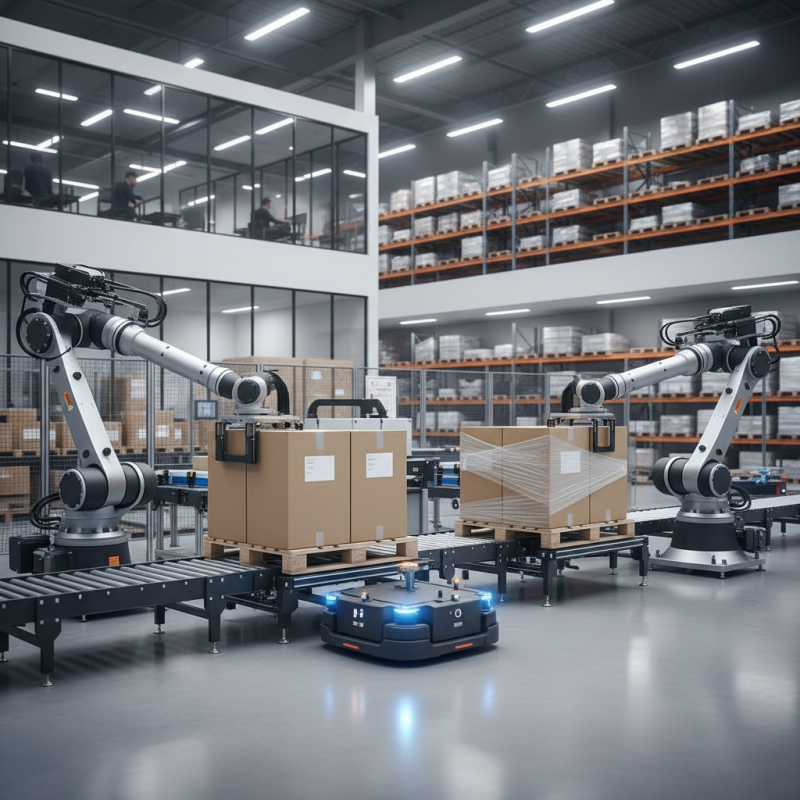
In the fast-evolving landscape of automation, selecting the right Robotic Palletisers is crucial for optimizing efficiency. This decision can significantly impact production workflows and overall productivity. Tom Anderson, an expert in automation technology, once stated, "The right robotic system can transform your business operations overnight." This highlights the importance of thoughtful selection in robotic systems.
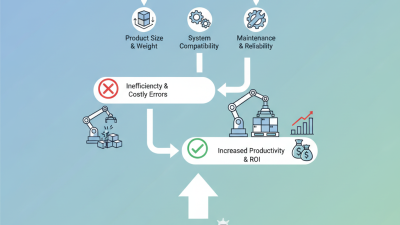
When considering Robotic Palletisers, businesses face various challenges. Compatibility with existing setups is one concern. Additionally, understanding specific needs is vital, as every operation varies. Misjudging these factors can lead to costly mistakes.
Ultimately, the choice of Robotic Palletisers should not be rushed. Take the time to evaluate options thoroughly. The right decision can lead to enhanced efficiency and significant savings. However, overlooking details may result in continued inefficiencies.
Identifying Your Business Needs for Robotic Palletisers
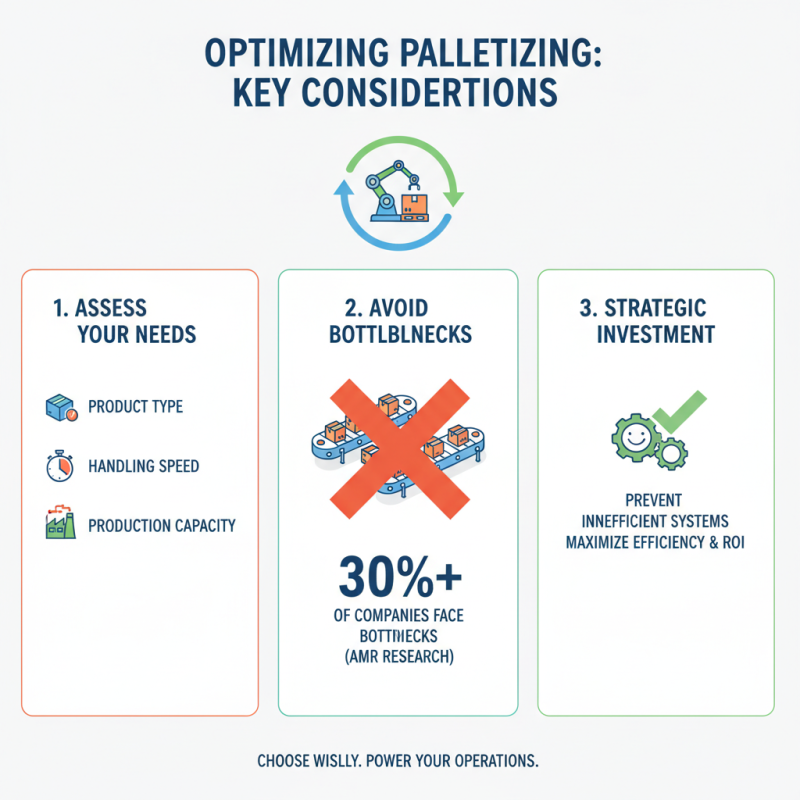
When considering robotic palletisers, identifying your business needs is crucial. Each operation has unique requirements. Factors like product type, handling speed, and production capacity should influence your decision. An industry report from AMR Research indicates that over 30% of companies experience bottlenecks due to inadequate palletising solutions. Understanding these needs helps prevent investment in systems that may not deliver expected efficiency.
Tips: Always evaluate your workspace. The layout of your facility can impact the effectiveness of robotic palletisers. Limited space may hinder the selection of larger models. Look for adaptable solutions that fit your environment.
Additionally, assess your future growth. A robotic system must evolve with your business. Research shows that 75% of companies wish they had chosen more scalable solutions. This insight underscores the importance of flexibility in robotic systems. Make sure they can handle various product shapes and sizes, as your lineup may diversify over time.
It's easy to overlook maintenance requirements. Regular upkeep is essential. Neglecting this can lead to costly downtimes. Gather insights on support services offered by potential suppliers. Not all vendors provide equal support. A thoughtful analysis of your operational needs today and tomorrow is vital. This will guide you towards the right robotic palletiser.
Evaluating Different Types of Robotic Palletisers Available
Choosing the right robotic palletiser for your business can be challenging. Understanding the types available is crucial. There are several key types of robotic palletisers to consider. Each type has its unique features, and assessing them will help you make an informed decision.
Articulated robotic palletisers are popular. They offer flexibility for various packing needs. However, they may require more floor space. This can be a limitation for smaller facilities. On the other hand, horizontal palletisers are efficient for high-speed operations and require less space. Yet, they might not be suitable for all kinds of products.
**Tip:** Evaluate your product types before deciding. Some palletisers are better for irregular shapes or weights. Another important factor is speed. Estimate your production needs.
Other robotic systems, such as delta palletisers, excel in speed and precision. They can handle multiple products quickly. However, setup and maintenance can be complex, demanding more technical support. Always analyze your staff's ability to adapt.
**Tip:** Consider how easy it is to train your team on a new system. Technical drawbacks can disrupt operations if not managed well. Balancing these details with your budget is essential.
Assessing Key Features and Specifications of Robotic Palletisers
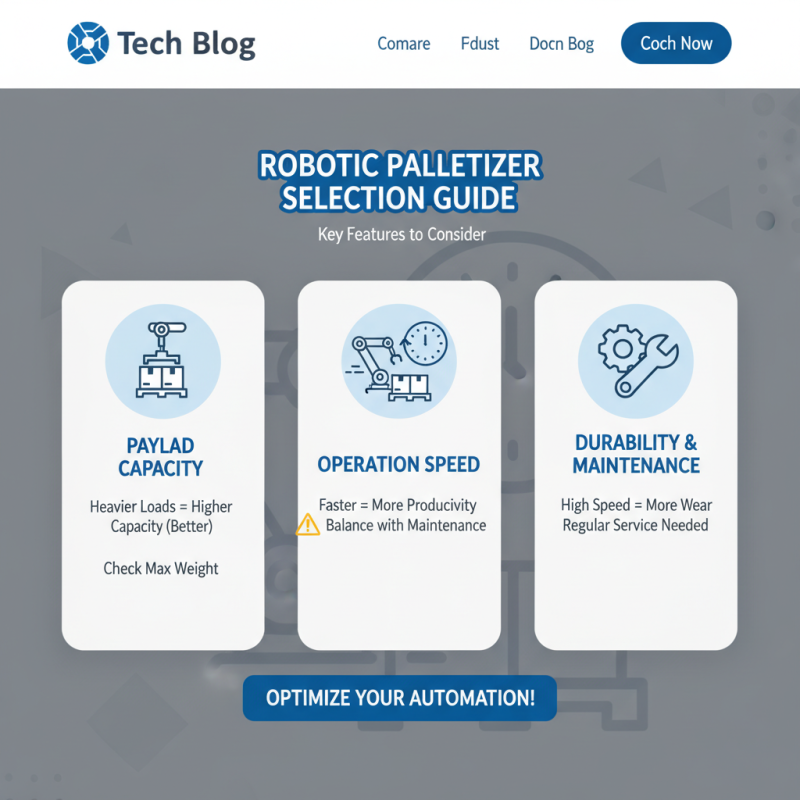
When selecting a robotic palletiser, assessing key features is essential. Look for payload capacity. It dictates how much weight the robot can handle. A higher capacity is often better for heavy loads. The speed of operation matters too. Faster palletisers can significantly boost productivity. However, be wary of overworking machines. Maintenance needs increase with higher speeds.
Flexibility is another crucial aspect. Some robotic palletisers excel with various package sizes and shapes. Others are more specialized. If your products frequently change, flexibility will save time and costs. Consider the ease of programming as well. A user-friendly interface is vital for quick adjustments, especially in a fast-paced environment.
Finally, look into safety features. Robotic palletisers should have built-in sensors to detect obstacles and prevent accidents. Nevertheless, relying solely on technology can be risky. Human oversight remains necessary to ensure safety protocols are followed. Keep in mind that the right choice might not always be the most advanced model. Sometimes, simpler, reliable options work best for specific needs.
Understanding Budget and Cost Considerations for Robotic Palletising
When considering robotic palletisers, budget and cost considerations are crucial. According to a report by Allied Market Research, the robotic palletising market is projected to reach $4.2 billion by 2026, growing at a CAGR of 8.4%. This illustrates the rising adoption of robotics in various sectors. However, the initial investment can deter many businesses. A basic robotic palletiser may cost around $50,000, while more advanced models might exceed $150,000.
Maintenance costs must also be factored in. Regular servicing, replacement parts, and upgrades can add up. Some reports indicate that maintenance can account for 10-20% of total ownership costs annually. This means that businesses need to plan not just for the purchase but for long-term operational expenses. Budget constraints can lead to selecting less suitable models, impacting efficiency.
Training is another expense often overlooked. Employees require training to operate these systems effectively. This can cost anywhere from $1,000 to $10,000, depending on the complexity of the system and training duration. The overall cost structure requires careful evaluation. Businesses must consider both the expected ROI and the hidden costs associated with robotic palletising. Balancing expectations with actual budgets is a real challenge.
How to Choose the Right Robotic Palletisers for Your Business? - Understanding Budget and Cost Considerations for Robotic Palletising
| Feature |
Description |
Cost Range (USD) |
| Load Capacity |
The maximum weight a robotic palletiser can handle. |
$20,000 - $70,000 |
| Speed |
The number of pallets processed per hour. |
$25,000 - $100,000 |
| Integration |
Compatibility with existing systems and equipment. |
$5,000 - $30,000 |
| Automation Level |
Degree of automation in the palletising process. |
$15,000 - $60,000 |
| Maintenance Costs |
Regular maintenance and repair expenses. |
$1,000 - $5,000 per year |
| Training Costs |
Expenses related to employee training for operation. |
$2,000 - $10,000 |
Analyzing Vendor Support and Maintenance Options for Efficiency
When selecting robotic palletisers, vendor support and maintenance options are crucial. Efficient support can greatly impact your production line. A 2022 industry report highlighted that companies with robust customer service saw a 20% increase in operational uptime. This emphasizes the importance of choosing a vendor that offers reliable support.
Maintenance should not be overlooked. Scheduled maintenance can prevent costly downtimes. According to research, facilities that implemented regular maintenance programs reduced machine breakdowns by 30%. However, not all vendors provide comprehensive maintenance options. Some might offer basic packages that do not cover critical components. This could lead to unforeseen expenses and inefficiencies in the long run.
Evaluate the available support plans. Ask potential vendors about response times and service guarantees. A thorough analysis can reveal whether a vendor is genuinely committed to supporting your business. Sometimes, a lower upfront cost doesn’t equate to overall savings. It is essential to reflect on these factors to ensure long-term efficiency and performance. Balancing cost and support quality remains a challenge for many businesses.
Efficiency Analysis of Robotic Palletisers