How to Choose the Right Granule Packing Machine for Your Needs?
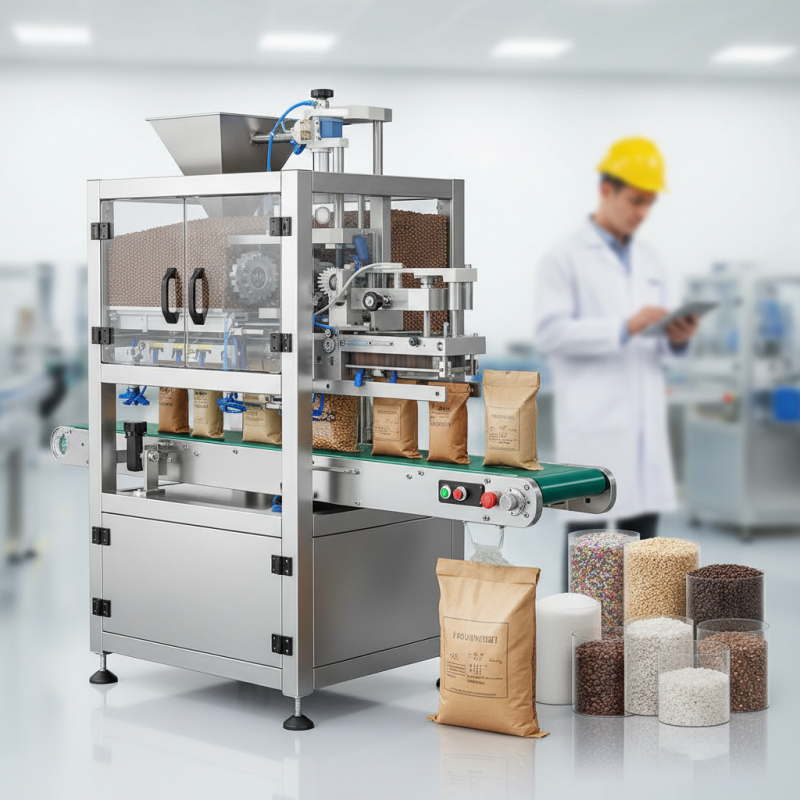
Choosing the right Granule Packing Machine can greatly impact your production efficiency. Expert John Smith, a leader in packaging technology, once said, "The right machine can save time and reduce errors." Different industries require specific features in packing machines.
Granule packing machines come in various designs and functionalities. It's essential to evaluate your unique needs before making a decision. Often, businesses overlook factors like bag size and sealing methods, which can lead to costly mistakes.
Understanding your product's characteristics is vital. For example, granule size and shape influence the machine's performance. The right Granule Packing Machine should accommodate these specifications. Reflecting on common challenges can help in this process.
Understanding Granule Packing Machines and Their Types
Granule packing machines are essential in many industries. They help pack products like food, pharmaceuticals, and chemicals. Understanding their types can help you choose the right one. For instance, you have vertical and horizontal machines. Vertical machines are suitable for small spaces, while horizontal models often pack larger volumes.
According to industry reports, the granule packing machine market is projected to grow by 5.8% annually. This growth indicates a rising demand in various sectors. Choosing the right machine depends on your product type. For example, free-flowing granules like rice require different packing solutions than sticky substances.
Consider machine speed and efficiency too. Many models can pack 30 to 100 bags per minute. However, not all machines can maintain this speed with different granule types. It's crucial to reflect on specific needs. What works for one product may not work for another. Testing machines in real conditions can expose these nuances. Careful evaluation can lead to better decisions.
Key Features to Consider When Selecting a Granule Packing Machine
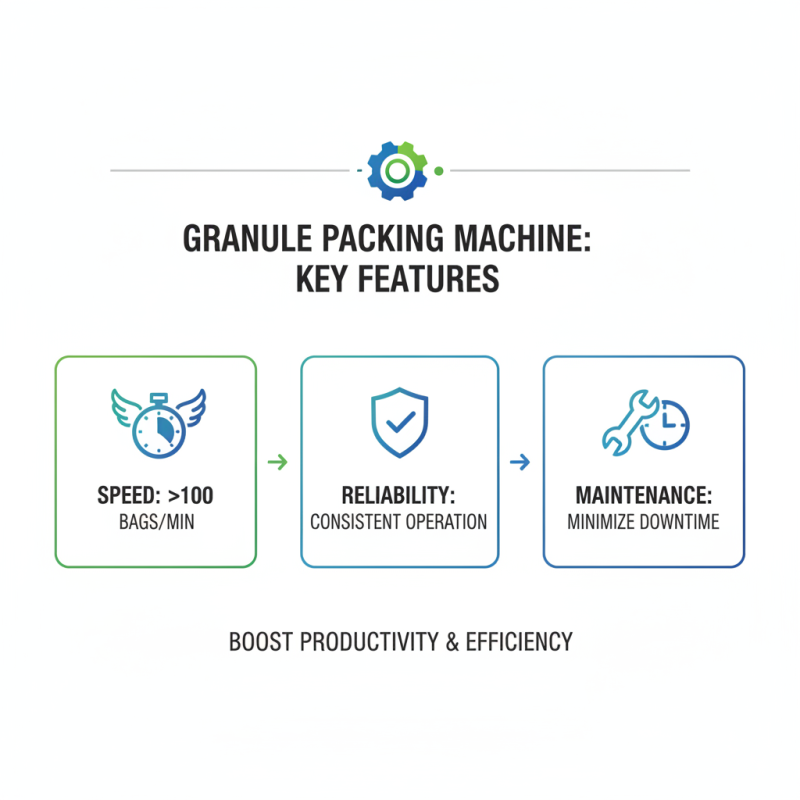
When selecting a granule packing machine, there are key features that can significantly impact your operations. Speed is crucial; industry reports indicate that machines can operate at speeds exceeding 100 bags per minute. This efficiency translates into higher productivity. Yet, balance this with the machine’s reliability. A faster machine isn’t useful if it frequently malfunctions. Users often overlook maintenance needs, which can lead to unexpected downtimes.
Another essential aspect is flexibility. Different products require varying bag sizes and materials. A machine that can adjust easily to these needs can save you time and costs. According to recent surveys, versatility is a top priority for 65% of manufacturers. Look for machines that support multiple formats, as this adaptability is vital in a competitive market.
Finally, consider the technology behind the machine. Automation features can enhance precision and reduce labor costs. Reports highlight that automating packing processes can cut costs by more than 30%. However, investing in high-tech features may seem daunting. Reflect on your current workflows and how these innovations can integrate seamlessly with them. Engaging with seasoned professionals can also provide insights into overcoming initial hurdles.
Assessing Production Capacity and Speed Requirements
Assessing production capacity and speed requirements is crucial when selecting a granule packing machine. Various industries have unique demands. For instance, food packaging often requires machines that can handle high speeds to keep up with consumer demand. Studies show that packaging lines in the food industry operate at rates of 60 to 120 bags per minute. This level of output can significantly boost efficiency.
However, a machine's speed is not the only factor. It must align with production capacity. If a facility produces 20 tons of granules per day, the machine must pack the product efficiently. Many businesses underestimate this correlation. A machine that operates too quickly might sacrifice accuracy. Packing errors can lead to wasted materials and increased costs.
Understanding these dynamics can prevent issues down the line. Industry reports suggest that companies overlook maintenance needs as well. A machine running at high speeds can wear out faster. Regular maintenance is essential for long-term reliability and performance. Ignoring this aspect could result in unplanned downtime, impacting overall productivity. Balancing speed and capacity, while considering maintenance, is vital for optimal operation.
How to Choose the Right Granule Packing Machine for Your Needs?
| Machine Type |
Production Capacity (Bags/Hour) |
Speed (Bags/Minute) |
Bag Size Range (mm) |
Power Consumption (kW) |
| Horizontal Granule Packing Machine |
1000 |
16.67 |
50-300 |
2.0 |
| Vertical Granule Packing Machine |
1200 |
20.00 |
100-500 |
2.5 |
| Automatic Granule Packing Machine |
1500 |
25.00 |
200-400 |
3.0 |
| Semi-Automatic Granule Packing Machine |
800 |
13.33 |
50-250 |
1.5 |
Evaluating Budget and Cost-Effectiveness of Packing Machines
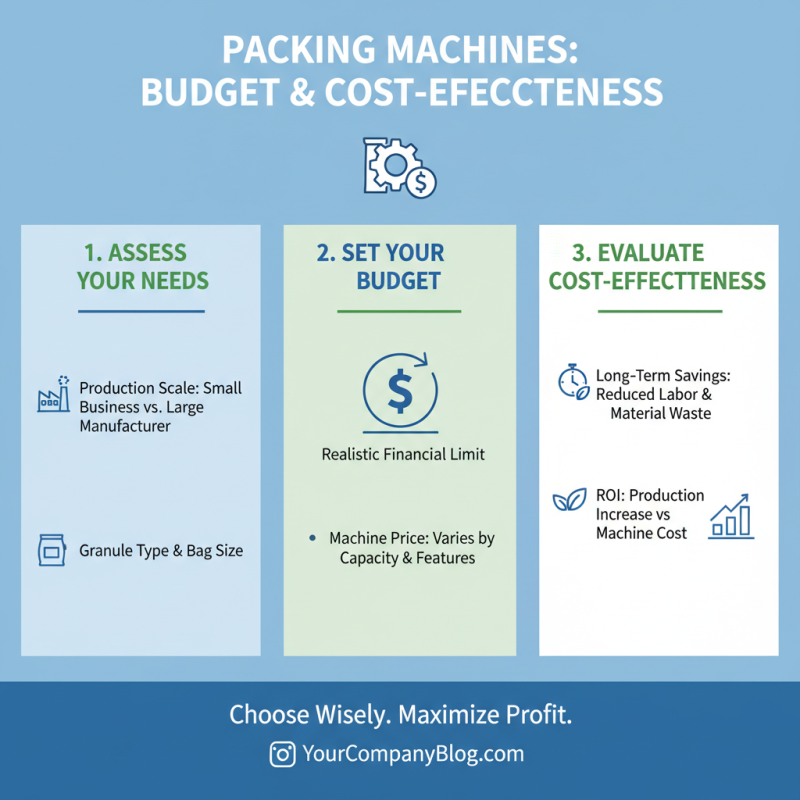
Choosing the right granule packing machine requires careful consideration of budget and cost-effectiveness. Understand your production scale. Are you a small business or a large manufacturer? The machine's price can vary significantly based on its capacity and features. Set a realistic budget before exploring the options.
Tip: Research the total cost of ownership. This includes maintenance and operational costs. A cheaper machine might have higher long-term costs.
Evaluate the features that matter most to your operations. Do you need high speed, accuracy, or flexibility in packaging sizes? Sometimes, machines with advanced features may not be necessary for simpler tasks. Think about your production line's unique needs.
Tip: Consider flexibility. If your product line changes often, a versatile machine might save you money in the long run. However, an inflexible machine may lead to wasteful expenses down the road.
Remember, performance and reliability may come at a premium. Reflect on whether the investment aligns with your business goals. Sometimes, spending a bit more now can prevent costly delays and issues later.
Importance of Maintenance and Support for Granule Packing Equipment
When selecting granule packing machines, maintenance and support should be a priority. Proper maintenance ensures your equipment operates at peak efficiency. Neglecting this aspect can lead to costly breakdowns. Regularly scheduled maintenance minimizes unexpected downtimes.
Tips: Create a maintenance schedule. Document all maintenance activities. This will help identify patterns and prevent future issues.
Support from the manufacturer or supplier is also crucial. Training staff on equipment operation helps increase productivity. Access to timely technical support can resolve problems quickly. Having spare parts readily available reduces wait times for repairs.
Tips: Verify the support offered before purchasing. Choose suppliers with a good track record of customer service. Regularly train your team to use the machine efficiently.
Remember, maintenance and support are ongoing processes. Don’t overlook the importance of these aspects in the long run.