Top Robotic Palletisers Transforming Warehouse Efficiency in 2026?
In 2026, the logistics industry witnesses a revolutionary change. Robotic Palletisers are at the forefront of this transformation. These advanced machines streamline the packaging and stacking process in warehouses. They efficiently handle various products seamlessly. As demand for speed increases, these robotic systems offer a solution.
Challenges remain despite their efficiency. Implementation can be costly and complex. Some businesses may face difficulty integrating these machines into existing workflows. Training staff to work alongside these technologies is also necessary. Robotic Palletisers push boundaries but require thoughtful adaptation.
Vision for the future is clear. Enhanced capabilities of Robotic Palletisers can yield significant efficiency gains. However, organizations must reflect on their specific needs. Each warehouse has unique challenges that demand tailored solutions. Balancing innovation with practicality is essential for success.
The Evolution of Robotic Palletisers in Warehousing
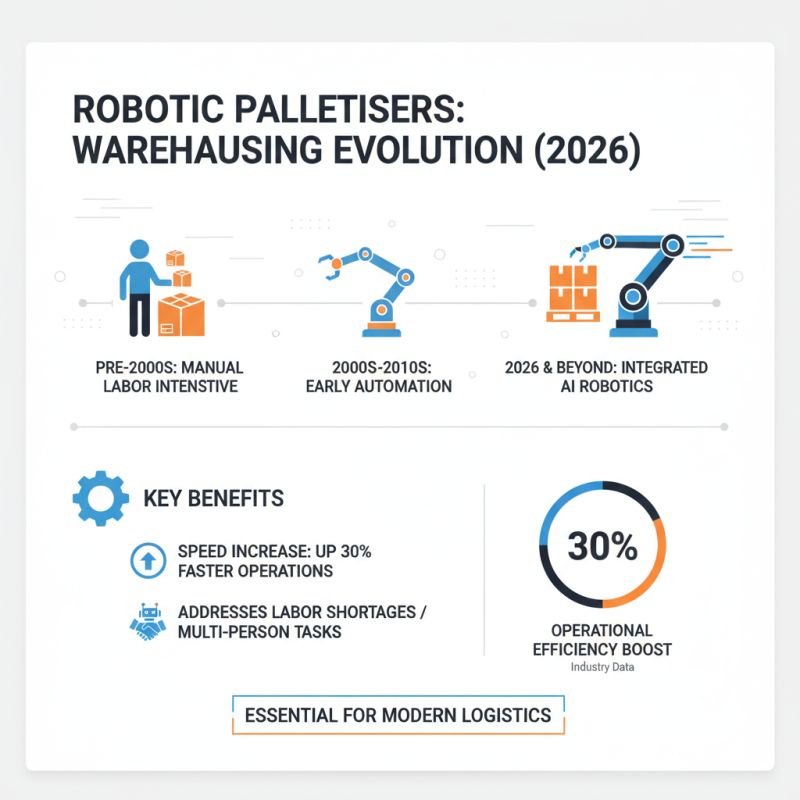
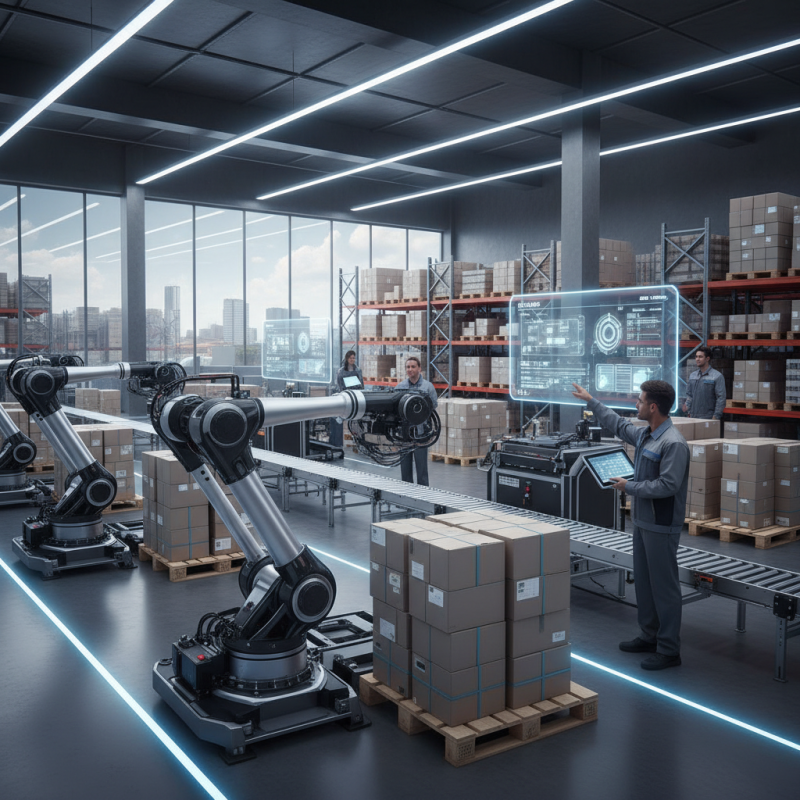
The evolution of robotic palletisers has dramatically reshaped warehousing logistics. In 2026, these machines are not just tools; they are integral to warehouse efficiency. Data from industry reports indicates that robotic palletisers can increase operational speed by up to 30%. They handle tasks previously requiring multiple personnel. With labor shortages continuing, this change is essential.
However, moving towards automation is not without its challenges. Integration with existing systems can be complex. Some warehouses struggle to adjust. Industry analysts reported that about 25% of companies face setbacks in implementation. These setbacks often stem from a lack of skilled workers for programming and maintenance. This skills gap can lead to underutilization of the technology.
Moreover, the upfront costs for robotic palletisers are substantial. Although the long-term savings are evident, initial investments may deter some businesses. Recent studies show that return on investment can take two to three years. As companies evaluate their options, they must weigh these costs against the potential for improved productivity. Balancing investment and adaptability is vital for success in an increasingly automated landscape.
Key Technologies Driving Robotic Palletiser Innovations
The automation of warehouses has made significant strides in recent years. Robotic palletisers are at the forefront of this change. A recent report predicts a 14% annual growth in the robotic palletiser market by 2026. This boom is driven by innovative technologies.
Machine learning is transforming operations. It allows robots to adapt to varying load sizes and shapes. This flexibility can increase efficiency by as much as 30%. Sensors and vision systems also play key roles. They enhance accuracy in identifying products. These technologies minimize errors during packing and stacking. However, implementing these systems requires careful planning and training. There are challenges in integrating new robots into existing workflows.
AI-driven analytics offer insights for optimization. They enable predictive maintenance, which can reduce downtime significantly. A study found that warehouses with smart robotics reduced operational costs by nearly 25%. Despite these benefits, many companies face hurdles. Staff resistance to change often slows down adoption. Striking the right balance between technology and human resources is crucial for success.
Benefits of Implementing Robotic Palletisers in 2026
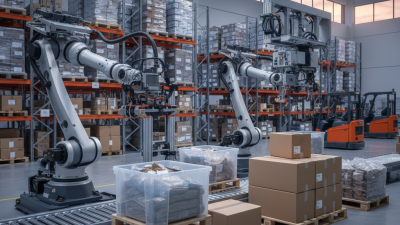
The implementation of robotic palletisers is reshaping warehouse efficiency in 2026. These machines automate the stacking process, reducing human workload. Workers can focus on other tasks, like quality control or inventory management. A well-designed robotic system can handle heavy and awkward loads effortlessly, proving highly efficient.
However, this transition is not without challenges. Initial setup costs can be high, requiring significant investment. Integrating robotic systems with existing infrastructure may bring complications. There can be a learning curve for staff, affecting productivity initially. Not all pallets or products fit the robotic systems perfectly, which sometimes leads to operational hiccups.
Despite these challenges, the benefits outweigh the downsides. Improved accuracy in stacking can reduce product damage. Efficiency leads to faster shipping times, increasing customer satisfaction. As these technologies mature, the flexibility of robotic palletisers will likely improve. Continuous evaluation and adaptation are crucial for maximizing productivity gains.
Impact of Robotic Palletisers on Warehouse Efficiency in 2026
Challenges and Solutions in Adopting Robotic Palletisers
Adopting robotic palletisers can boost warehouse efficiency significantly. However, companies face several challenges. One key issue is the cost of integration. Many businesses hesitate due to the high initial investment. This can lead to delays in adopting new technology.
Additionally, training staff to operate and maintain these systems is crucial yet often overlooked. Without proper training, the machinery may not perform effectively.
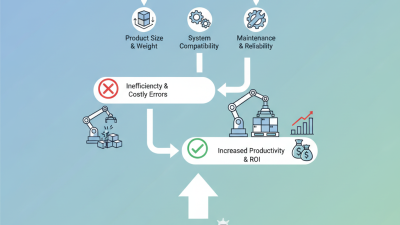
Another challenge is flexibility. Robotic palletisers must adapt to various pallet types and product sizes. Many systems struggle with this adaptability. Companies often find themselves needing customized solutions, which can add to expenses.
Maintenance is another aspect requiring attention. Mechanical failures can disrupt operations and result in lost productivity.
The technology is evolving, but hurdles remain. Companies must carefully consider their specific needs. Too often, businesses dive into the latest solutions without comprehensive planning. Reflection on existing processes can provide insights. This can lead to more informed decisions when adopting robotic palletisers.
Future Trends: Robotic Palletisers Beyond 2026
The landscape of warehouse automation is rapidly changing. Robotic palletisers are poised to lead this evolution beyond 2026. According to recent industry reports, the global market for robotic palletising is expected to reach USD 3.4 billion by 2027. This growth reflects an increased demand for efficiency and flexibility in logistics.
As warehouse operations expand, robotic palletisers will adapt to new challenges. They can handle various product sizes and shapes, which traditional systems struggle with. This adaptability is crucial. A 2023 survey revealed that 70% of warehouses are planning to implement advanced robotic solutions within the next three years. However, not all companies are ready. The initial investment and integration challenges can be barriers. Many organizations still hesitate to upgrade outdated systems.
Additionally, the rise of e-commerce demands faster processing times. Robotic palletisers can operate at higher speeds compared to manual labor. Yet, there are concerns about the workforce's future. Reports indicate that automation may lead to job displacement in the sector. Balancing automation and human employment will be critical in shaping the outcomes of this technological shift. The quest for efficiency must consider the human element, ensuring a harmonious transition.