Top 10 Granule Packing Machines That Boost Your Efficiency?
In the fast-paced world of packaging, efficiency is paramount. Granule Packing Machines have become essential tools for manufacturers. According to a recent industry report by Packaging World, the granule packing market is expected to grow at a CAGR of 5.2% over the next five years. This growth highlights the increasing demand for automation and speed in production lines.
Expert in packaging technology, Dr. John Smith, emphasizes, “Granule Packing Machines can significantly enhance productivity and reduce labor costs.” Many companies have seen improvements, yet some struggle to adapt their processes. Identifying the right machinery is crucial. With numerous models available, choosing the best granule packing machine can be overwhelming.
The implications of this choice extend beyond mere efficiency. Packaging errors can lead to wasted resources and dissatisfied customers. Companies must carefully consider their unique needs before investing in new equipment. Reflecting on past decisions can guide future purchases, ensuring that the right granule packing machine is selected to maximize operational success.

Key Features to Look for in Granule Packing Machines
When choosing a granule packing machine, consider several key features.
Consistency in weighing is crucial. A machine should deliver precise measurements every time.
Accurate weight ensures quality control and reduces product waste. Look for machines with advanced weighing technology.
Speed is another important factor. High-speed machines increase throughput. However, be cautious; more speed can lead to errors if not managed properly.
Ease of operation matters too. Machines should have user-friendly interfaces. Simple controls allow operators to focus on packaging rather than figuring out the system.
Look for features like touch screens and easy programmable settings. Additionally, maintenance requirements should be assessed.
Machines need regular cleaning and servicing. A machine that is hard to maintain can lead to downtime.
Finally, versatility can’t be overlooked. A good packing machine should handle various granule sizes.
Flexibility extends the machine's usage across different products. However, versatile machines can be complex.
Operators must be trained adequately to prevent complications. Balancing these features can lead to the right selection but may also introduce your own specific challenges.
Top Brands and Models of Granule Packing Machines
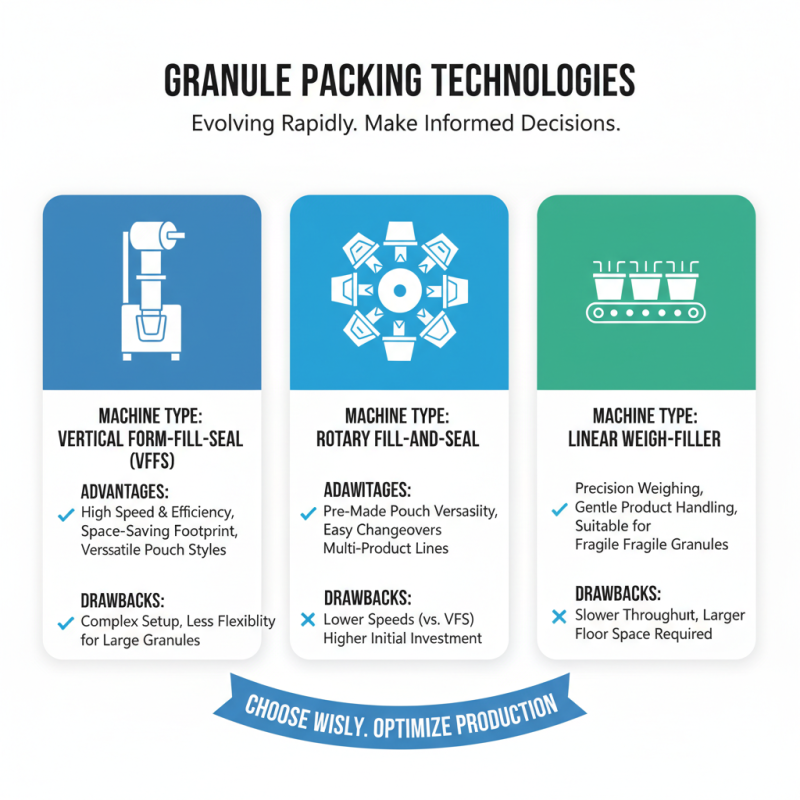
When choosing granule packing machines, it’s essential to focus on reliability and efficiency. Many brands offer diverse models, each tailored to specific needs. Some machines excel in speed, while others are built for precision. The right choice depends on your production goals. Some machines are compact, saving space in smaller facilities. Others come with advanced features but may be harder to operate.
Operational challenges often arise with complex models. Training staff can be time-consuming. A straightforward design often results in fewer errors. Automated systems can enhance productivity but require periodic maintenance. Some machines may be underperforming due to improper calibration. It’s crucial to ensure that settings align with your material type. User feedback highlights the importance of robust customer support. Machines lacking good service often lead to frustration.
How Granule Packing Machines Improve Efficiency
Granule packing machines play a crucial role in improving operational efficiency in various industries. According to a recent industry report, companies using advanced packing technologies can see productivity increases of up to 30%. These machines automate repetitive tasks, which significantly reduces labor costs and minimizes human error. Efficient packing results not only save time but also enhance product handling and storage.
Efficiency stems from several key features of granule packing machines. For instance, real-time monitoring and automatic calibration ensure that each package meets quality standards. This reduces waste and prevents costly recalls. Furthermore, these machines can operate continuously, maximizing output during peak production periods. However, it is essential to maintain them properly. Neglected machines can lead to breakdowns, disrupting workflow and causing delays.
Another aspect to consider is scalability. As businesses grow, their packing needs change. Granule packing machines can easily adapt to different sizes and formats. This flexibility is vital for companies planning to expand. Nonetheless, initial investment costs can be high and not every business may be ready to take that leap. Balancing these factors is key to optimizing efficiency and ensuring long-term success.
Top 10 Granule Packing Machines That Boost Your Efficiency
| Machine Model |
Packing Speed (bags/min) |
Weight (kg) |
Dimensions (L×W×H, mm) |
Power (kW) |
Efficiency Rating |
| Model A |
80 |
500 |
1000×800×2000 |
5 |
Excellent |
| Model B |
70 |
600 |
1200×900×2100 |
6 |
Very Good |
| Model C |
90 |
450 |
1100×850×1950 |
4.5 |
Excellent |
| Model D |
75 |
550 |
1150×880×2050 |
5.5 |
Very Good |
| Model E |
85 |
490 |
1020×810×2000 |
5 |
Excellent |
| Model F |
70 |
620 |
1250×950×2100 |
6 |
Good |
| Model G |
88 |
480 |
1180×870×2050 |
4.8 |
Very Good |
| Model H |
82 |
520 |
1090×840×2000 |
5.2 |
Excellent |
| Model I |
78 |
600 |
1140×910×2150 |
5.7 |
Very Good |
| Model J |
77 |
580 |
1070×830×1980 |
5.3 |
Good |
Maintenance Tips for Optimal Performance of Packing Machines
Maintaining packing machines is crucial for efficiency. Regular maintenance enhances performance and extends equipment life. Start by checking the machine’s lubrication. Properly lubricated parts reduce friction and wear. This simple step can avoid costly repairs.
Inspecting seals and gaskets is essential. Damaged seals can lead to product leakage. Take a moment to examine these components regularly. Additionally, keep the machine clean. Dust buildup can affect operation and lead to mechanical issues. A clean machine is a happy machine.
Don’t ignore the importance of software updates. Outdated systems may cause inefficiency. Schedule routine checks for software and firmware. It’s easy to overlook this aspect, but it matters greatly. Lastly, document maintenance practices. Small oversights can lead to bigger problems later.