2026 Best Automated Packaging Machine Options for Businesses?
In the fast-evolving landscape of packaging, businesses are increasingly turning to Automated Packaging Machines. According to a report by Smithers Pira, the global market for automated packaging is expected to reach $30 billion by 2026. This remarkable growth reflects the efficiency these machines bring to various industries. Experts believe integrating automation can enhance production speed while reducing labor costs.
John Williams, a leading expert in packaging technologies, underscores the importance of this shift. He states, "Investing in automated systems is crucial for staying competitive." However, many businesses still grapple with the transition. The choice of an appropriate Automated Packaging Machine can be daunting. Factors like product type, cost, and scalability need careful consideration.
Some companies report challenges in adapting their workflows to accommodate new automated processes. The equipment may require specialized training, and initial investment can be high. Therefore, reflecting on the long-term benefits versus short-term hurdles is essential. Balancing these elements is key to successful implementation, as the packaging landscape continues to evolve.
Overview of Automated Packaging Machines in 2026
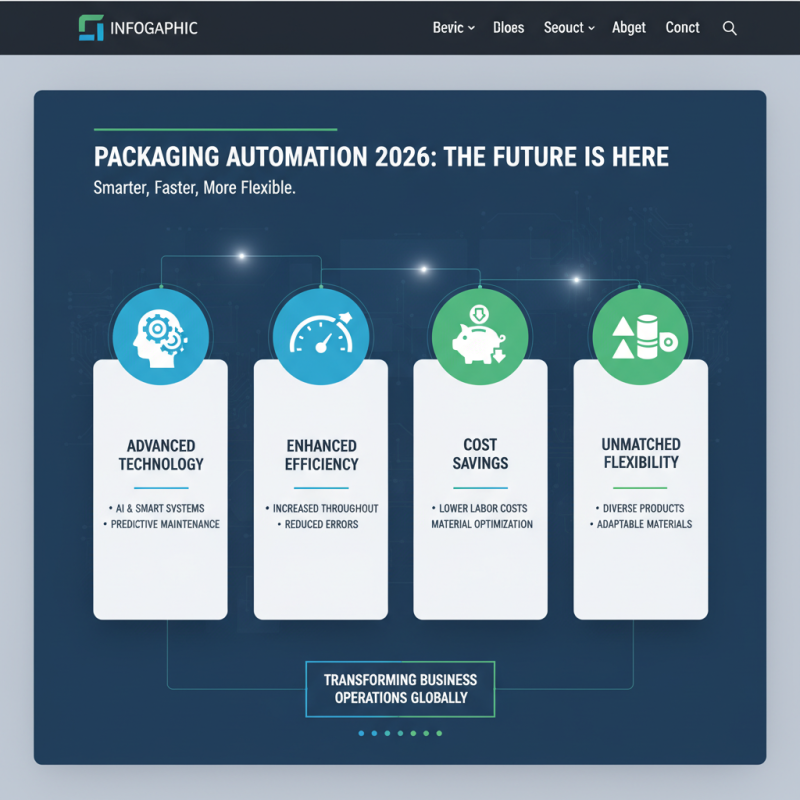
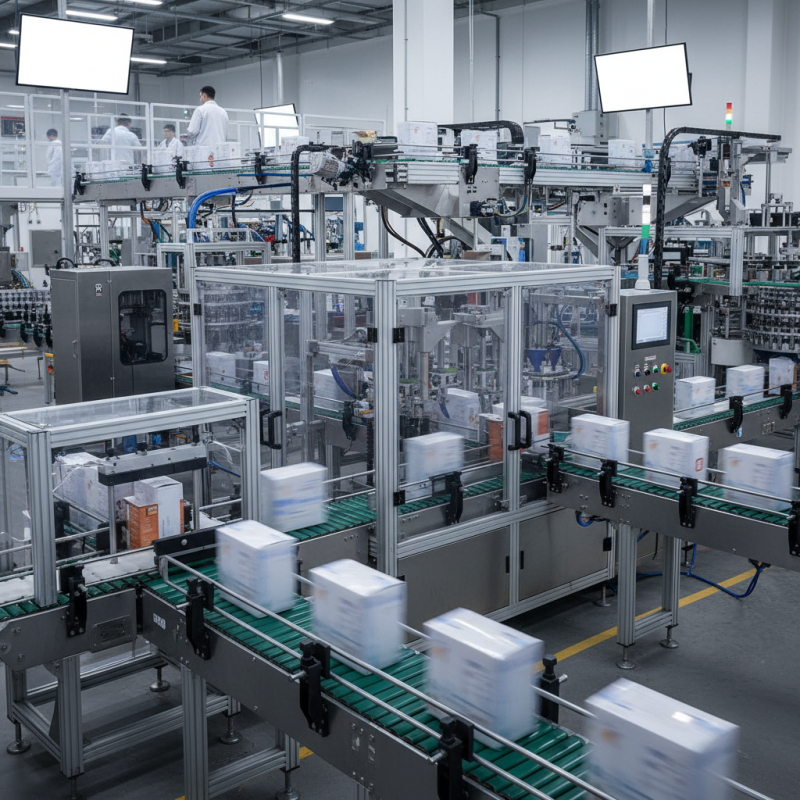
Automated packaging machines are transforming the way businesses operate. In 2026, these machines are more advanced than ever, integrating smart technology and AI. They enhance efficiency and reduce labor costs significantly. Many machines now handle diverse products, adapting to various packaging materials easily. This flexibility opens up new possibilities for businesses of all sizes.
However, implementing these systems is not without challenges. Businesses must consider the initial investment and ongoing maintenance costs. Integrating new technology into existing workflows can be complex. Employees may need extensive training, which can disrupt operations. Overall, while the benefits are significant, careful planning is crucial.
Moreover, sustainability remains a concern. Many automated machines focus on eco-friendly options, yet finding the right balance can be difficult. Companies must remain vigilant against overspending or overlooking waste management. Proper evaluation is essential to harness the full potential of automated packaging solutions. Balancing cost-effectiveness and environmental responsibility is key.
Key Features to Consider When Choosing a Packaging Machine
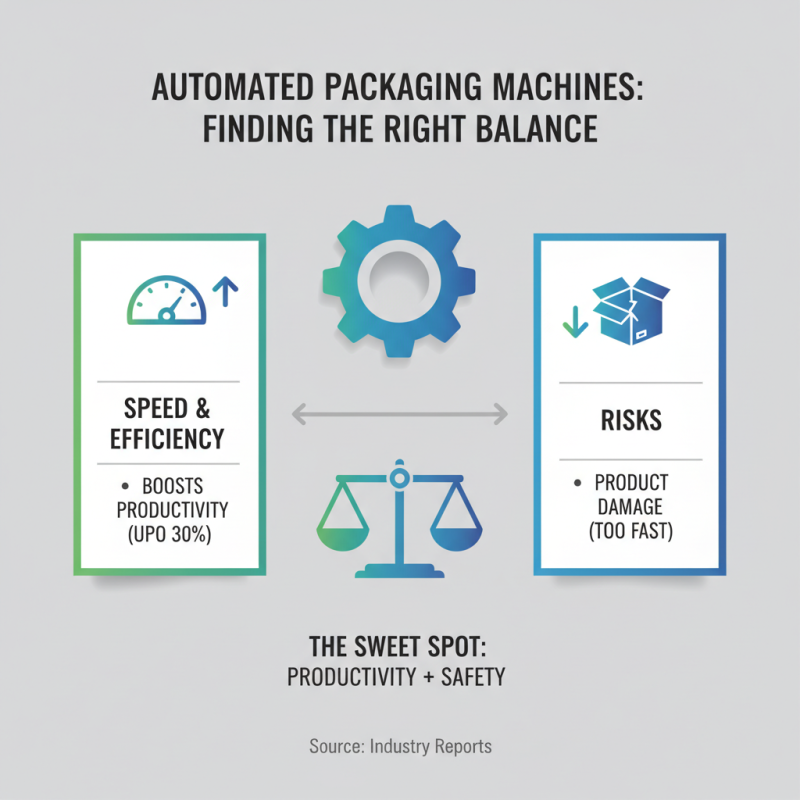
When choosing an automated packaging machine, businesses must consider key features carefully. Speed and efficiency are crucial. Reports show that automated machines can boost productivity by up to 30%. However, speed isn't everything. A machine that operates too quickly can lead to product damage. It's essential to find a balance.
Flexibility is another important feature. The ability to handle various package types and sizes is vital for adapting to market changes. According to industry analysis, over 60% of businesses face challenges due to inflexible machinery. Moreover, ease of operation shouldn't be underestimated. Training staff to operate complex machines can be time-consuming and costly. Simple interfaces can save businesses both time and money.
Finally, maintenance requirements can impact long-term investment. Research indicates that up to 20% of production downtime is linked to equipment failures. Regular maintenance is non-negotiable. Yet, some machines may promise low maintenance but can be challenging to repair. Evaluating total cost of ownership will help avoid future pitfalls.
Top Automated Packaging Machine Brands and Models for 2026
In 2026, businesses are increasingly turning to automated packaging machines to enhance efficiency. Various models are designed for specific needs. For example, some machines excel in high-speed packaging for food products. Others are tailored for delicate items, ensuring safety during handling. Businesses must evaluate their unique requirements, as not all machines will suit every operation.
Several brands offer innovative solutions, yet quality varies. Some models provide advanced features like predictive maintenance, while others focus on simplicity. This creates decisions that can be challenging. Long-term reliability is essential, but some machines may require frequent adjustments. A lack of technical support can lead to operational hiccups. Reflecting on what each model offers will help businesses choose wisely.
In addition to function, ease of integration matters greatly. Machines that seamlessly connect with existing systems can save time and resources. However, understanding the learning curve is vital. Employees may need training, which can delay initial production. Ultimately, investing in the right automated packaging machine promises great returns but also demands thoughtful consideration of potential difficulties.
2026 Best Automated Packaging Machine Options for Businesses
Cost Factors and Budgeting for Automated Packaging Solutions
When considering automated packaging solutions, cost factors play a crucial role. The initial investment can vary significantly. According to a recent industry report, mid-range automated machines can range from $25,000 to $100,000. This often depends on features, speed, and integration capabilities. Customized solutions can push costs even higher, sometimes exceeding $500,000. Businesses must assess their volume and requirements carefully.
Ongoing expenses also matter. Maintenance costs typically add 10-15% to yearly expenses. Training staff adds another layer to the budget. A study revealed that businesses investing in training saw a 25% reduction in downtime. However, not all companies prioritize this, leading to inefficiencies. Often, the cheapest option isn't the best in the long term.
In addition to costs, businesses need to consider ROI. Many companies underestimate the time taken to achieve this. A projected payback period can vary from one to three years. Careful budgeting can make the difference between success and failure. Balancing initial costs with long-term gains is vital for strategic planning.
Future Trends in Automated Packaging Technology
The landscape of automated packaging technology is rapidly evolving. In 2026, efficiency and sustainability will take center stage. Businesses are seeking machines that can adapt to various packaging needs without extensive manual intervention. Flexibility in design allows companies to package different products easily. Moreover, integrating AI into packaging processes will enhance accuracy and reduce waste.
Automation isn’t flawless. Companies may encounter challenges with initial setup and maintenance costs. Training staff to operate new machines can be daunting. There’s always a risk of technical glitches. Companies should assess their specific needs. Innovations like smart sensors can reduce downtime but may not be universally applicable. The importance of human oversight remains critical, even in an automated environment.
Consumers increasingly prefer eco-friendly packaging. Automated solutions must address this demand. The trend is shifting toward recyclable or biodegradable materials. However, sourcing these materials can sometimes be challenging. The balance between automation efficiency and ecological responsibility is delicate. Choices made today will shape the future of packaging technology for years to come.
2026 Best Automated Packaging Machine Options for Businesses
| Machine Type |
Automation Level |
Speed (Packages/Min) |
Industry Applicability |
Estimated Cost ($) |
| Vertical Form Fill Seal |
Semi-Automatic |
40 |
Food & Beverage |
15,000 |
| Robotic Arm Packaging |
Fully Automatic |
60 |
Electronics |
45,000 |
| Shrink Wrapping Machine |
Fully Automatic |
50 |
Consumer Goods |
30,000 |
| Palletizing Systems |
Fully Automatic |
80 |
Logistics & Warehousing |
100,000 |
| Cartoning Machines |
Semi-Automatic |
30 |
Pharmaceuticals |
20,000 |