How to Choose the Best Turret Rewinder for Your Needs?
Choosing the right Turret Rewinder can significantly impact your production process. This machine plays a crucial role in handling the winding of materials like labels and flexible packaging. The right model can boost efficiency and reduce waste, ultimately saving you time and money.
When evaluating different options, consider factors such as speed, tension control, and ease of use. It’s essential to understand your specific needs and the type of materials you'll be working with. Assessing your production volume and potential growth is crucial, too. Some machines may seem impressive but may not fit smaller operations or specialized tasks effectively.
Making the right choice is not always straightforward. There can be trade-offs between cost and features. Researching and consulting with experts can lead to better decisions. Consider customer reviews and industry benchmarks to gauge reliability. A well-selected Turret Rewinder can be a game-changer, but it's vital to approach the decision thoughtfully, aware of your unique requirements.
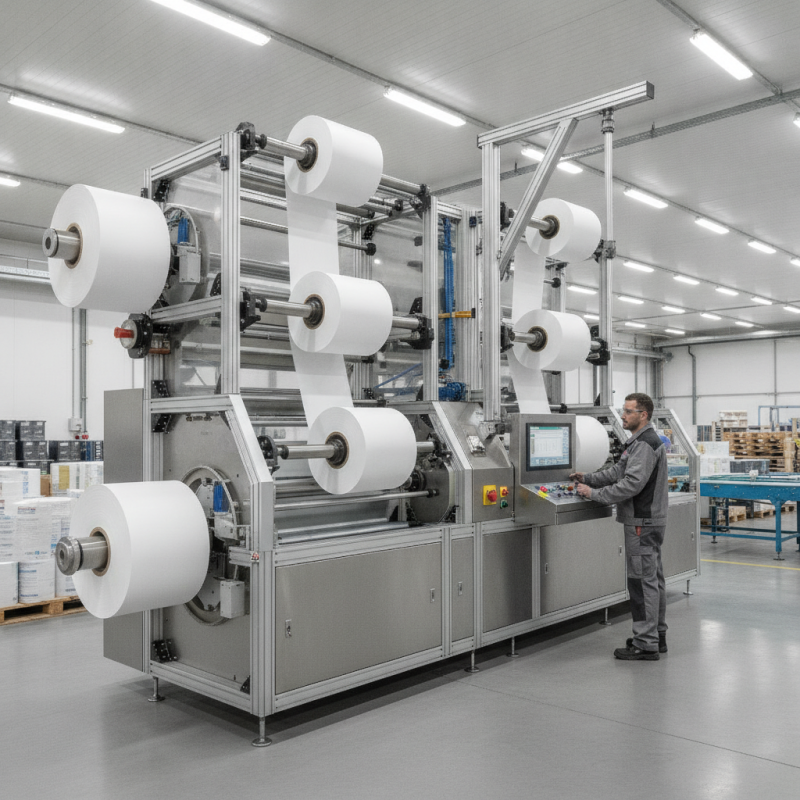
Factors to Consider When Selecting a Turret Rewinder
Choosing the right turret rewinder is no small task. You need to consider several key factors. First, evaluate the speed and efficiency. Analyze how quickly the rewinder can process your materials. This is crucial for meeting production deadlines.
Capacity matters too. Consider the maximum roll diameter and core size. If the machine cannot handle your requirements, it may lead to downtime. It's also wise to assess the rewinder's material compatibility. Various materials require different handling techniques. Ensuring the machine can work with your substrates will save you time and hassle.
Tips: Always look for user reviews. They provide valuable insights into reliability and performance. Don’t skip the demonstration phase. Observing the machine in action can reveal its strengths and weaknesses.
Lastly, think about maintenance and support. A well-supported machine will ensure longevity. A reliable service team can make a significant difference when issues arise. Be wary of overly complex machines; simplicity can lead to enhanced productivity and fewer problems down the line. Balancing these factors will help you select the best turret rewinder for your needs.
Understanding Different Types of Turret Rewinders Available
When selecting a turret rewinder, it's essential to understand the various types available. These machines vary significantly in their features and capabilities. Some models focus on speed and efficiency, while others prioritize versatility for different materials. Consider whether you need a basic model or one that allows for more customization, like tension control and roll size adjustments.
One common type is the automatic turret rewinder. This machine offers high-speed operation, ideal for large production runs. If your projects vary in material type, a semi-automatic rewinder might be more suitable. These allow for manual adjustments and can handle a wider range of materials but may require more operator input.
Tips: Always check for customer reviews on functionality. Real-world experiences can highlight potential issues. It's wise to assess the maintenance requirements of a rewinder. A machine with excessive upkeep can lead to unexpected downtime and costs. Ensure the rewinder you choose aligns with your long-term production goals. This prevents costly mistakes that may arise from choosing a machine ill-suited for your needs.
Comparison of Different Types of Turret Rewinders
Evaluating Production Speed and Efficiency Metrics in Rewinders
When evaluating turret rewinders, production speed and efficiency metrics play a crucial role. Understanding these metrics helps you choose the right rewinder for your operations. A high-speed rewinder can boost your output significantly. However, speed alone is not enough. The efficiency of a machine needs careful consideration.
Look at how well the rewinder can minimize downtime. Frequent stops for adjustments can undermine production speed. Operators should also assess the ease of setup. Complicated setups lead to longer changeover times. This can impact the overall efficiency. Sometimes, a slower machine with greater reliability can outperform a faster one.
Consider the quality of the finished product as well. Rapid rewinding may result in a less durable outcome. Finding a balance between speed and product quality is essential. Reviewing user experiences can provide insights. Don’t overlook the data from actual operations. An effective rewinder should meet your unique production needs, which may not always align with generic efficiency metrics.
How to Choose the Best Turret Rewinder for Your Needs? - Evaluating Production Speed and Efficiency Metrics in Rewinders
| Model |
Production Speed (m/min) |
Efficiency (%) |
Max Roll Diameter (mm) |
Power Consumption (kW) |
| Model A |
250 |
90 |
600 |
5 |
| Model B |
300 |
85 |
800 |
7 |
| Model C |
400 |
92 |
700 |
6 |
| Model D |
350 |
88 |
750 |
6.5 |
Assessing Material Compatibility and Specifications for Rewinders
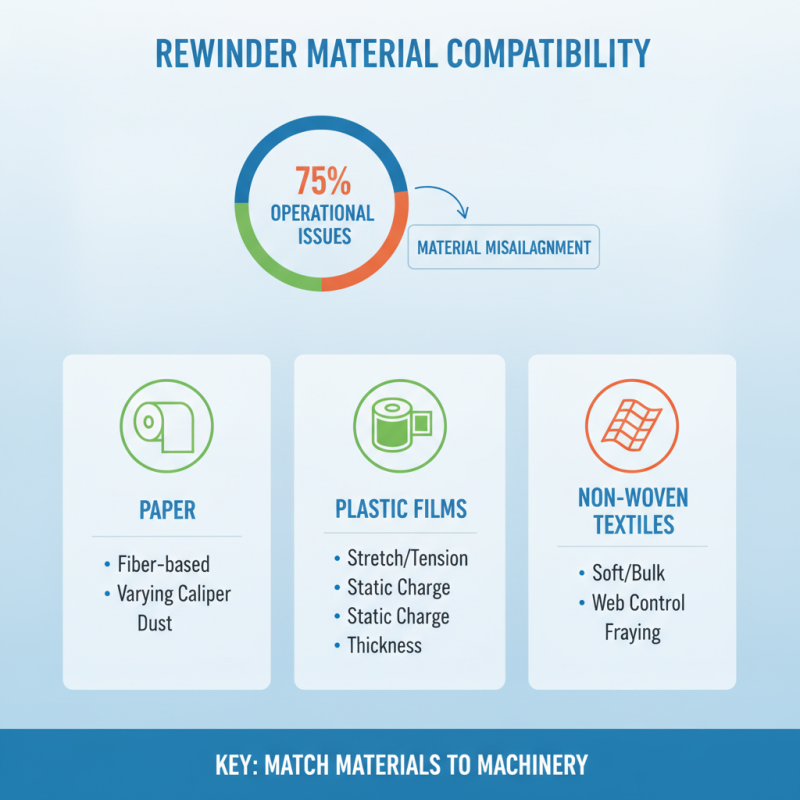
Selecting the right turret rewinder involves careful consideration of material compatibility and specifications. A recent industry report indicates that nearly 75% of operational issues arise from misalignment between rewinding machinery and material types. Understanding the specific materials you work with is crucial. For instance, paper, plastic films, and non-woven textiles each have unique characteristics and requirements.
When assessing materials, think about thickness and elasticity. A thicker substrate may require different tension settings to avoid deformation. On the other hand, stretchy materials might necessitate a more delicate handling approach. Studies show that using precision tension controls can reduce waste by up to 30%. In addition, consider the type of rewind that best suits your needs, whether it's cross-rewinding or center-rewinding. Each option offers different benefits depending on the material.
It's essential to reflect on your production goals. Sometimes, a rewinder may meet basic requirements but not provide the efficiency needed for high-demand operations. Upgrading to a model with better material handling properties can lead to significant operational improvements. Being aware of your equipment's limitations is crucial for effective long-term use. Invest time in understanding these compatibilities to optimize your production line.
Cost Analysis: Balancing Initial Investment and Long-Term Savings
When considering a turret rewinder, cost analysis is essential. The initial investment can vary significantly. Typical prices range from $20,000 to $100,000, depending on features. Businesses must assess whether the advanced features justify the cost. A report by the Flexible Packaging Association reveals that integrating automatic features can lead to a 30% reduction in labor costs. This long-term saving can offset the higher purchase price and enhance overall efficiency.
Maintenance costs also impact the total expenditure. A well-maintained rewinder can last over 10 years. Reports indicate that poorly maintained equipment incurs up to 20% higher operational costs. Regular servicing is crucial but may require budget allocation. It's vital to weigh these factors against potential downtimes. Upgrading to a more efficient model only makes sense if it reduces operating costs significantly.
Investing in a turret rewinder should involve careful analysis of both upfront costs and long-term savings. Fluctuating material costs and economic conditions could change your strategy over time. A well-planned purchase can lead to substantial savings. However, ongoing review is necessary to ensure the equipment remains cost-effective.