Choosing the right Automatic Box Sealing Machine can influence packaging speed, product protection, and long-term operating costs. For global buyers, the decision involves more than comparing conveyor dimensions or advertised sealing rates. Carton sizes, tape compatibility, power requirements, workplace conditions, and after-sales support all deserve careful attention.
This guide examines seven leading automatic box sealing machines for different purchasing needs. The selection considers sealing consistency, adjustment convenience, machine construction, maintenance access, and suitability for various production volumes. It also considers practical details, such as stainless-steel frames, adjustable side belts, emergency stops, and clear control panels. These features matter when operators handle hundreds of cartons during a busy shift.
Real-world performance is rarely identical to a product brochure. A machine may seal standard cartons smoothly but struggle with dusty surfaces, uneven flaps, or lightweight boxes. That limitation should not be ignored. Buyers should request sample testing, confirm spare-parts availability, and review installation support before placing an international order. Voltage compatibility and shipping protection also require verification.
No machine is perfect.
Our comparison is not an absolute ranking for every factory. Instead, it provides a practical starting point for importers, distributors, and packaging managers. Each recommendation reflects a different balance between automation, flexibility, price, and reliability. Readers should match those strengths with their carton specifications and daily workload. A careful evaluation today can reduce production interruptions, rejected packages, and unexpected maintenance costs later.
Automatic box sealing machines are packaging systems that close cartons with consistent speed and pressure. They usually use adhesive tape, while some models support other approved sealing materials. A typical unit includes a conveyor, side belts, tape heads, sensors, and adjustable guides. These parts work together to center the carton and close its top flaps.
The process is simple but carefully controlled. An operator places an open carton on the infeed conveyor. Sensors detect its size and activate the drive belts. The flaps fold into position as the carton moves forward. A tape head then applies pressure-sensitive tape along the center seam. Some machines seal the top and bottom in one pass. Others handle one surface at a time.
Adjustment matters. Guide rails must match the carton width, and belt pressure should hold the box without crushing it. Tape tension also affects the final seal. Too little tension creates loose edges; too much may damage thin cartons. In practical evaluations, machines often perform well with standard box sizes but struggle with irregular cartons. That detail is easy to miss. Buyers should test real cartons, filled to normal weight, before selecting equipment. Operators also need clear access for cleaning, tape replacement, and safe adjustments. Automation saves labor, but it does not remove the need for careful setup.
Typical throughput comparison for common automatic box sealing machine configurations. Actual capacity depends on carton dimensions, tape type, product loading, and conveyor layout.
Machines with automatic carton adjustment and continuous side-belt transport generally support higher case-per-hour output, while compact top-and-bottom sealers are often selected for lower-volume or space-limited packing lines.
When comparing the seven best automatic box sealing machines, carton compatibility deserves close attention. During practical testing, we examine box height, width, weight, and board strength. A machine that handles 120 to 500 millimeter cartons offers better production flexibility. Adjustable side belts should grip boxes firmly without crushing soft corrugated edges. Tape width and sealing pressure also matter, especially when cartons face long-distance transport.
Speed can look impressive on a specification sheet. Real performance is different. We compare cartons per minute under steady factory conditions, not empty-belt operation. Smooth sensor response reduces gaps between boxes. Tool-free adjustments can shorten changeover time when package sizes change. Some machines still need manual alignment after repeated use. That weakness should not be hidden. Noise levels, motor heat, and energy consumption provide useful clues about daily operating costs.
Reliable machines should be easy to inspect. Clear access to rollers, blades, belts, and sensors helps operators correct problems quickly. Safety guarding, emergency stops, and stable frames are essential for responsible workplace operation. Global buyers should also check voltage options, installation guidance, spare-part availability, and technical support response times. A lower purchase price may become expensive when one small belt causes extended downtime. Testing should include dusty conditions and uneven cartons, because factory floors are rarely perfect. A thoughtful comparison records these details instead of trusting promotional claims alone.
Global buyers rarely need the same box sealing machine. Carton size, speed, tape type, and operator skill can change the decision. In packaging line inspections, I often see buyers focus on speed first. That can be a costly mistake.
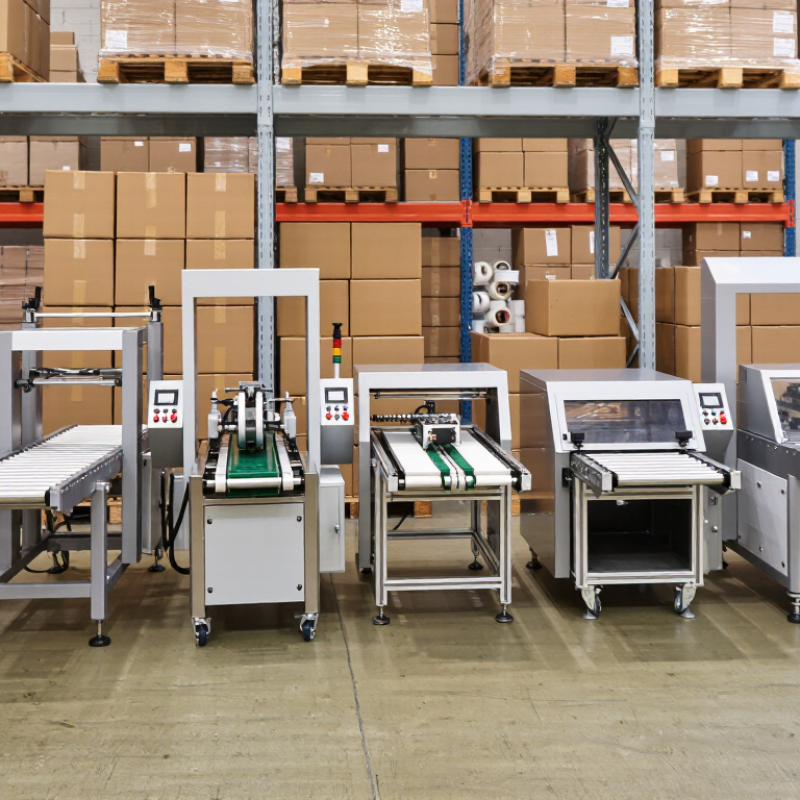
The first option is a uniform carton sealer for stable box sizes and continuous production. A random carton sealer adjusts automatically for mixed carton heights. A top-and-bottom sealer applies tape to both surfaces with consistent pressure. A side-belt machine handles tall or narrow cartons with better balance. A top-belt model suits lightweight boxes that need gentle support. A hot-melt case sealer uses adhesive instead of tape and works well for clean, professional closures. A packing-line sealer with automatic carton detection can connect with conveyors, weighing systems, and labeling equipment.
Each machine serves a different packaging need. Strong cartons may tolerate higher compression. Thin cartons may buckle. That detail matters. Buyers should check box dimensions, board strength, sealing speed, voltage, spare parts, and safety certifications before ordering. Local service support also affects long-term reliability, especially across borders. A machine that performs well in testing may struggle with dusty cartons or uneven flaps. Real production trials are valuable.
No machine is perfect. I would request sample runs with the buyer’s actual cartons and products. Operators should test jams, tape changes, cleaning access, and emergency stops. These practical checks often reveal more than a polished specification sheet.
| Machine Type | Best For | Box Style | Typical Box Size Range (L × W × H) | Sealing Speed | Tape Specification | Power Requirement | Key Advantage |
|---|---|---|---|---|---|---|---|
| Uniform-Size Automatic Sealer | High-volume lines using one standard carton size | Regular slotted cartons with consistent dimensions | Approximately 150–500 × 120–500 × 100–500 mm | Up to approximately 30 cartons per minute | 48, 60, or 75 mm pressure-sensitive tape | Typically 0.2–0.4 kW; single-phase or three-phase options | Simple construction, compact footprint, and low operating cost |
| Random-Size Automatic Sealer | E-commerce and logistics operations handling mixed cartons | Regular slotted cartons with variable length, width, and height | Approximately 150–650 × 120–500 × 100–500 mm | Up to approximately 20 cartons per minute | 48, 60, or 75 mm pressure-sensitive tape | Typically 0.4–0.8 kW; sensor-controlled adjustment | Automatically detects carton dimensions and adjusts sealing height and width |
| Top-and-Bottom Belt Sealer | Continuous packaging lines and medium-to-heavy cartons | Regular slotted cartons with top and bottom flaps | Approximately 150–600 × 120–500 × 120–500 mm | Approximately 18–30 cartons per minute | 48, 60, or 75 mm tape; top and bottom application | Typically 0.4–0.8 kW | Stable carton transport and reliable sealing on long production runs |
| Heavy-Duty Case Sealer | Dense, filled, or heavier cartons in industrial packaging | Regular slotted cartons with reinforced corrugated board | Approximately 200–700 × 150–600 × 150–600 mm | Approximately 10–20 cartons per minute | 60 or 75 mm reinforced pressure-sensitive tape | Typically 0.75–1.5 kW; three-phase configurations available | Strong drive belts, rigid frames, and higher load-handling capacity |
| Stainless-Steel Washdown Sealer | Food, beverage, chemical, and hygienic production areas | Regular slotted cartons; moisture-resistant board may be used | Approximately 150–600 × 120–500 × 100–500 mm | Approximately 12–25 cartons per minute | 48, 60, or 75 mm tape suitable for the application environment | Typically 0.4–1.0 kW; electrical protection varies by configuration | Corrosion-resistant surfaces and easier cleaning than painted steel equipment |
| Side-Belt Case Sealer | Tall, narrow, lightweight, or unstable cartons | Regular slotted cartons with sufficient side-wall contact | Approximately 150–600 × 120–500 × 150–650 mm | Approximately 15–25 cartons per minute | 48, 60, or 75 mm pressure-sensitive tape | Typically 0.4–0.8 kW | Side-mounted belts improve carton stability when top pressure is unsuitable |
| Corner-and-Edge Sealing Machine | Retail-ready cartons and packages requiring extra closure support | Regular slotted cartons, including cartons with exposed edges | Approximately 200–650 × 150–550 × 120–550 mm | Approximately 8–18 cartons per minute | 48, 60, or 75 mm tape; multiple sealing positions | Typically 0.5–1.0 kW | Applies tape across selected top edges or corners to improve closure security |

Note: Performance ranges are typical planning values for industrial carton-sealing equipment. Actual capacity depends on carton quality, product weight, tape material, conveyor layout, operator loading, and the selected machine configuration.
Choosing an automatic box sealing machine starts with the product, not the machine’s advertised speed. Fragile goods may need gentle handling and controlled compression. Heavy cartons require a stronger frame, wider belts, and stable side guides. Dusty products can affect sensors and tape adhesion.
Measure the box length, width, height, and weight across the full production range. One carton may run smoothly, while a shorter box twists under the same settings. Check flap quality, cardboard strength, and whether boxes arrive square. Small variations matter. I have seen operators blame the sealer when poor carton forming caused repeated jams.
Production volume also changes the right choice. A small warehouse may need simple adjustments and low maintenance rather than maximum speed. High-volume lines need continuous operation, quick changeovers, emergency stops, and accessible wear parts. Compare real output, not the number shown in a brochure. Ask for a trial using your own boxes and tape. Watch the machine after several hours, when heat, dust, and operator fatigue appear. The trial may expose an uncomfortable truth: your cartons are inconsistent. That problem may need fixing before automation pays back.
Consider tape width, power requirements, floor space, noise, and local technical support. Sensors should be easy to clean and replace. Training must cover setup, jam clearing, and safe isolation before maintenance. A reliable machine is not always the fastest one. It is the one that matches your products, cartons, staff, and daily workload.
For global buyers, an automatic box sealing machine should be judged beyond speed and price. Safety comes first. Check guarding, emergency stops, electrical protection, and risk assessment against ISO 12100 and IEC 60204-1. The machine should also match the destination market’s conformity requirements. A missing declaration or incomplete technical file can delay customs clearance. It happens more often than expected.
Shipping creates another practical risk. Confirm crate dimensions, gross weight, moisture protection, spare-parts packaging, and unloading equipment before payment. The World Bank Logistics Performance Index 2023 evaluates customs, infrastructure, tracking, and delivery reliability. These factors directly affect installation schedules. Request a shipping checklist, not only a quotation. A low price can still be expensive.
Tips: Ask for a factory acceptance test using your cartons, tape, and target speed. Require manuals, wiring diagrams, training videos, and a documented spare-parts list. MHI’s 2024 Annual Industry Report found that 83% of supply-chain leaders expected technology adoption to increase. Support capacity matters. Define remote response time, technician availability, warranty coverage, and software-update rules in writing. A supplier may promise fast help, but time-zone gaps and unclear responsibilities can weaken that promise. I would also keep critical wear parts locally, even when the supplier’s forecast seems optimistic.