Leave Your Message

How to Choose a Tubular Stranding Machine in 2026?

Choosing a Tubular Stranding Machine in 2026 is not simply a matter of comparing prices, speeds, or catalogue photographs. The right decision begins with the cable itself: conductor diameter, strand construction, material hardness, lay length, production volume, and required surface quality. A machine that performs beautifully on copper may struggle with compacted aluminium. Small differences matter.

Cable manufacturing consultant Dr. Heinz W. Schmitz offers a useful warning: “A stranding machine must be chosen for the process, not for the brochure.” This principle deserves careful attention. In a real factory, operators notice vibration before managers notice rejected coils. They hear bearing noise. They inspect uneven tension near the take-up. These details reveal whether a machine truly fits the production environment.

This guide examines the practical criteria behind a reliable Tubular Stranding Machine purchase. It considers cage capacity, pay-off control, tension stability, rotational speed, tooling flexibility, automation, maintenance access, energy consumption, and supplier support. Safety and documented compliance remain essential. So does after-sales service.

The cheapest option may not be economical.

A high-speed model can create unnecessary waste when changeovers are frequent. An advanced control system may also confuse operators without proper training. That is an uncomfortable point, but it matters. Buyers should compare measurable output with actual factory conditions, not imagined performance. The best machine is usually the one that delivers stable quality, manageable maintenance, and predictable production over many years.

How to Choose a Tubular Stranding Machine in 2026?

Define the Cable Requirements and Production Goals

How to Choose a Tubular Stranding Machine in 2026?

Define the Cable Requirements and Production Goals

Start with the cable, not the machine brochure. Record conductor material, wire diameter, strand count, lay length, and finished diameter. Also define acceptable resistance, ovality, tension variation, and surface damage. IEC 60228 conductor classes can guide flexibility and strand construction choices. The target market matters too. The IEA’s Global EV Outlook 2025 reported more than 17 million electric car sales worldwide in 2024. That growth increases pressure for consistent automotive and charging-cable production.

Production goals should be measurable. State the required output in kilograms per hour, annual operating hours, and planned product changeovers. A machine rated for high speed may perform poorly on small batches. It may also create more scrap during acceleration. Check the usable speed range, not only the maximum speed. Ask for trial data using your actual wire sizes and materials. Request measurements for tension stability, pitch accuracy, noise, and energy use.

Do not overlook maintenance. A tubular stranding line can lose valuable hours through difficult access, worn guides, or slow reel changes.

In my experience, the fastest machine is not always the most productive one.

A modestly rated line may deliver better output when setup time and rejects are included. This is where the decision becomes less perfect. Production forecasts can change, so leave room for future strand designs without paying for capacity you cannot use.

Compare Tubular Strander Types and Operating Configurations

Choosing a tubular stranding machine starts with the product, not the advertised speed. Examine conductor diameter, strand count, lay length, and required surface quality. A horizontal tubular strander suits long production runs and easier material loading. A vertical configuration can reduce floor space, but it may complicate access during bobbin changes.

Different tubular designs support different operating priorities. A single-layer machine is often simpler to adjust and maintain. Multi-layer configurations increase output, yet they demand tighter tension control between cages. Fixed payoffs provide stable feeding for consistent wire. Rotating payoffs can handle complex strand arrangements, but they add inertia and setup work. Check the take-up range carefully. A narrow range may limit future products.

Ask for measured results, not only catalog figures. During a factory trial, inspect tension variation, bearing temperature, noise, and actual changeover time. Short samples can hide problems. Run the machine long enough to expose heating and uneven winding. Servo-controlled tension improves repeatability, especially with fine conductors. However, advanced controls do not correct poor alignment or unsuitable bobbins.

The machine should match your operators, maintenance tools, and plant layout. Leave room for safe access around rotating sections. Review spare-part availability and training documents before purchase. Energy use matters too, particularly when several cages run continuously. The perfect configuration rarely exists. A machine chosen only for maximum speed may perform poorly on your smallest conductor. Expect some compromise, and document why each setting was selected.

How to Choose a Tubular Stranding Machine in 2026?

Compare tubular strander types and operating configurations for conductor, cable, rope, and specialty stranding applications

Machine Type Typical Number of Bobbins Typical Product Range Typical Operating Speed Typical Lay-Length Range Recommended Operating Configuration Best-Fit Applications Main Selection Considerations
Compact Tubular Strander 6–12 Small conductors and flexible cables, approximately 1–8 mm finished diameter Up to approximately 1,500–2,500 rpm, depending on material, bobbin size, and lay length Approximately 25–250 mm Single-wire or multiple-wire pay-off with capstan, take-up, and basic tension control Control cables, small flexible conductors, instrumentation cables, and communication cables
Standard Tubular Strander 12–24 Conductors and cables, approximately 3–20 mm finished diameter Approximately 600–1,500 rpm, depending on product construction and machine configuration Approximately 40–400 mm Motorized pay-offs, programmable pitch control, capstan or caterpillar haul-off, and automatic take-up Power cables, industrial cables, automotive cables, and general-purpose stranded products
Heavy-Duty Tubular Strander 18–36 Large conductors, armored cores, and robust cable constructions, approximately 10–40 mm finished diameter Approximately 250–900 rpm, with lower speeds generally used for larger or heavier products Approximately 80–800 mm High-torque drive, reinforced bobbin carriers, closed-loop tension control, heavy-duty capstan, and powered take-up Large power conductors, mining cables, industrial umbilicals, and mechanically demanding cable cores
High-Speed Tubular Strander 6–18 Small and medium-size conductors, approximately 1–12 mm finished diameter Approximately 1,500–3,000 rpm when compatible with the product and bobbin design Approximately 20–250 mm Servo-controlled pay-offs, electronic synchronization, low-inertia bobbins, automatic tension compensation, and precision take-up High-volume flexible cables, fine-wire conductors, data cables, and repeat production runs
Rigid-Frame Tubular Strander 12–36 Medium and large conductors, approximately 5–35 mm finished diameter Approximately 300–1,200 rpm Approximately 50–600 mm Fixed or reinforced tubular frame with synchronized drives, independent tension adjustment, and guided take-up Power and industrial cables requiring consistent geometry and controlled compression
Basket- or Cage-Integrated Tubular Line Typically 6–24 tubular bobbins plus upstream or downstream auxiliary pay-offs Multi-layer cable constructions and products requiring several stranding stages Approximately 200–1,200 rpm for the tubular section, depending on the complete line design Approximately 40–800 mm Integrated pre-twist or post-twist stage, dancer control, accumulator, capstan, and synchronized take-up Complex power cables, concentric layers, composite cables, and multi-stage cable production
Specialty Tubular Strander for Rope or Braided Products 6–24, depending on strand count and rope construction Flexible wire rope, synthetic-fiber rope, hybrid products, and specialty stranded assemblies Approximately 100–1,000 rpm, determined by material stretch, strand count, and product diameter Approximately 30–1,000 mm Low-tension pay-off, adjustable guide system, controlled back-twist, dancer, and application-specific take-up Rope cores, flexible reinforcement, specialty cords, and products requiring controlled twist balance
Data note: The values shown are typical engineering ranges for comparison, not universal machine limits. Actual performance depends on conductor material, wire diameter, strand count, bobbin dimensions, allowable tension, lay length, insulation or covering process, and local safety requirements.

Evaluate Machine Capacity, Speed, and Stranding Quality

How to Choose a Tubular Stranding Machine in 2026?

Evaluate Machine Capacity, Speed, and Stranding Quality

Choosing a tubular stranding machine begins with your actual production range. Capacity should match conductor size, strand count, and planned operating hours. Check the maximum and minimum wire diameters carefully. A machine rated for large conductors may perform poorly with fine wires. Leave room for growth.

Speed needs practical testing, not impressive figures alone. High rpm can reduce output when tension becomes unstable. Ask for production data at your target diameter and lay length. Compare running speed, changeover time, and rejected coils. Do not trust speed alone. A slower machine may deliver more usable cable each shift. Operators should also confirm whether the drive maintains steady rotation during acceleration and stopping.

Stranding quality depends on tension control, guide alignment, and consistent bobbin movement. Inspect sample coils for gaps, crossed wires, uneven lay, and surface marks. Measure lay length at several points, not only near the coil end. Request a repeatable trial using your own wire, if possible. In practice, small tension differences can create visible defects after insulation. I once saw a trial pass visually but fail dimensional checks later. That mistake matters. Review maintenance access, sensor stability, and calibration records before purchase. Reliable results come from both machine design and disciplined operation.

Check Automation, Safety, Maintenance, and Energy Features

How to Choose a Tubular Stranding Machine in 2026?
Check Automation, Safety, Maintenance, and Energy Features

Choosing a tubular stranding machine in 2026 requires more than checking production speed. Automation should match your operators, product range, and quality records. Look for recipe storage, closed-loop tension control, automatic pay-off adjustment, and clear fault messages. These features reduce manual corrections and make shift changes more consistent. Do not buy automation blindly. An overly complex interface can slow a small team, especially during training.

Safety deserves direct inspection, not only a checklist. Confirm that guards stop the machine quickly when opened. Check emergency stops, interlocks, noise levels, and access around rotating parts. Sensors should detect broken wires and abnormal tension before damage spreads. Ask whether safety functions are tested regularly and documented clearly. A reliable supplier should provide operating instructions, risk information, and practical operator training.

Maintenance details often decide long-term performance. Choose accessible lubrication points, visible wear indicators, and standard replacement parts. Remote diagnostics can help, but local troubleshooting remains important when production stops. Review cleaning time, spare-part availability, and service response arrangements. Energy monitoring is also valuable. Efficient motors, standby modes, and controlled heating can lower unnecessary consumption. I once focused too heavily on output speed and underestimated setup losses. That mistake changed my evaluation method. Now I measure energy per production batch, maintenance minutes, and rejected material during a trial run.

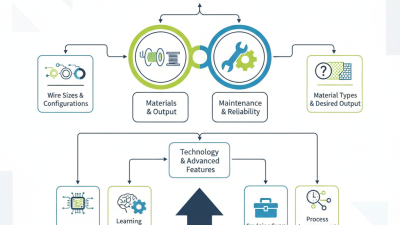
A practical procurement model should give the highest priority to operator safety and process automation, while also accounting for maintenance accessibility and energy consumption. The percentages show a balanced evaluation framework for comparing tubular stranding machines without using company or brand data.

Assess Supplier Support, Total Cost, and Future Scalability

When choosing a tubular stranding machine in 2026, supplier support deserves the same attention as machine speed.

Ask for commissioning records, operator training hours, spare-part lead times, and remote troubleshooting procedures. A supplier promising “fast service” is not enough. Request measurable response targets and contact details for existing users. During factory visits, inspect cable samples, tension stability, guarding, and noise levels. Small details matter.

Total cost extends far beyond the purchase invoice.

Track electricity consumption, lubricant use, tooling replacement, setup labor, rejected cable, and planned downtime. The International Energy Agency’s Electricity Grids and Secure Energy Transitions report estimates annual grid investment must exceed 600 billion dollars by 2030. That growth may increase demand for reliable cable production, but it will not forgive unstable equipment. A cheaper machine can become expensive after repeated strand breaks.

Scalability requires modular payoff, not vague promises.

Check whether the frame supports additional bobbins, larger conductor sizes, digital monitoring, and future insulation-line integration. The U.S. Department of Energy’s National Transmission Needs Study indicates transmission capacity may need to rise 60% by 2030 and triple by 2050. Choose controls that can exchange production data with existing systems. I would not assume every “upgrade-ready” design is truly ready. Ask for drawings, software policies, and upgrade pricing in writing. A spreadsheet can still miss one costly night shift.