Top 10 Benefits of Tmg Palletizer for Global Buyers?
In today's rapidly evolving manufacturing landscape, the Tmg Palletizer stands out as a revolutionary tool for global buyers. Its efficiency in automating palletizing tasks significantly reduces labor costs and enhances productivity. According to a recent report by the International Palletizing Association, businesses can improve throughput by up to 30% with automated systems like the Tmg Palletizer.
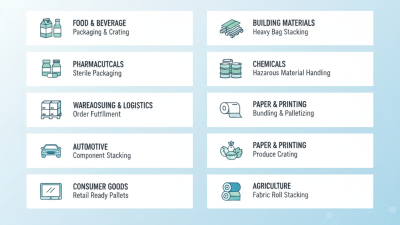
Industry expert Dr. Alex Thompson notes, “Investing in advanced palletizing solutions, such as the Tmg Palletizer, is essential for staying competitive.” This statement emphasizes the growing importance of technology in logistics. The Tmg Palletizer caters to diverse industries, from food and beverage to pharmaceuticals, offering robust solutions tailored to each sector's unique needs.
However, as companies adopt new technologies, they must also consider potential challenges. While automation drives efficiency, it may require a shift in workforce dynamics. Balancing technology with human expertise is crucial. The Tmg Palletizer not only boosts productivity but also prompts reflection on future industry practices. As the automation wave continues, the decision to implement such systems will shape the future of manufacturing.
Key Features of TMG Palletizers That Enhance Operational Efficiency
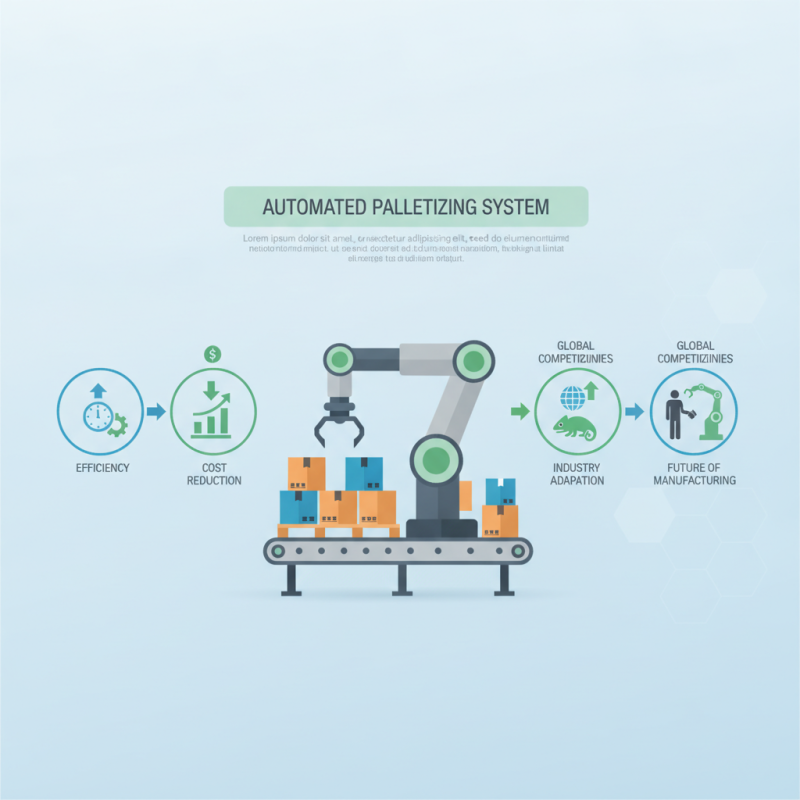
TMG palletizers stand out due to their advanced features that enhance operational efficiency. These machines automate the packaging process, reducing manual labor. As a result, companies can allocate their workforce to more critical tasks. The efficiency of TMG palletizers leads to faster production cycles. This speed is essential for meeting tight deadlines in a competitive market.
User-friendly interfaces are another key feature. Operators can easily adjust settings, which minimizes downtime during product changes. The machine's agility allows it to handle various product sizes. This adaptability means businesses can scale operations without significant investments in new equipment. Furthermore, data analytics capabilities provide real-time feedback on performance. This feature helps identify issues before they impact productivity.
Not everything is perfect, however. Some users report a learning curve for new operators. Initial setup can be complex, requiring trained personnel. Regular maintenance is crucial for optimal performance. Neglecting this can lead to mechanical failures. While TMG palletizers offer significant benefits, ongoing training and support are necessary for long-term success. Balancing these factors will determine operational efficiency in the long run.
Impact of TMG Palletizers on Reducing Labor Costs in Warehousing
The integration of TMG palletizers in warehousing significantly reduces labor costs, a crucial aspect for global buyers. By automating the palletizing process, these systems streamline operations and minimize manual handling. Fewer workers are needed, which directly lowers payroll expenses. Additionally, automation mitigates the risks associated with human error, leading to more efficient operations. Over time, this efficiency translates to substantial savings.
Another benefit is the optimized use of warehouse space. Automated palletizers can stack goods more efficiently compared to manual methods. This maximizes storage capacity and improves inventory management. Furthermore, less reliance on manual labor allows companies to redirect resources. Employees can focus on higher-value tasks rather than repetitive manual labor. However, companies must consider initial investment costs and ongoing maintenance.
Some may find the transition to automation challenging. Training staff to work alongside machines requires time and effort. There might be resistance to change from employees who are accustomed to traditional methods. Organizations need to approach this shift with a clear strategy. Engaging employees early can ease this transition. While TMG palletizers offer clear advantages, careful planning is essential to fully realize their benefits in reducing labor costs.
Case Studies: Increased Productivity with TMG Palletizers in Global Markets
In global markets, TMG palletizers have shown remarkable results in enhancing productivity. One case study revealed that a leading beverage manufacturer increased its packaging speed by 30% after implementing TMG systems. This boost allowed them to meet rising consumer demand without compromising quality. The elimination of manual errors contributed significantly to improved efficiency.
Another example comes from a food processing plant that adopted TMG technology. This facility reported a dramatic 25% reduction in operational costs. Their labor hours decreased, allowing workers to focus on more strategic tasks. Achieving these gains highlights how automation can address workforce challenges and streamline operations.
However, not all deployments are seamless. Some companies faced initial integration issues with existing infrastructure. Adjusting workflows and training staff required time. Despite these obstacles, the long-term benefits proved worth the effort. The industry trend indicates that companies investing in automation are likely to see substantial returns, with an estimated average ROI of 15-20% within two years.
Top 10 Benefits of Tmg Palletizer for Global Buyers
| Benefit |
Description |
Case Study Example |
Productivity Improvement (%) |
| Increased Efficiency |
Automates the palletizing process, reducing labor costs. |
A beverage company saw a 30% increase in output. |
30% |
| Reduced Labor Costs |
Lowers the need for manual labor in palletizing tasks. |
A food packaging plant cut labor expenses by 25%. |
25% |
| Improved Accuracy |
Reduces errors associated with manual palletizing. |
A pharmaceutical company reported a 15% decrease in misloaded pallets. |
15% |
| Increased Flexibility |
Handles various product sizes and shapes with ease. |
A dairy company added new products without new equipment. |
N/A |
| Enhanced Safety |
Minimizes worker injuries associated with heavy lifting. |
A logistics firm reduced accidents by 40%. |
40% |
| Scalability |
Easily adapts to increasing production demands. |
A snack manufacturer doubled output capacity. |
100% |
| Lower Energy Consumption |
Optimized power usage reducing operational costs. |
A brewery saved 20% on energy bills. |
20% |
| Consistent Quality |
Ensures consistent pallet configurations and stability. |
A cosmetics company maintained product integrity during shipping. |
N/A |
| Data Collection |
Provides analytics for tracking productivity and efficiency. |
An electronics manufacturer improved decision-making through data insights. |
N/A |
| Improved Supply Chain Management |
Streamlines operation, enhancing logistics and distribution. |
A furniture manufacturer reduced lead times by 35%. |
35% |
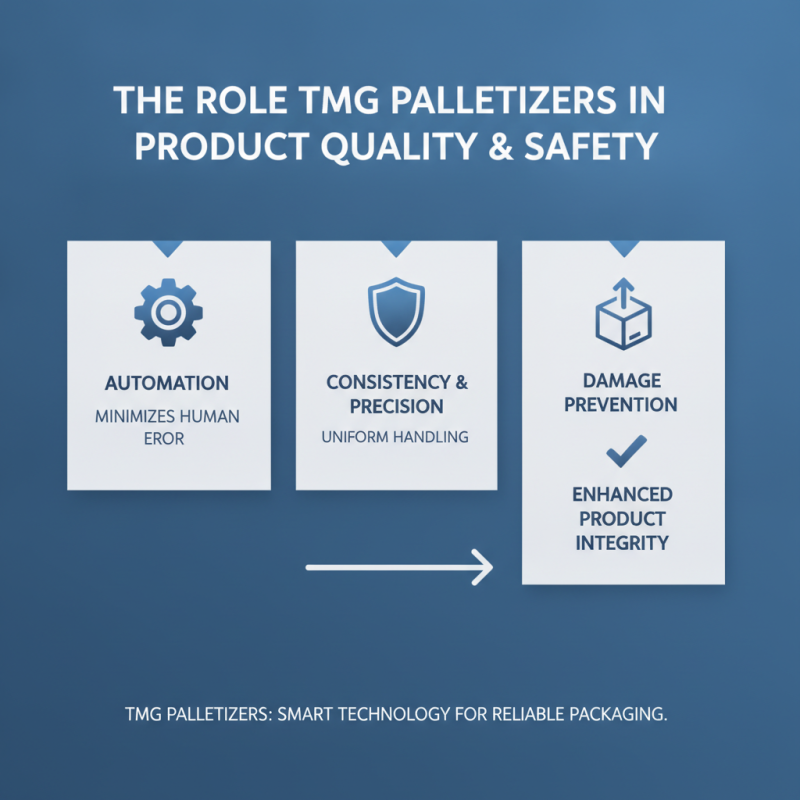
The Role of TMG Palletizers in Ensuring Product Quality and Safety
TMG palletizers play a vital role in maintaining product quality and safety. By automating the palletizing process, they minimize human errors. This technology ensures that products are handled consistently and precisely, which is crucial in preventing damage during packaging.
The reliability of TMG palletizers is evident in their ability to adapt to various types of products. Regular audits and adjustments are often needed to optimize their performance. While they enhance efficiency, human oversight remains essential. Employees must still monitor the palletizing process to catch any anomalies that may arise, ensuring quality control.
Additionally, continuous training for operators helps in understanding machine capabilities. Knowledge of these machines fosters an environment of safety and proficiency. However, relying solely on technology could lead to oversight. Balancing automation with human intuition can refine the overall operation, ensuring product integrity throughout the supply chain.
Environmental Benefits of Using TMG Palletizers for Sustainable Operations
TMG palletizers contribute significantly to sustainable operations across various industries. Their design emphasizes energy efficiency, reducing the overall carbon footprint. Automated systems minimize human error, leading to less waste and improved productivity. With a shift toward automation, the need for manual labor diminishes. This transition can foster a more eco-friendly workplace.
The materials used in TMG palletizers are often recyclable. Using robust, durable materials results in longer lifespans. This reduces the frequency of replacements. However, it raises questions about initial manufacturing processes. Can they be always optimized for lower emissions? Overall, this technology encourages businesses to assess their supply chains more thoughtfully.
While advancements are impressive, the shift may not be seamless. Training staff on new technology can be challenging. Proper implementation and maintenance of palletizers require ongoing investment. These hurdles remind us that every sustainable solution should be examined continually for improvement. The journey toward sustainability is ongoing. Some operational bottlenecks may still exist, but the potential benefits are substantial.
Top 10 Benefits of TMG Palletizer for Global Buyers
This chart illustrates the top ten benefits of using TMG Palletizers for global buyers. Each benefit is scored based on its impact on operational efficiency, cost reduction, sustainability, and quality assurance, providing valuable insights for businesses considering these solutions.