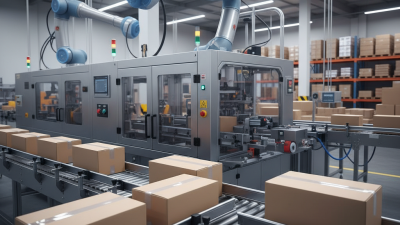
Top 10 Palletizing Robot Applications You Should Know?
In the rapidly evolving manufacturing landscape, "Palletizing Robot Applications" are shaping the future of logistics. Experts like John Smith, a leading figure in robotics, states, “Robotic palletizing is no longer a luxury; it’s a necessity for efficiency.” As companies strive for automation, understanding the top applications becomes crucial.
Palletizing robots are not just limited to a single industry. They transform processes across various sectors, from food and beverage to pharmaceuticals. These machines enhance precision, speed, and reliability in material handling. However, industries still face challenges in integrating these technologies effectively. The transition can be daunting, and not all companies achieve seamless implementation.
Through exploring different applications of palletizing robots, we can appreciate their impact. Some companies may overlook potential benefits in flexibility and cost savings. By recognizing these factors, businesses can better strategize their automation efforts. Adopting palletizing robotics is a journey filled with learning opportunities, not just immediate gains. Companies must continuously refine their approach to harness the full potential of "Palletizing Robot Applications.
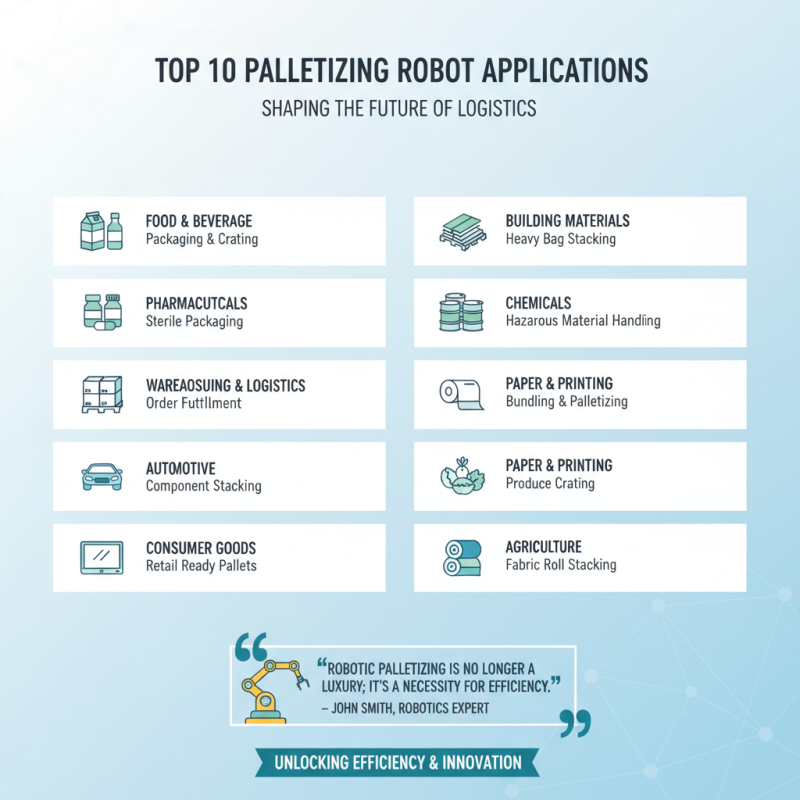
Top Applications of Palletizing Robots in the Food Industry
Palletizing robots are transforming the food industry. They handle repetitive tasks, freeing up human workers for more complex roles. These robots efficiently stack products onto pallets, ensuring stability and optimizing storage. The ability to increase speed while maintaining accuracy helps businesses meet consumer demand.
In the food sector, these robots manage diverse items. From bags of flour to boxes of beverages, their versatility is impressive. However, integrating these systems is not without challenges. Training staff to work alongside robots requires time and patience. Furthermore, regular maintenance is crucial to avoid downtime.
Still, the benefits often outweigh the difficulties. Enhanced productivity and reduced labor costs can lead to significant savings. As technology advances, these robots will become even more efficient. The food industry stands to gain immensely, adapting to new consumer preferences with improved agility.
Efficiency Gains in Beverage Bottling with Robotic Palletizers
Robotic palletizers are transforming the beverage bottling industry.
These machines streamline the packing process, increasing efficiency significantly. With high-speed operations, they can handle large volumes, reducing the time required for packaging.
This speed is especially crucial in a market that demands rapid fulfillment. Operators benefit from these machines as they free up human labor for more complex tasks.
However, getting the most from these systems requires careful planning. Integrating robotic palletizers into existing workflows can be a challenge. There are various factors to consider, such as
layout configurations and line speeds. Not every system is a perfect fit for all operations. Ensuring compatibility with different bottle shapes and sizes is essential for optimal performance.
Mistakes in design or implementation can lead to inefficiencies. Regular maintenance of robotic equipment is also vital. A lapse in upkeep could lead to breakdowns, causing delays in production.
Companies must continuously evaluate their automated systems. Identifying areas for improvement can enhance productivity over time.
Robotic palletizers hold immense potential, but they need to be managed wisely.
Automotive Industry: Enhancing Production Lines with Palletizing Robots
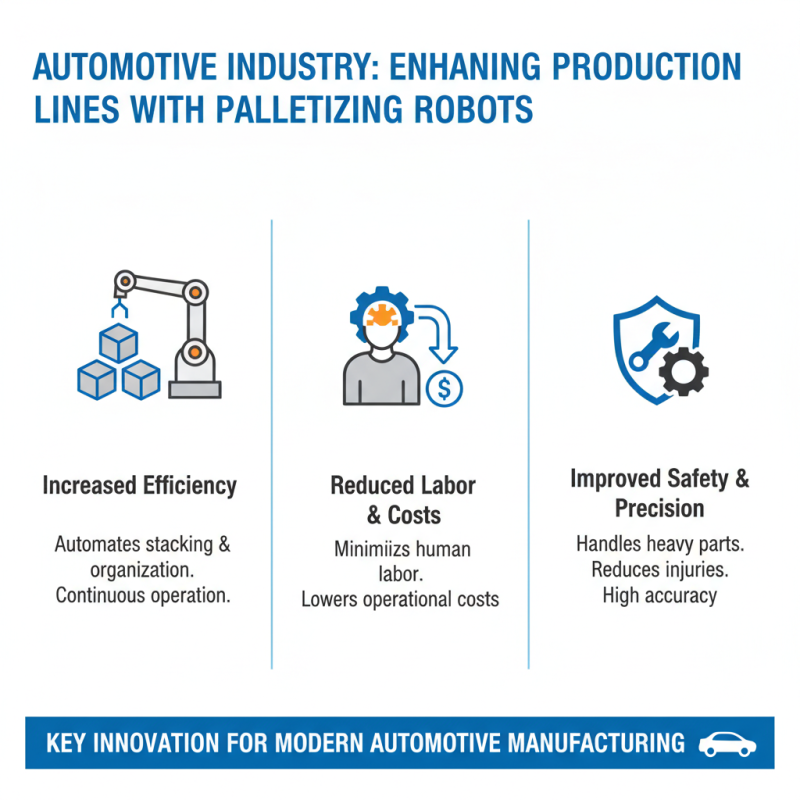
The automotive industry is rapidly evolving. One key innovation is the use of palletizing robots, which enhance production efficiency. These robots automate the process of stacking and organizing components, minimizing human labor. With precision and speed, they can handle heavy parts, reducing the risk of workplace injuries. A well-implemented robotic system can operate continuously, increasing output significantly.
Palletizing robots also present challenges. Their initial setup can be complex and costly. Companies must ensure that the robots are integrated smoothly into existing workflows. Training staff to work alongside these machines is crucial. There’s always a learning curve, and adaptation may take time. Continuous evaluation of their performance is needed to maximize benefits.
Moreover, while these robots can improve accuracy, some errors can occur. Routine maintenance is essential to keep them functioning optimally. Companies must develop plans to address any malfunctions swiftly. A strategy that marries human oversight with robotic efficiency is vital. Balancing technology with experienced personnel can pave the way for success in automotive manufacturing.
Pharmaceutical Sector: Ensuring Precision with Robotic Palletizing Systems
In the pharmaceutical sector, precision is non-negotiable. Robotic palletizing systems play a vital role in ensuring the accuracy and efficiency of packaging processes. These robots can handle sensitive materials carefully, reducing the risk of contamination. They also operate quickly, keeping pace with high-demand production lines. This speed is crucial in a sector where delays can lead to significant financial losses.
However, integrating robotic systems isn’t without challenges. Training staff to work alongside robots requires time and resources. There can be initial setbacks in achieving optimal workflow. The design of robotic arms needs to be tailored for different products, which adds an extra layer of complexity. Despite these hurdles, the benefits often outweigh the difficulties.
Using robotic systems improves safety as well. Human error is minimized, reducing the chances of mishandling products. As companies strive to enhance their operational capacities, robotic palletizing is gaining traction. It allows manufacturers to focus more on quality control and innovation. Still, companies need to reflect on their specific needs before making the transition.
Top 10 Palletizing Robot Applications in the Pharmaceutical Sector
This chart illustrates the usage of robotic palletizing systems across various applications in the pharmaceutical sector, highlighting the importance of precision in each area.
Consumer Goods: Streamlining Packaging Processes Using Robotic Solutions
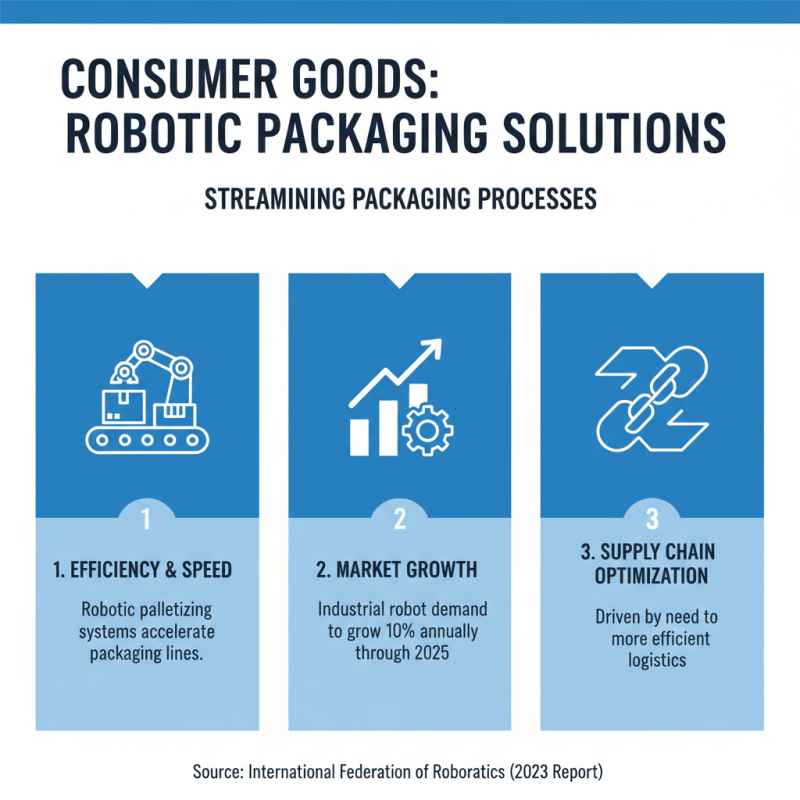
In today's consumer goods sector, efficiency is vital. Robotic palletizing systems offer a transformative solution for packaging processes. According to a report by the International Federation of Robotics, the demand for industrial robots is expected to grow by 10% annually through 2025. This is driven largely by the need for more efficient supply chains.
Robotic solutions enhance accuracy in product placement and reduce labor costs. Implementing these systems can result in a 30% decrease in packing errors, positively impacting overall production. Companies are leveraging automation not only to improve speed but also to elevate safety standards. Reduced human interaction in hazardous environments leads to fewer workplace injuries.
However, integrating robotics into existing systems is not without challenges. Staff must adapt to new technologies, which can cause temporary disruptions. Moreover, the initial investment can be significant. Future sustainability of these solutions relies on continuous training and evaluation. As firms navigate these complexities, ensuring a balance between automation and human oversight becomes essential.