Top Motor Winding Cable Types and Their Applications for Optimal Performance?
Motor Winding Cable is essential in various applications. These cables connect the winding of electric motors to the power supply. The selection of the right type is crucial for optimal performance.
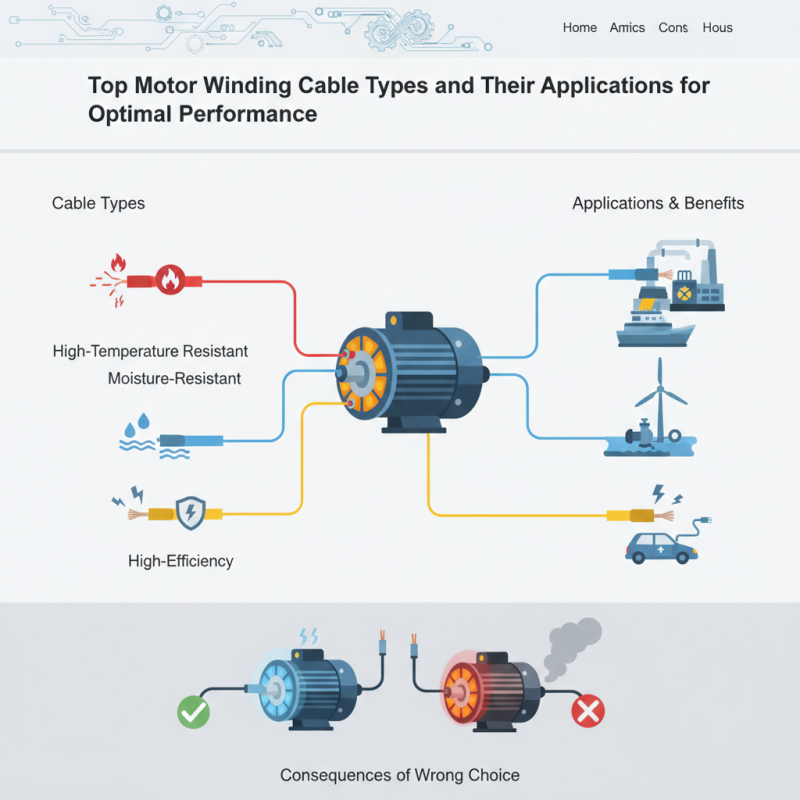
Different types of Motor Winding Cable offer unique benefits. For instance, some are designed for high temperature, while others resist moisture. Understanding these specifics can greatly enhance the efficiency of motor systems. Yet, many users overlook the significance of these details.
Choosing the wrong cable can lead to serious issues. It may result in overheating, inefficiency, or even motor failure. This highlights the importance of proper knowledge in selecting the appropriate Motor Winding Cable. It is a reminder that expertise matters in ensuring reliable operation.
Overview of Motor Winding Cables: Importance and Functions
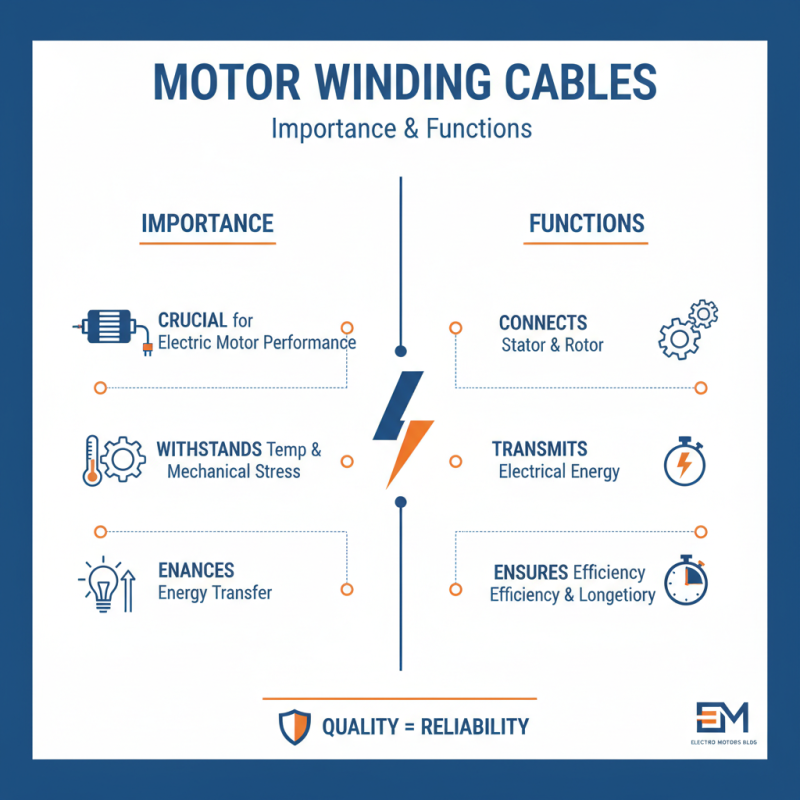
Motor winding cables play a crucial role in the performance of electric motors. They connect the stator and rotor, transmitting electrical energy that drives motor operation. These cables are designed to withstand temperature changes and mechanical stresses. Their materials and construction are vital for ensuring efficiency and longevity. High-quality cables can enhance energy transfer and reduce heat loss.
Understanding the functions of these cables is essential for optimal performance. Insulation is key, protecting against electrical shorts and wear. Proper insulation materials, like PVC or rubber, can withstand high voltages and extreme conditions. Additionally, the cable gauge influences the current capacity. Choosing the right gauge ensures that the motor operates effectively without overheating.
While many considerations exist, some users may overlook the importance of choosing the correct cable type. Mistakes can lead to inefficiencies or motor failure. Regular inspections can help ensure that the motor winding cables remain in good condition. Identifying wear early can prevent larger issues and enhance overall performance. Proper maintenance is just as vital as the initial selection of components.
Types of Motor Winding Cables: A Comparison of Common Materials
When selecting motor winding cables, different materials play critical roles in performance. Copper and aluminum are the most common choices, each with unique advantages. Copper wires are known for their excellent conductivity, making them ideal for applications requiring efficient power transmission. However, they tend to be more expensive than aluminum counterparts. Aluminum wires are lightweight and corrosion-resistant, but they offer lower conductivity.
Insulation materials also vary significantly and should be considered for optimal performance. PVC and rubber are popular options. PVC insulation is affordable and provides good resistance to moisture and chemicals. Rubber, while more costly, offers superior flexibility and durability under extreme conditions. However, rubber insulation can degrade over time, necessitating periodic inspections.
Conductivity and insulation should be balanced against factors like cost and application requirements. Choosing the right combination can enhance motor efficiency and lifespan. Sometimes, compromises are necessary. Relying solely on one type may limit overall effectiveness. Evaluating specific project needs is essential to avoid common pitfalls. Understanding these differences can lead to better decisions in motor winding cable selection.
Top Motor Winding Cable Types and Their Applications for Optimal Performance
| Cable Type |
Material |
Voltage Rating |
Temperature Rating |
Common Applications |
| Polyvinyl Chloride (PVC) Cable |
PVC |
600 V |
-10°C to 70°C |
General purpose motors, household appliances |
| Thermoplastic Elastomer (TPE) Cable |
TPE |
300 V |
-40°C to 90°C |
Flexible applications, robotics |
| Rubber Insulated Cable |
Rubber |
600 V |
-40°C to 90°C |
Industrial motors, outdoor applications |
| Silicone Rubber Cable |
Silicone |
600 V |
-60°C to 180°C |
High-temperature applications, automotive |
| EPR Insulated Cable |
Ethylene Propylene Rubber |
1 kV |
-40°C to 90°C |
Transformer connections, power generation |
Applications of Different Motor Winding Cable Types in Industry
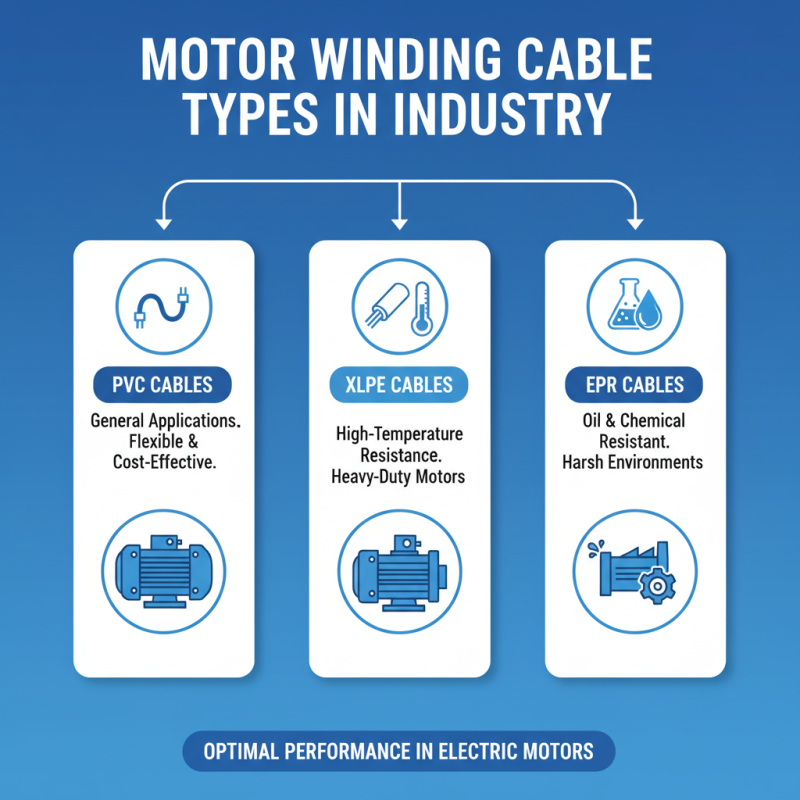
Motor winding cables play a crucial role in industrial applications. They are essential for delivering optimal performance in electric motors. Different types of cables, such as PVC, XLPE, and EPR, cater to specific needs. PVC cables are popular for general applications due to their flexibility. XLPE cables can withstand high temperatures, making them ideal for heavy-duty motors. EPR cables offer excellent resistance to oils and chemicals, suitable for harsh environments.
In industries like manufacturing and mining, choosing the right cable is vital. According to a recent industry report, improper cable selection can lead to efficiency losses of up to 15%. Many operations face downtime due to cable failures, emphasizing the need for quality and reliability.
Tip: Regularly inspect motor winding cables and replace them when signs of wear appear. It prevents further issues in the future.
Cable insulation is another important factor. Poor insulation can cause electrical failures and safety hazards. In fact, the International Electrotechnical Commission states that faulty insulation is responsible for 30% of electrical failures worldwide. Focusing on high-quality insulation can dramatically reduce risks.
Tip: Always follow installation guidelines and ensure proper cable handling to maintain integrity.
Factors Influencing the Selection of Motor Winding Cables
When selecting motor winding cables, several factors come into play. The type of insulation is crucial. For instance, PVC and enamel are common choices, but thermoplastic elastomers are gaining traction for their durability. Reports indicate that using high-grade materials can enhance cable lifespan by up to 30%. This is significant, especially in high-performance motors enduring harsh conditions.
Temperature ratings also influence cable selection. Cables are rated for specific temperature ranges, typically between -30°C and 150°C. In environments with extreme heat, selecting cables that can handle higher temperatures is vital. Industry studies show that improper temperature ratings can reduce insulation effectiveness, creating potential hazards down the line. Moreover, the cable's size and material conductivity matter. Judiciously choosing the correct gauge ensures efficient electricity flow, avoiding energy losses.
Another consideration is flexibility. Some applications require cables that can withstand frequent bending without compromising performance. In these scenarios, highly flexible cables that meet specific bend radii can be advantageous. However, balancing flexibility and strength can be challenging. It requires a thorough understanding of the application demands and the operating environment. The careful evaluation of these factors ensures optimal performance and longevity of motor systems, ultimately affecting the efficiency of machinery operations.
Best Practices for Maintaining Optimal Performance of Winding Cables
Maintaining optimal performance of winding cables is essential for any motor operation. Regularly inspecting the cables can prevent many issues. Look for signs of wear, discoloration, or fraying. If any abnormalities appear, it is crucial to address them quickly. Poorly maintained cables can lead to reduced efficiency and may cause overheating.
It's important to keep winding cables clean and free from contaminants. Dust and grease can build up over time, affecting performance. Using appropriate cleaning methods ensures longevity. Furthermore, storing cables properly also plays a significant role. Avoid excessive bending or twisting, which can damage the insulation. Always keep the cables in a dry place to prevent moisture-related issues.
Education on proper handling is often overlooked but vital. Many users are unaware of the risks associated with incorrect practices. Training staff on cable care can enhance performance significantly. Regular maintenance checks highlight the importance of vigilance. Developing a routine can help ensure that all winding cables function at their best, ultimately improving overall reliability.
Top Motor Winding Cable Types and Their Applications
This chart illustrates the different types of motor winding cables and their common applications, highlighting the importance of selecting the right cable type for optimal performance.