Why Choose Robotic Case Palletizing for Your Business Needs?
In today's competitive landscape, businesses constantly seek ways to enhance efficiency and reduce costs. Robotic Case Palletizing stands out as a transformative solution. Industry expert Dr. Emily Smith, a leading authority on automation, emphasizes the importance of this technology by stating, "Robotic Case Palletizing not only streamlines operations but also drastically improves accuracy."
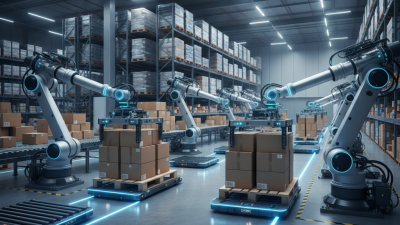
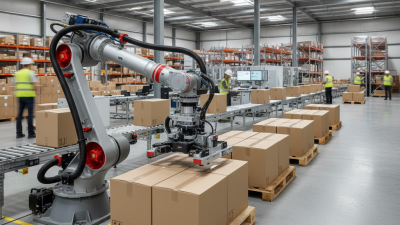
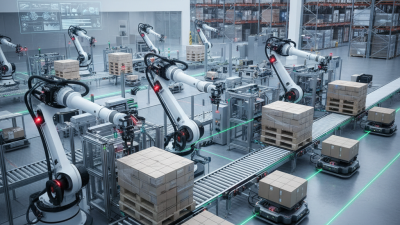
Robotic Case Palletizing is revolutionizing warehousing and distribution. It allows companies to handle heavy and repetitive tasks with ease. This technology automates the stacking of products onto pallets, freeing up valuable human resources for more strategic roles. Moreover, it significantly minimizes the risk of workplace injuries.
Despite the clear advantages, some businesses hesitate to adopt Robotic Case Palletizing. They might question the initial investment or the integration into existing systems. However, the long-term benefits often outweigh these concerns. Ultimately, embracing this innovation can lead to increased productivity and a robust bottom line. Reflecting on these factors can foster a deeper understanding of the potential this technology holds.
Benefits of Robotic Case Palletizing for Increased Efficiency
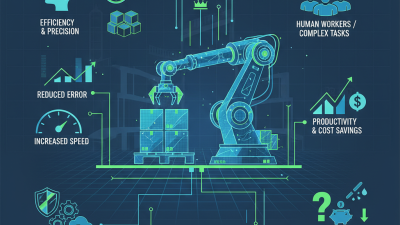
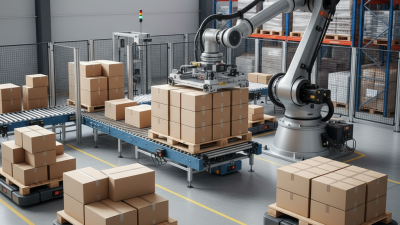
Robotic case palletizing has become a game-changer for many businesses. It significantly enhances efficiency in production and distribution processes. By automating the palletizing stage, companies can reduce labor costs and minimize human error. Robots can operate tirelessly, stacking cases with precise alignment, which ensures uniformity and stability.
Implementing robotic systems allows for increased flexibility. These systems can be programmed to handle various product sizes and shapes. That capability means companies can respond quicker to market changes. However, transitioning to robotic palletizing requires careful planning. Businesses must assess their current workflows and make necessary adjustments, which can be challenging.
Moreover, while robots improve speed, they also require maintenance and monitoring. This aspect can lead to unexpected downtime if not managed properly. Finding the right balance between human workers and robotic efficiency is crucial. Businesses should continuously analyze their systems to maximize the advantages of robotic palletizing while addressing any shortcomings.
Cost-Effectiveness of Robotic Solutions in Palletizing Operations
Robotic case palletizing is transforming the way businesses approach their operations.
Cost-effectiveness is a key motive driving this shift. Traditional labor-intensive methods are often expensive when considering wages, training,
and turnover. In contrast, robotic solutions bring significant savings in the long run. They can operate around the clock, reducing the need for overtime and minimizing human error.
Many companies have reported lower operational costs after implementing robotic systems. For instance, the initial investment may seem high, but the return on investment is notable.
Automation often leads to increased productivity and efficiency. Robots can handle repetitive tasks better than human workers, thereby reducing strain and injuries.
However, not every operation is ready for a robotic overhaul. Evaluating specific needs is crucial.
Quality control is another area for reflection. With automation, some businesses worry about product integrity. Ensuring that the robotic systems are properly calibrated and maintained is essential.
Regular assessments help address issues and improve performance. While robotic solutions offer many advantages, they also require a commitment to ongoing support and training.
Improving Workplace Safety Through Automation in Palletizing
Robotic case palletizing is reshaping workplace safety in manufacturing and logistics. Traditional palletizing involves manual labor, leading to physical strain and injuries. According to the Bureau of Labor Statistics, nearly one-third of workplace injuries are due to overexertion. Automating this process with robotics reduces such risks significantly. Workers can focus on higher-value tasks while robots handle the heavy lifting.
Automation enhances precision and efficiency. A report from the International Federation of Robotics indicates that robotic solutions in palletizing can increase productivity by 15-30%. This efficiency translates into fewer accidents due to fatigue or distraction among workers. Additionally, the robots can operate in hazardous environments, minimizing human exposure to potential dangers.
However, the transition to robotic systems requires careful planning. Companies must assess their production lines and train staff to manage these technologies effectively. Initial costs can be high, and not every system guarantees immediate results. Organizations should evaluate their specific needs before implementing automation solutions. Balancing the benefits with potential challenges is essential for a safe and efficient workplace.
Why Choose Robotic Case Palletizing for Your Business Needs? - Improving Workplace Safety Through Automation in Palletizing
| Feature |
Benefit |
Impact on Safety |
Cost Efficiency |
| Automated Palletizing |
Increased speed and accuracy in pallet handling |
Reduces the risk of worker injuries from manual handling |
Lower labor costs and increased throughput |
| Flexible Integration |
Can easily adapt to various product shapes and sizes |
Minimizes repetitive strain injuries |
Reduces changeover time, enhancing efficiency |
| Data Analytics |
Provides insights into operational performance |
Enhances decision-making for safety improvements |
Optimizes resource allocation and reduces waste |
| Consistent Performance |
Maintains quality control over palletizing |
Lowers the chance of accidents due to errors |
Minimizes costs associated with product damage |
| Reduced Footprint |
Less space required compared to traditional methods |
Improves safety awareness and reduces clutter |
Lower overhead costs related to facility maintenance |
Flexibility and Scalability of Robotic Palletizing Systems
Robotic palletizing systems are becoming essential for many businesses. Their flexibility is a major advantage. These systems can adapt to various product sizes and shapes without extensive reconfiguration. A facility can quickly shift from packing boxes to pallets of bottles. This capability reduces downtime and increases productivity.
Scalability is another critical factor. Companies can start with a single robotic unit and expand as needed. As demand grows, additional robots can be integrated easily. This step-by-step approach helps in managing investment costs effectively. However, some companies may underestimate the need for ongoing maintenance and training. Neglecting these aspects can lead to inefficiencies.
Furthermore, implementing robotic systems presents challenges. Employees may need to adjust to new workflows. Some might feel uncertain about their roles with automation. Continuous communication and training are essential to ease these transitions. Emphasizing the benefits of robotics can help employees embrace change.
Technological Advancements Driving Robotic Case Palletizing Decisions
Robotic case palletizing is gaining traction in various industries. Technological advancements are reshaping the decision-making process for companies. According to recent data from a leading market research firm, the global robotic palletizing market is expected to reach $2.6 billion by 2025, driven by increased automation and efficiency demands.
As businesses look to improve productivity, robotic systems offer precise and consistent palletizing solutions. The International Federation of Robotics reports that automation improves output by up to 30%. Flexibility is another critical aspect. Modern robotic systems can adapt to different product sizes and weights with ease. This adaptability allows industries to respond quickly to market changes, though it requires continuous training and updates.
Challenges remain, of course. Implementing these systems demands significant upfront investment. Companies may struggle with integration into existing workflows. Up to 30% of firms report difficulties in operator training and system maintenance. While robotic case palletizing offers promise, firms must weigh these challenges carefully against potential productivity gains. Advanced robotics may enhance operations, yet the road to seamless adoption is complex and requires strategic planning.
Benefits of Robotic Case Palletizing