Top 10 Automated Palletizing Equipment in China for Global Buyers?
In today's fast-paced manufacturing landscape, the demand for Automated Palletizing Equipment is on the rise. Companies worldwide seek efficient solutions to enhance productivity and reduce labor costs. China has emerged as a leading supplier of advanced palletizing technologies. Many global buyers turn to Chinese manufacturers for high-quality and innovative equipment.
Automated palletizing systems streamline the loading and unloading of goods, ensuring accuracy and speed. These machines are designed to handle various products, from boxes to bags. Features may include robotic arms, vision systems, and intelligent controls. Buyers often face challenges when choosing the right equipment, as not all suppliers meet international quality standards. It's essential to conduct thorough research to select reliable partners.
Investing in Automated Palletizing Equipment can significantly improve operational efficiency. However, it requires careful consideration of individual business needs. Companies may struggle with integration or have concerns about long-term support. A clear understanding of local market dynamics and equipment specifications is critical for global buyers seeking successful outcomes.
Overview of Automated Palletizing Equipment in China
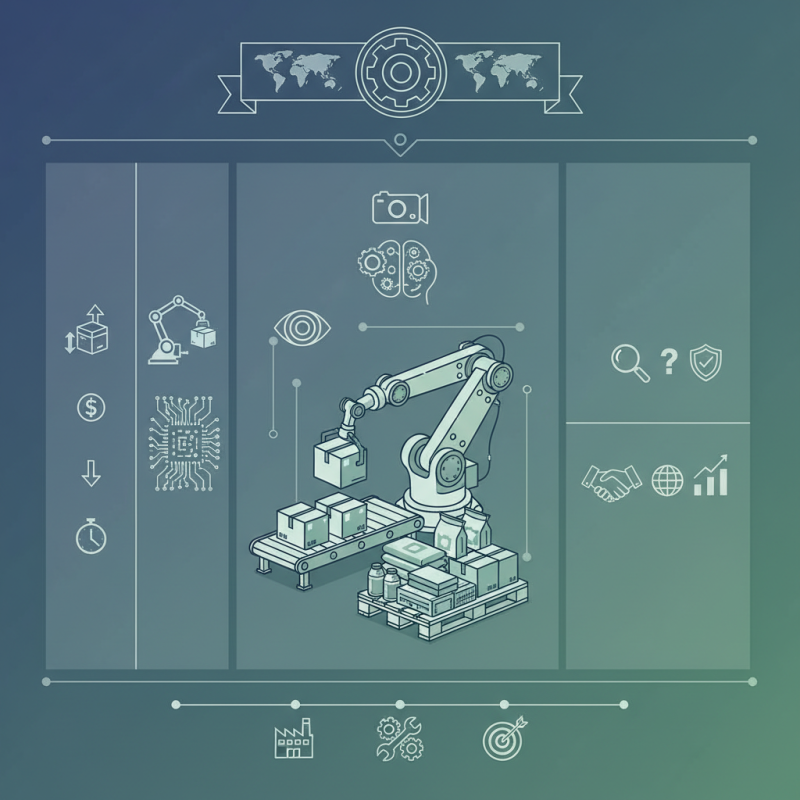
Automated palletizing equipment plays a crucial role in modern manufacturing and logistics. In China, advancements in technology have led to various innovative solutions. Many factories are adopting these systems to enhance efficiency and reduce labor costs. Automation allows for higher precision and speed in handling products.
These machines vary in design and functionality. Some types use robotic arms, while others utilize layer or vacuum systems. Each method has its strengths and challenges. Robotic solutions are versatile but can require significant programming. Vacuum systems are reliable but may struggle with heavier items. End users must assess their specific needs carefully.
Despite the advancements, there are areas for improvement. Not all providers offer consistent support after deployment, leaving users in a lurch. Additionally, not every facility is suited for these automated systems. Space constraints or existing workflow processes can limit effectiveness. Buyers should carefully evaluate their environment before investing in these technologies.
Key Features of Automated Palletizing Systems
Automated palletizing systems are essential in modern warehousing. They enhance efficiency while reducing labor costs. Many systems use robots and conveyor belts to move products in a precise manner. This technology allows for consistent stacking, minimizing product damage during transportation.
Key features set these systems apart. First, flexibility is crucial. Systems can often handle different product shapes and sizes. This adaptability enables companies to respond quickly to market changes. Additionally, user-friendly interfaces help operators monitor performance. Real-time data can indicate when maintenance is required, ensuring optimal operation.
Despite advancements, challenges remain. The initial investment can be substantial. Companies may hesitate, fearing slow returns. Furthermore, not all products suit automated solutions. Size, weight, or shape can complicate the process. Assessing these factors is vital before investing in palletizing technology.
Top 10 Automated Palletizing Equipment in China for Global Buyers
| Model |
Type |
Load Capacity (kg) |
Speed (Pallets/hour) |
Key Feature |
| Model A |
Robotic Arm |
1200 |
25 |
Flexible Gripper |
| Model B |
Cartesian |
1500 |
30 |
Easy Integration |
| Model C |
Collaborative |
1000 |
20 |
Safety Sensors |
| Model D |
Scara |
1300 |
28 |
High Precision |
| Model E |
Hybrid |
1400 |
35 |
Versatile Gripping |
| Model F |
Delta |
1100 |
40 |
Fast and Efficient |
| Model G |
Automated Guided Vehicle |
1600 |
50 |
Navigation Sensors |
| Model H |
Forklift |
2000 |
22 |
Heavy Load Handling |
| Model I |
Pallet Wrapper |
1200 |
15 |
Wrap Efficiency |
| Model J |
Belt Conveyor |
1800 |
33 |
Continuous Flow |
Top 10 Automated Palletizing Machines for Global Buyers
Automated palletizing machines are essential in modern manufacturing. They enhance productivity and reduce labor costs. In China, the market for these machines is rapidly growing. Recent industry reports estimate the demand for automated palletizers will increase by 8% annually. This growth is driven by the expansion of the e-commerce sector and the need for efficient supply chain management.
Key features of top automated palletizing machines include flexibility and speed. Many machines can adjust to various package sizes. This adaptability helps manufacturers meet market demands quickly. However, some machines have a steep learning curve, requiring staff training. The initial investment can be daunting for small businesses. Yet, long-term savings in labor and increased output often justify this expense.
Global buyers should consider not only the technology but also the reliability of suppliers. Some reports indicate that quality assurance is still lacking in many low-cost models. It is crucial to evaluate both equipment performance and after-sales support. A machine that fails often leads to increased downtime, undermining operational efficiency. Careful assessment of available options ensures optimal production flow for manufacturers.
Top 10 Automated Palletizing Equipment in China for Global Buyers
Comparative Analysis of Leading Palletizing Brands in China
When exploring automated palletizing equipment in China, several brands stand out. Each brand offers unique features that cater to different needs in logistics and manufacturing. Key considerations include
speed,
efficiency, and
adaptability to various packaging types.
Many leading brands utilize advanced technology for precise and reliable pallet placement. Some focus on high-speed applications, while others emphasize flexibility for diverse industry demands. This variation highlights the importance of assessing specific operational requirements before making a decision.
It's crucial to acknowledge that not all brands deliver perfection. Issues such as inconsistent performance or maintenance challenges have been reported. Buyers should research real-user experiences to gain practical insights. Understanding the strengths and weaknesses of different automated palletizers can lead to more informed choices. Investing time in this comparison process ensures better alignment with organizational goals.
Market Trends and Future of Automation in Palletizing Solutions
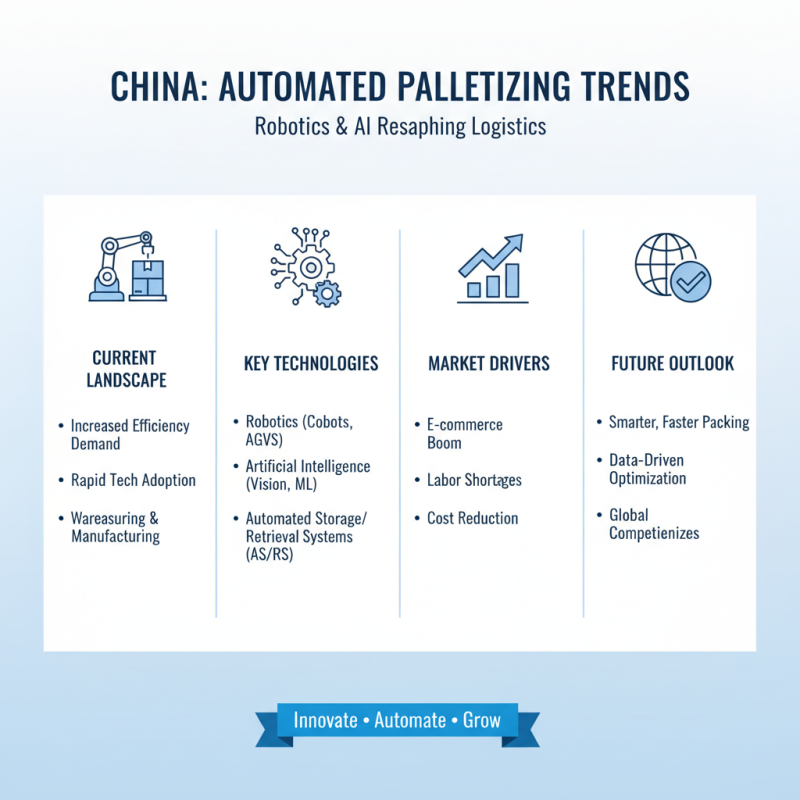
Automation in palletizing solutions is rapidly evolving in China. With the increase in demand for efficiency, many companies are adopting advanced technologies. Robotics and AI are becoming common in warehousing and manufacturing. This trend is reshaping how products are packed and shipped.
Investing in automated palletizing equipment can significantly reduce labor costs. The current market shows a clear move towards smart machines. They can operate around the clock, improving productivity. However, recent findings suggest that not all systems are equally effective. Certain setups may require constant monitoring and adjustments. This raises questions about long-term viability.
**Tip:** Before selecting an automated system, assess your specific needs. Consider factors like product type, size, and throughput. This assessment can prevent costly mistakes.
As the industry grows, embracing innovations is essential. Data from various sectors indicates that flexibility is crucial. Companies may face challenges in integrating new machines. Skilled workers are needed for maintenance and support. Balancing automation with human input remains a complex issue.
**Tip:** Regular training for staff can enhance compatibility with new technologies. Clear communication between stakeholders is necessary for smooth transitions. This ensures that everyone is aligned with business goals.