Why Choose an HDPE Extrusion Line for Your Business?
Choosing the right production equipment affects product quality, operating costs, and long-term reliability. A Hdpe Extrusion Line can convert polyethylene pellets into pipes, sheets, profiles, or custom products with consistent control. It supports repeatable output when temperature, pressure, cooling, and haul-off speed are properly managed.
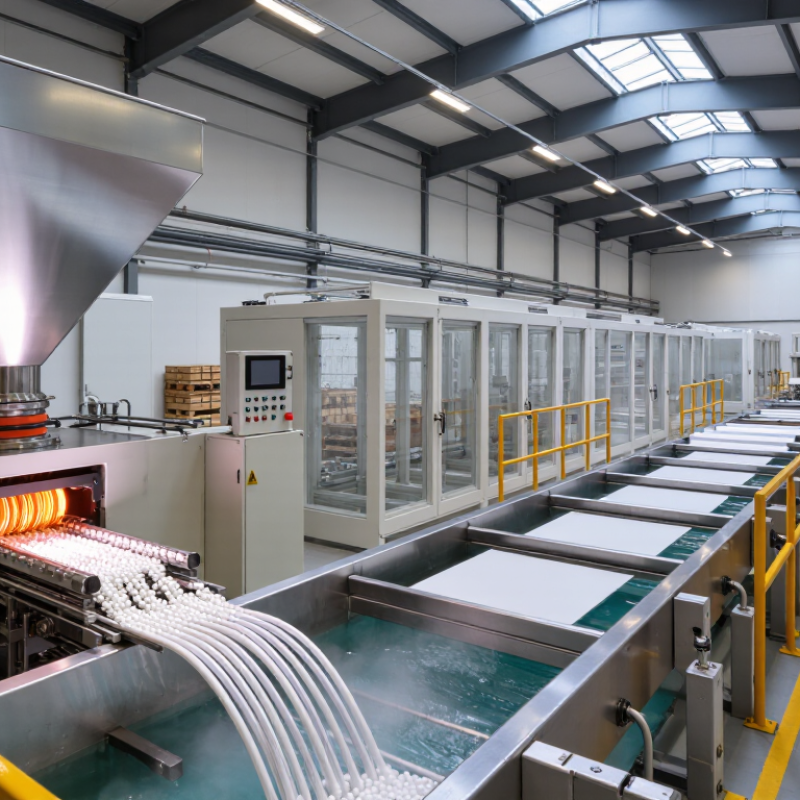
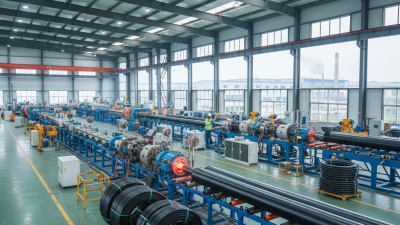
In practical production, the line begins with material feeding and plasticizing. The extruder then shapes the melt through a calibrated die. Vacuum sizing tanks, cooling systems, cutters, and winding units complete the process. Each section provides visible evidence of performance. A stable melt produces smoother surfaces. Accurate cooling helps maintain dimensions. Reliable haul-off reduces uneven wall thickness. These results matter when customers inspect every meter of pipe or sheet.
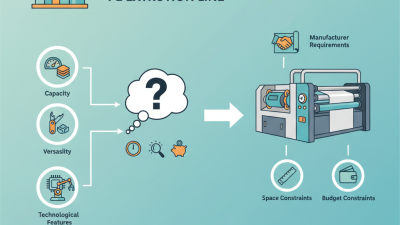
A well-selected Hdpe Extrusion Line may improve energy use and reduce material waste. However, equipment alone cannot solve poor process planning. Operators need training, preventive maintenance, and suitable resin grades. Installation space, electrical capacity, water quality, and output targets also require careful review. That choice matters. A line designed for small profiles may not suit large-diameter pipe production. Quoted capacity can also differ from actual output under demanding conditions. Supplier experience becomes valuable here. Request documented test results, component specifications, and service commitments before investing. Compare the complete production system, not only the extruder price. The best decision balances performance, maintainability, safety, and realistic business needs.
An HDPE extrusion line converts solid polyethylene pellets into continuous products such as pipes, sheets, profiles, or films. The process begins when pellets enter a heated barrel through a hopper. A rotating screw then carries the material forward. Heat and friction soften the pellets into a uniform melt.
At the end of the barrel, the melt passes through a die. The die gives the plastic its required shape. For pipe production, a sizing sleeve and vacuum tank help control the diameter. Cooling water removes heat and stabilizes the product. A haul-off unit pulls the material at a controlled speed. Finally, a cutter or coiler prepares it for handling.
Small changes matter. Screw speed, barrel temperature, melt pressure, and cooling flow must work together. If pulling speed rises too much, the wall may become thin. If cooling is uneven, the product can bend or show surface stress. Clean feedstock also matters. Contamination may create weak points or rough surfaces.
In practical production, operators often inspect the first meters closely. They check dimensions, appearance, and melt stability before increasing output. A line may run quietly while producing inconsistent material. That is easy to miss. Regular calibration, safe operating procedures, and documented checks support reliable quality. Still, setup is not always perfect. Different resin grades can require different temperature profiles, screw speeds, and cooling conditions.
| Process or Data Dimension | Typical HDPE Extrusion-Line Value | How It Supports Business Performance |
|---|---|---|
| Raw Material | High-density polyethylene pellets, commonly with a density of approximately 0.941–0.965 g/cm³ | Provides a lightweight material with high stiffness, impact resistance, and good chemical resistance. |
| Material Melting Range | Approximately 125–135°C, depending on HDPE grade and molecular structure | Allows the polymer to be melted and formed continuously without the high temperatures required by many engineering plastics. |
| Typical Melt-Processing Temperature | Approximately 180–230°C; the exact setting depends on the product, grade, and die design | Supports stable flow while helping to limit thermal degradation and unnecessary energy consumption. |
| Main Extrusion Stages | Feeding → conveying and melting → mixing → filtration, when required → die forming → cooling → sizing or haul-off → cutting or winding | Creates a continuous production process that can be adapted to pipes, sheets, profiles, films, and other products. |
| Common Screw Length-to-Diameter Ratio | Approximately 30:1–36:1 for many modern HDPE extrusion applications | Provides sufficient residence time for melting, homogenization, and pressure development. |
| Typical Throughput Range | Approximately 50–1,000 kg/h, depending on screw diameter, product type, die size, and operating speed | Enables businesses to select a line capacity suited to pilot production, medium-volume manufacturing, or continuous industrial output. |
| Typical Screw Diameter Range | Approximately 45–150 mm for many pipe, profile, sheet, and pelletizing systems | Makes it possible to match machine size and investment level with the required production volume. |
| Cooling Method | Water baths, spray cooling, air cooling, or combinations of these methods; cooling-water temperature is commonly controlled near 10–25°C | Controls product dimensions, surface quality, and shape retention after the melt exits the die. |
| Common Finished Products | Pressure and non-pressure pipes, sheets, films, profiles, conduit, geomembranes, and compounds or pellets | Supports product diversification across construction, water management, packaging, agriculture, and industrial applications. |
| Key Material Advantages | Low moisture absorption, strong chemical resistance, good impact performance, and a relatively low density | Can reduce product weight and maintenance requirements while extending service life in demanding environments. |
| Automation and Control | Typical systems monitor barrel temperature, melt pressure, screw speed, haul-off speed, cooling, and product dimensions | Improves repeatability, reduces manual adjustment, and helps detect process deviations earlier. |
| Energy-Use Consideration | Energy demand varies substantially with line size, output, heating efficiency, cooling equipment, and product geometry | Efficient heaters, properly sized drives, insulation, and optimized throughput can lower energy use per kilogram of product. |

Note: The values shown are representative industry ranges rather than fixed specifications. Actual operating conditions should be established from the selected HDPE grade, product dimensions, die design, cooling system, and required quality standards.
An HDPE extrusion line can manufacture several practical products for construction, agriculture, utilities, and industrial packaging. Its most common output is HDPE pipe, including water pipes, drainage pipes, gas conduits, and irrigation lines. With suitable dies, the same line can produce solid sheets, hollow profiles, protective ducts, and custom sections. Some configurations also make geomembranes for ponds, reservoirs, and controlled waste-management applications.
Product quality depends on more than the extruder itself. Resin grade, moisture control, die design, cooling temperature, and haul-off speed all affect the final result. Experienced operators inspect wall thickness, surface smoothness, dimensions, and weldability during production. A pipe may look acceptable while hiding uneven thickness inside. That is an easy mistake to miss. Output can also vary when recycled material is added without careful testing, so each formula needs practical validation before large-scale production.
Tips: Match the die to the product before choosing equipment. Check the required diameter range, pressure rating, and production speed. Keep cooling water stable and measure samples regularly. Record defects instead of relying on memory. Small process changes can improve consistency, although real production rarely behaves perfectly.
For manufacturers evaluating an HDPE extrusion line, the main question is practical: what business value will it create? HDPE supports durable pipes, sheets, profiles, and protective components. Its resistance to moisture, chemicals, and impact can reduce replacement demands in demanding applications. A stable extrusion process also helps maintain consistent dimensions across long production runs. That matters. Customers notice variation quickly, especially when parts must connect precisely.
A well-configured line can improve output while controlling material waste. Automated temperature zones, calibrated dies, and reliable cooling systems support repeatable production. Operators spend less time correcting uneven walls or surface defects. This can lower labor pressure and make delivery schedules more predictable. In my experience, the financial benefit is not only higher speed. It also comes from fewer rejected meters, fewer tool changes, and better use of recycled production scrap where specifications permit.
HDPE extrusion offers flexibility when market demand changes. A business may switch between product sizes by adjusting dies, cooling settings, and haul-off speed. This supports custom orders without requiring a completely new production system. However, flexibility is not automatic. Poor resin storage, weak process monitoring, or rushed maintenance can erase expected gains. Energy use also deserves close review, because an efficient line can still perform poorly when heating and cooling systems are neglected. The figures should be tested under actual material, staffing, and order conditions, not borrowed from a brochure.
Choosing an HDPE extrusion line begins with your product, not the machine brochure. Plastics Europe reported 413.8 million tonnes of global plastics production in 2023. That scale increases pressure for stable output and efficient material use.
Define annual demand, operating days, and realistic maintenance hours. Then calculate required throughput: annual tonnes multiplied by 1,000, divided by productive hours. Add a modest safety margin, not an exaggerated one.
Check sustained output, screw design, L/D ratio, melt-temperature control, and motor efficiency. A line rated at 500 kilograms per hour may not maintain that rate with recycled feedstock.
OECD’s Global Plastics Outlook reported that only 9% of plastic waste was recycled globally in 2019. This makes material consistency important. Ask for trials using your actual HDPE grade, moisture level, color, and additive package. Observe pellet feeding, pressure stability, die swell, cooling, and cutting accuracy. Small defects become expensive after several production shifts.
For pipe, sheet, or profile production, inspect vacuum calibration, haul-off grip, wall-thickness control, and changeover time. Request measured energy consumption per kilogram, not general efficiency claims. Also verify spare-part availability and operator training.
My practical concern is often overlooked: the cheapest line can create more scrap during unstable starts. That cost rarely appears in the quotation. Industry reports provide useful benchmarks, but your own trial data should decide the purchase.
Choosing an HDPE extrusion line requires more than comparing advertised output rates. Businesses should match the equipment to actual product demand, pipe sizes, resin grades, and operating schedules. A line producing 800 kilograms per hour may look impressive, but it can waste energy if daily orders remain small. Measure twice.
Available floor space also matters. The line needs room for material feeding, cooling tanks, haul-off equipment, cutting, and finished-product storage. Check electrical capacity, water circulation, ventilation, and noise levels before signing a purchase agreement. These details often create unexpected installation costs. They are not minor issues.
Maintenance planning deserves serious attention. Ask how quickly critical heaters, sensors, screws, and dies can be replaced. Request clear service procedures and operator training, not only a machine specification sheet. Experienced teams should test wall thickness, diameter accuracy, surface quality, and production stability during commissioning. A lower purchase price may become expensive when downtime increases. I would also calculate labor, energy, scrap, maintenance, financing, and spare-part costs over several years. That calculation may challenge the original investment plan. Businesses should leave room for future upgrades, but oversized equipment can be just as risky. Reliable production depends on balanced capacity, skilled operators, documented quality checks, and realistic sales forecasts.
Temperature control is a key consideration when investing in an HDPE extrusion line. The equipment should provide stable heating, cooling, and die-temperature control across these typical engineering ranges. Actual settings depend on the HDPE grade, product design, throughput, and production environment.