What Are the Top Palletizing Robot Applications?
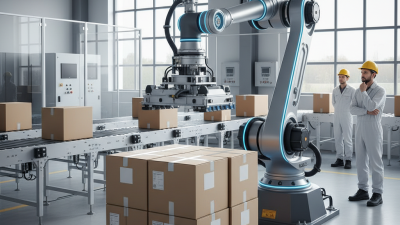
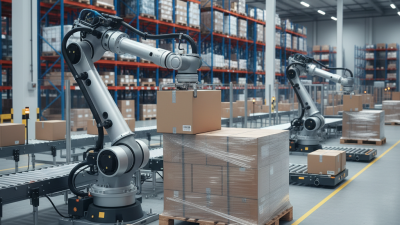
Palletizing Robot Applications are changing how factories move finished goods from production lines to storage and shipping areas. These systems stack cartons, bags, trays, and cases with repeatable speed. A robot may place hundreds of packages each hour, depending on product weight, pattern, and line design. The real value is not speed alone. It is safer lifting, steadier stacking, and more predictable output.
In food and beverage plants, robots handle cartons of bottles, cans, and packaged goods. In consumer goods facilities, they arrange boxes of household products onto pallets. Distribution centers use robotic cells to manage mixed case sizes and frequent order changes. Each application demands careful planning. Gripper choice matters. So do pallet dimensions, conveyor height, package stability, and available floor space. A weak layout can create jams, even when the robot itself performs accurately.
Practical experience shows that successful projects begin with a detailed workflow review. Engineers measure cycle times, test package surfaces, and confirm how loads behave during transport. Safety controls and operator access also require serious attention. No application is automatically ideal. Some installations disappoint because product variation was underestimated. Others need better training and maintenance planning. This article examines the top Palletizing Robot Applications, their operational benefits, and the limitations that decision-makers should consider before investing. The goal is a realistic view, not a sales promise.
What Palletizing Robots Are and How They Work
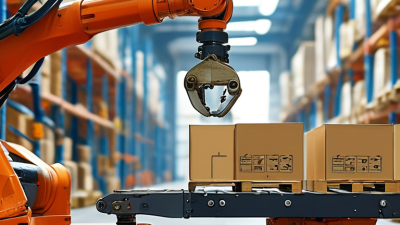
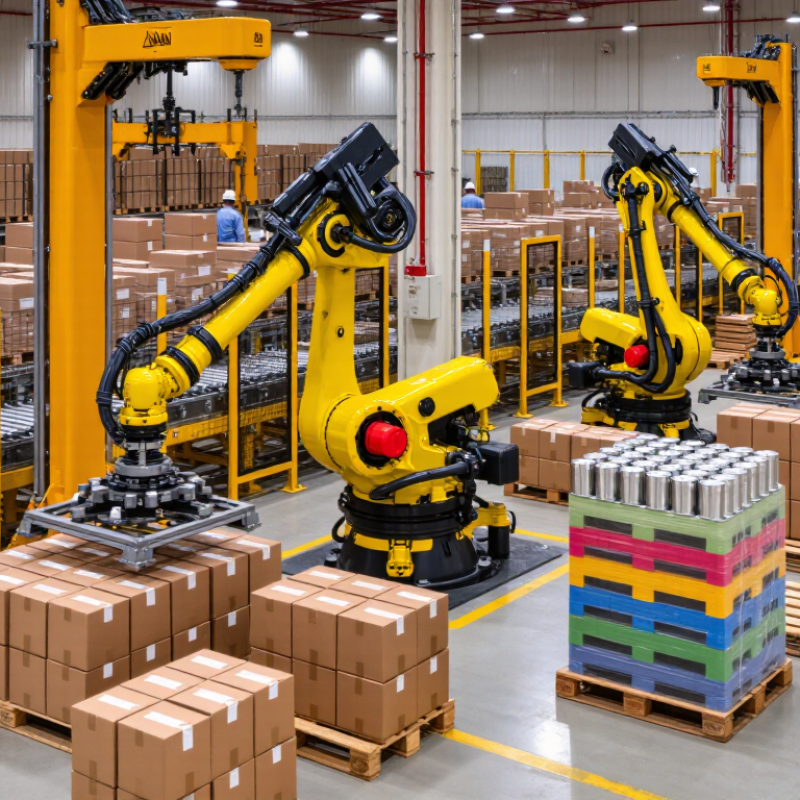
A palletizing robot moves cartons, bags, or cases from a conveyor onto a pallet in a planned pattern. Its control system uses programmed positions and movement paths to guide each pick and placement. A gripper, vacuum tool, or clamp holds the load. The right tool depends on the package’s shape, weight, and surface. Some boxes have slick plastic wrap; others have soft sides that need gentler handling.
The cycle begins when a package reaches a pickup point. Sensors can check its position, while the robot’s controller coordinates the arm, end-of-arm tool, and conveyor. The robot lifts the package, follows a defined route, then sets it down to build a stable layer. Small placement errors matter. A crooked bottom layer can make upper cartons lean, especially when stacks grow tall. Not glamorous, but important.
A palletizing cell also relies on guarding, interlocks, and emergency stops to help protect nearby workers. Operators typically set pallet dimensions, layer patterns, and product parameters through a control interface. Real products are rarely as consistent as a clean simulation suggests. Cartons may arrive rotated, crushed, or with uneven gaps. That is where commissioning and regular checks prove their value. Even a well-tuned system may need adjustment when packaging changes. We should not assume automation removes every handling problem; it changes where people need to pay attention.
Which Industries Use Palletizing Robots Most Often
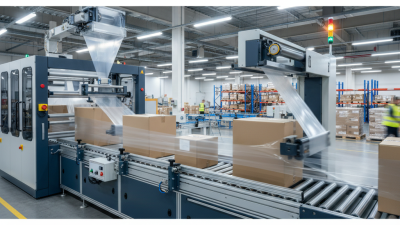
Palletizing robots are used most often in food, beverage, consumer goods, and warehouse distribution. These sectors move heavy cartons, bags, trays, and cases every hour. Repetitive stacking also creates injury risks and inconsistent pallet patterns. The International Federation of Robotics reported 541,302 industrial robot installations worldwide in 2023. Its World Robotics 2024 report identifies food and consumer products as growing automation users. Palletizing is a practical entry point because robots can work beside conveyors, pallet dispensers, and stretch wrappers.
Food and beverage plants usually demand fast changeovers. A robot may stack bottled drinks in one hour and boxed snacks in the next. Packaging reports from PMMI show strong automation investment across food, beverage, and consumer packaged goods operations. Distribution centers use palletizing robots when order volumes vary sharply. They handle mixed cases, although mixed-SKU palletizing remains technically demanding. Chemical and building-material producers also use robotic palletizing for sacks, pails, and sealed containers. These loads require careful gripping and stable layer design.
The data is useful, but not perfect.
Industry reports often group palletizing within wider robotics categories. That can hide differences between sectors and regions. Energy costs, labor availability, package size, and floor space change the business case. In practice, a smaller facility may gain more from one flexible cell than a large fixed system. Poorly designed cartons can still collapse, even with accurate robot motion. That detail is easy to overlook. Reliable adoption therefore depends on trial pallets, measured cycle times, safety validation, and maintenance records, not attractive estimates alone.
What Are the Top Palletizing Robot Applications?
Palletizing robots are used most often in high-volume industries that handle standardized cases, bags, cartons, trays, or containers. Food and beverage typically represent the broadest range of palletizing applications, followed by consumer goods, logistics, chemicals, and building materials.
The chart presents a normalized industry adoption index based on common palletizing use cases, production volume, packaging standardization, and demand for end-of-line automation. It is intended for comparison rather than as a market-share estimate.
How Palletizing Robots Handle Different Products and Loads
Palletizing robots must adapt to the product, not just repeat a fixed motion. Cartons with flat tops often suit vacuum grippers, while porous cardboard may need mechanical clamps or a different suction setup. Bags shift as they settle, so a gripper must support them without crushing the contents. Pails and other rigid containers need stable contact points and enough clearance to avoid catching neighboring units. Small details matter.
Load shape changes the stacking plan. A robot can alternate carton direction between layers to improve stability, but the pattern must match the carton’s strength and the pallet dimensions. Heavy items generally belong lower, while uneven or fragile products may need wider support. A perfectly tight pattern can still be a poor choice if it makes the load unstable or difficult to unload. That trade-off is easy to miss.
In a working cell, sensors and product recipes help the robot respond to different sizes, weights, and infeed positions. Operators may adjust grip force, approach speed, or layer spacing after observing real products—not just sample specifications. Bags can wrinkle, boxes can vary slightly, and pallets are not always perfectly square. The awkward cases deserve another test. A setup that handles one ideal load may struggle when packaging changes, so changes to product or pallet patterns should be checked before production resumes.
What Palletizing Patterns and End-of-Arm Tools Are Used
Palletizing patterns shape both load stability and cycle time. Column stacking places cartons directly above one another, keeping edges aligned and making the pattern easy to program. It works well for uniform boxes, though tall loads may shift if cartons compress.
Interlocked patterns rotate or offset cartons between layers, creating a more connected load. Brick patterns use a similar offset, often leaving small gaps that operators should check during testing. Small details matter.
The end-of-arm tool must match the package, not just the robot’s payload rating. Vacuum grippers can lift smooth, flat cartons, while mechanical clamps can handle porous boxes that leak air. Bag grippers may use broad plates or fingers to support flexible packages without squeezing product unevenly. Fork-style tools suit some open-bottom cases or totes.
A slip-sheet attachment can place a separator between layers, but it adds another pick-and-place step. For mixed carton sizes, a programmable pattern and adjustable gripping surfaces can reduce changeover work. Still, one pattern rarely fits every load.
Test sample packages at the planned speed, and inspect corners, layer alignment, and the final pallet after movement. A clean first layer can hide trouble above it. That part is easy to miss.
Slight carton bulging, dusty surfaces, or uneven bag fill may call for a different tool or a slower approach.
How to Select a Palletizing Robot for an Application
What Are the Top Palletizing Robot Applications?
How to Select a Palletizing Robot for an Application
Palletizing robots commonly handle cartons, bags, pails, and reusable totes at the end of production lines. Choose equipment around the actual load, not a brochure’s maximum speed. Record each item’s weight, dimensions, packaging material, and arrival rate. A 12-kilogram carton needs a different grip and motion profile than a soft, shifting sack. Also check pallet sizes, stacking patterns, available floor space, and the robot’s reach. Small details matter.
Tips: Test the gripper with real products, including damaged or slippery packages. Measure peak demand, not just the average shift rate. Leave room for pallet exchange and operator access.
Before selecting a system, observe the line during busy periods and product changeovers. Confirm that the robot can place the heaviest load steadily at the farthest required position. Review how often recipes change, and whether workers can adjust them without specialist support. Ask how routine cleaning, fault recovery, and spare parts will affect downtime. A tidy spreadsheet can still miss a crooked carton or a pallet that arrives slightly off-center. No choice is perfect; verify the awkward cases before committing.