China Top 10 Automated Palletizing Equipment You Should Know About?
In the fast-evolving industrial landscape, understanding the nuances of Automated Palletizing Equipment is vital. This technology enhances efficiency and streamlines logistics in warehouses and factories. As businesses strive for higher productivity, automated solutions are no longer a luxury but a necessity.
China’s market is brimming with innovative automated palletizing systems. Each piece of equipment offers unique features catering to various industries. For instance, some machines prioritize speed, while others focus on accuracy. It is crucial, however, to evaluate these tools critically. Not all options will suit every operation. Some may have limitations that require careful consideration.
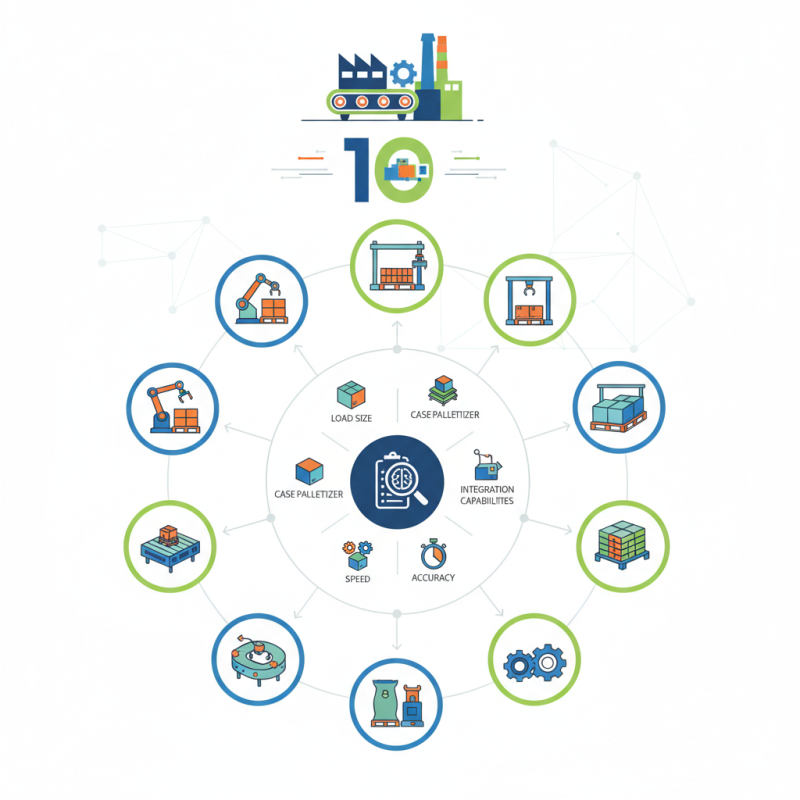
As you explore the top 10 automated palletizing equipment, remember to consider factors like load size and integration capabilities. Each machine has its specifics, strengths, and weaknesses. By aligning your needs with the right technology, you pave the way for efficient operations and improved productivity.
Overview of Automated Palletizing in China
Automated palletizing is transforming the manufacturing landscape in China. In recent years, the market has witnessed significant growth. According to a report by Research and Markets, the automated palletizing systems market in China is expected to reach $1.8 billion by 2025. This growth is driven by the increasing demand for efficiency and accuracy in supply chain operations.
The implementation of automated systems has enhanced productivity. Many factories report a reduction in labor costs by up to 30%. Such systems can handle a higher volume of products, improving overall output. Additionally, they reduce human error during the palletizing process, ensuring more consistent quality. Yet, some companies struggle with integration. Legacy systems often impede the adoption of new technologies.
Despite advancements, challenges remain. The initial investment for automated palletizing systems can be steep, making some hesitant. Moreover, a skilled workforce is essential for maintaining these systems. Companies must prioritize training and development. Automation is not a one-size-fits-all solution. Each business must assess its specific needs and capabilities to determine the best approach for implementation.
Key Features of Top Automated Palletizing Equipment
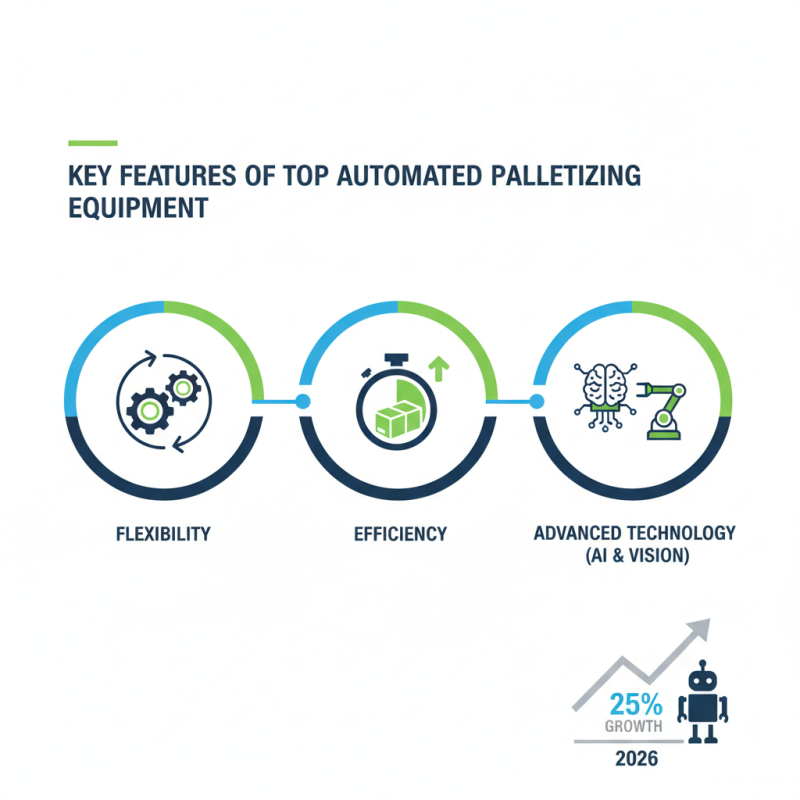
Automated palletizing equipment has become essential for modern manufacturing and logistics. It significantly enhances productivity while minimizing human errors. Key features of these systems often include flexibility, efficiency, and advanced technology integration. For instance, a report by the International Federation of Robotics indicated that the demand for palletizing robots is expected to grow by 25% annually through 2026. This is largely due to advancements in AI and machine vision technologies.
Flexibility is crucial. Numerous systems can handle varying sizes and shapes of products. Manufacturers appreciate this adaptability, which allows for seamless transitions between product lines. Efficiency is another standout feature. Automated systems consistently outperform manual labor. According to the Association for Advanced Automation, automated palletizing can increase throughput by 30%. However, implementing such technology requires significant upfront investment, which can be a barrier for smaller firms.
Advanced features often include real-time monitoring and remote access capabilities. These allow operators to track performance and conduct maintenance more effectively. Yet, operators must be skilled in understanding system alerts. Even small errors in programming can lead to downtime. The learning curve for staff can also be steep, raising concerns about training costs. Balancing automation with skilled labor requires careful planning and consideration.
Comparison of Leading Brands in the Market
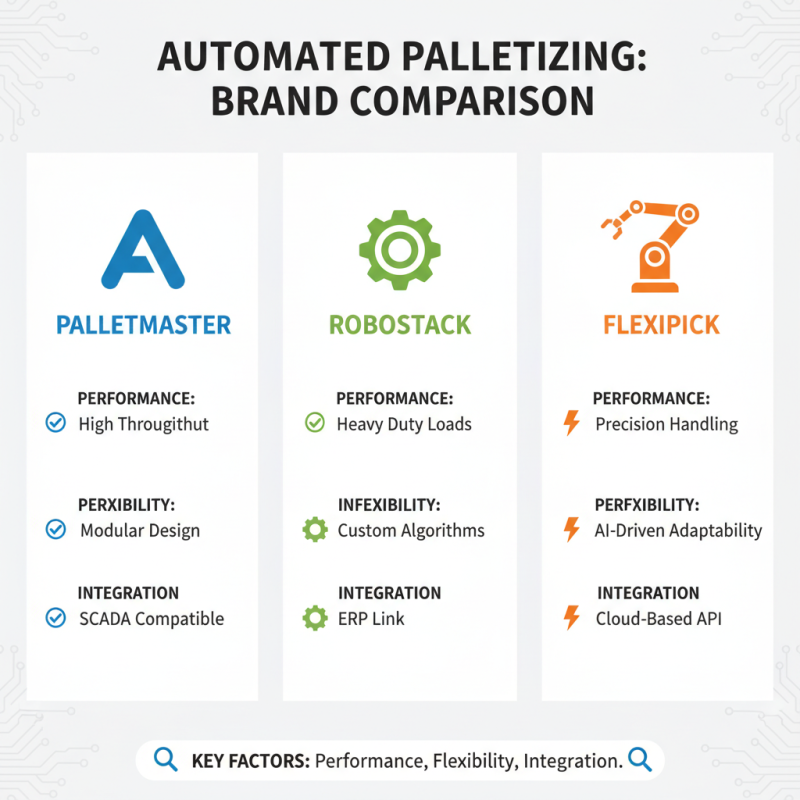
In the fast-paced world of automated palletizing, several brands dominate the landscape. Each brand offers unique features, catering to various needs. Performance, flexibility, and ease of integration are essential factors influencing decisions. It’s crucial to evaluate how these systems adapt to specific warehouse operations.
One common trend is energy efficiency. Brands are now focusing on machines that consume less power, helping reduce operational costs. Additionally, software integration plays a vital role. Many systems offer advanced robotics and AI capabilities, enhancing overall productivity. However, integration with existing systems may pose challenges.
Companies often face a dilemma when selecting equipment. Higher upfront costs can deter investment, but long-term savings are appealing. It's important to weigh the advantages against potential technical difficulties. Investing in training for personnel is also vital. A well-trained workforce ensures that the equipment runs smoothly, making it a worthwhile consideration. Balancing budget constraints with quality and efficiency is an ongoing challenge in this evolving market.
Applications of Automated Palletizing Equipment Across Industries
Automated palletizing equipment significantly boosts efficiency across various industries. In manufacturing, these machines handle heavy loads, reducing workplace injuries. They ensure precise stacking, which is vital in warehousing. Proper configuration allows for seamless integration with existing systems.
Food and beverage sectors utilize palletizers for high-speed operations. They manage diverse product sizes with ease. This flexibility minimizes downtime and enhances productivity. However, calibration is essential for optimal performance. Regular maintenance can prevent unexpected malfunctions that disrupt production flow.
In the consumer goods industry, automated palletizing supports diverse packaging. It adapts to changes in product design or packaging methods. This adaptability is crucial for market responsiveness. Operators should invest in training for handling these advanced machines. Knowledgeable staff can maximize equipment potential, ensuring long-term reliability.
China Top 10 Automated Palletizing Equipment You Should Know About
| Equipment Type |
Load Capacity (kg) |
Speed (Pallets/hour) |
Suitable Industry |
Automation Level |
| Articulated Robot |
1500 |
250 |
Food & Beverage |
High |
| Delta Robot |
800 |
400 |
Pharmaceuticals |
High |
| SCARA Robot |
1000 |
200 |
E-commerce |
Medium |
| Collaborative Robot |
500 |
150 |
Consumer Goods |
Medium |
| Automated Guided Vehicle (AGV) |
2000 |
100 |
Manufacturing |
High |
| Pallet Wrapper |
1500 |
80 |
Distribution |
Low |
| Bulk Palletizer |
3000 |
50 |
Construction |
Medium |
| Articulating Arm Palletizer |
2000 |
120 |
Electrical |
High |
| Layer Palletizer |
2500 |
180 |
Beverage |
High |
| Robotic Arm Palletizer |
1800 |
160 |
Warehousing |
High |
Future Trends in China's Automated Palletizing Technology
As China embraces automation, palletizing technology sees rapid advancements. This shift promises to enhance efficiency and reduce labor costs across various industries. Modern automated palletizers now utilize advanced sensors and AI algorithms, increasing precision in stacking. These improvements lead to faster production rates while maintaining high accuracy.
Still, challenges remain in adapting these technologies to diverse environments. Industries must consider the unique characteristics of their products. For instance, fragile items require gentler handling, while heavy goods need robust support. Moreover, integrating these systems with existing workflows can be complex. Companies may face difficulties in training staff to operate new machinery.
In the near future, we expect to see a rise in modular designs. These will allow for flexibility and scalability, catering to businesses of all sizes. Enhanced connectivity through IoT will enable real-time monitoring, giving managers more transparency. However, the question of cybersecurity in automated systems looms large. As technology becomes smarter, protecting sensitive data will be crucial.
Future Trends in China's Automated Palletizing Technology
This bar chart illustrates the projected growth in the adoption of automated palletizing equipment in China over the next five years, reflecting key trends in technology advancement and market demand.