Leave Your Message

What Is Robotic Case Palletizing and How Does It Work?

Robotic Case Palletizing is changing how factories move packaged goods from conveyor lines to warehouse pallets. The concept is simple: a robotic arm picks cases, follows a programmed pattern, and places them into stable layers. The engineering is not simple. Case weight, carton strength, product shape, and pallet dimensions all matter.

The International Federation of Robotics reported 541,302 industrial robots were installed worldwide in 2023. Its World Robotics 2024 report also recorded more than four million robots operating globally. These figures show growing automation demand, but they do not guarantee a successful palletizing project. Every line behaves differently. A dusty carton, a damaged box, or a shifting product can interrupt a perfect-looking sequence.

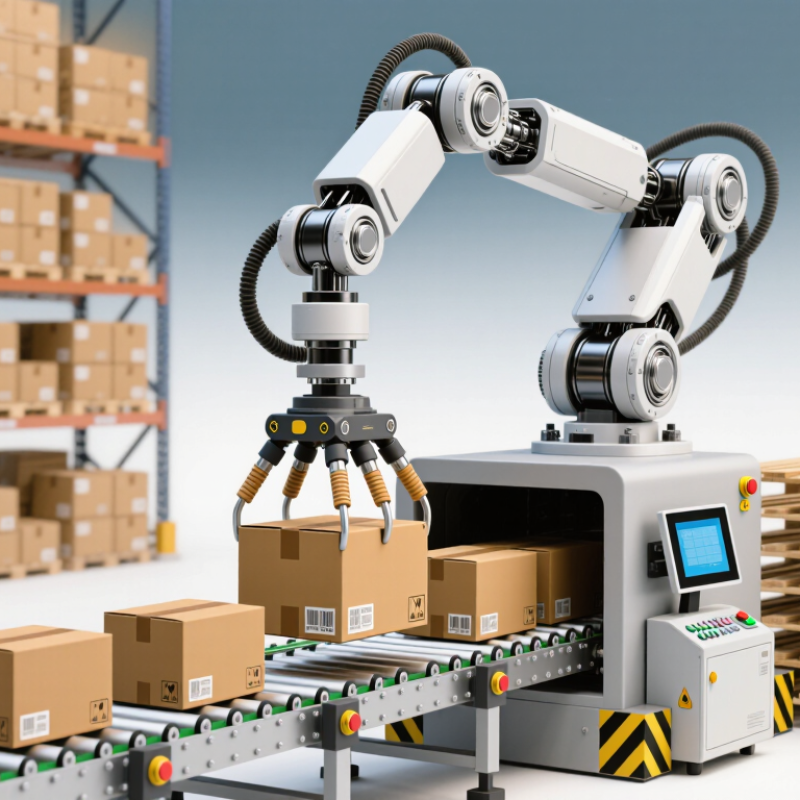
A typical Robotic Case Palletizing system includes case conveyors, sensors, a robot, a gripper, pallet dispensers, and control software. Vision systems may identify case positions. Pattern software then calculates each layer, including rotation and spacing. The robot lifts cases with vacuum cups, clamps, or hybrid tools. Sensors verify placement before the next movement begins.

Packaging Machinery Manufacturers Institute reports that labor availability and operational efficiency remain major automation concerns for packaging companies. That pressure explains the interest in robotic palletizing. However, speed is only one measure. Reliable gripping, accessible maintenance, safe guarding, and quick changeovers often decide the real return on investment. ISO 10218 and relevant industrial safety guidance should inform system design.

A robot is not magic. Poor carton design can defeat expensive equipment. Careful testing still matters. This guide examines the equipment, workflow, benefits, limitations, and practical decisions behind modern Robotic Case Palletizing.

What Is Robotic Case Palletizing and How Does It Work?

What Is Robotic Case Palletizing?

Robotic case palletizing is the automated placement of product cases onto pallets. A robot lifts sealed cartons from a conveyor and arranges them into stable patterns. The system may handle food boxes, household goods, or industrial packages. The task is repetitive.

A typical cell uses conveyors, sensors, a robot arm, and a custom gripper. Sensors confirm each case’s position, size, and orientation. Software then selects a pallet pattern based on case dimensions and weight. The gripper may use vacuum, clamps, or both. The robot places each case carefully, building layers from the pallet upward. Some systems add slip sheets or transfer finished pallets to wrapping equipment.

The scale of automation is growing. The International Federation of Robotics reported 541,302 industrial robots installed worldwide in 2023. MHI’s 2024 Annual Industry Report also identified robotics and automation as major supply-chain investment priorities. These figures support stronger interest in palletizing cells, especially where labor availability changes by season.

Real installations are rarely perfect. Dust can weaken vacuum grip, while soft cartons may collapse under pressure. A poorly designed pallet pattern can create leaning stacks. The weak point is often upstream. Inconsistent case spacing can disrupt an otherwise advanced robot. Engineers must test carton strength, conveyor timing, pallet quality, and operator access before approving production. Human review still matters.

Core Components of a Robotic Palletizing System

Robotic case palletizing uses an industrial robot to stack cartons, bags, or containers onto pallets. The system receives products from a conveyor and places them in a programmed pattern. Each layer must remain stable during storage and transport. Small placement errors can create large problems.

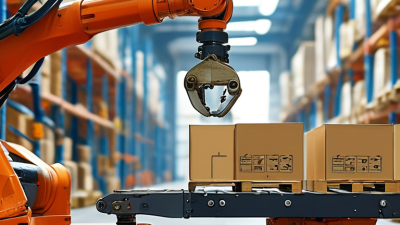
The robot arm is the central component. It moves through precise, repeatable paths and carries a task-specific gripper. Vacuum cups suit smooth cartons, while clamp grippers handle heavier or irregular loads. A conveyor controls product flow, and sensors confirm each case’s position. A pallet dispenser supplies empty pallets when needed. Some systems also use slip-sheet feeders between layers.

The control system connects these components. Its software manages pallet patterns, robot motion, product spacing, and production speed. Operators can adjust settings for different case sizes without rebuilding the entire process. Safety scanners, guarded areas, and emergency stops reduce risks around moving equipment. Reliable systems also record faults and cycle data, helping technicians find recurring issues.

Real installation work requires more than selecting a powerful robot. Floor conditions, carton strength, pallet quality, and humidity can affect performance. A pattern that looks efficient on screen may fail with soft packaging. No system is flawless. Regular inspections, gripper checks, and practical testing remain essential. I would treat the first production week as a learning period, not a final verdict.

How Cases Move from the Conveyor to the Robot

Robotic case palletizing begins before the robot lifts anything. Cases leave the packing line on a powered conveyor, usually with flat sides facing forward. Guides keep them centered, while sensors detect arrival, size, and spacing. A programmable controller compares these signals with the approved pallet pattern. Timing matters. If cases arrive too close together, the robot may wait, divert one case, or stop safely.

At the transfer point, a metering device creates a predictable gap between cases. The robot’s gripper approaches from above or from the side, depending on case strength and orientation. Vacuum tools suit smooth cartons, while clamp tools can handle surfaces that flex. The robot lifts one case, turns it when required, and places it against the programmed layer pattern. Each layer may alternate direction to improve stability. Small details matter. A crushed corner can change the grip.

After placement, sensors verify height, position, and pallet presence. The conveyor cannot keep feeding if a pallet is missing or a case is misaligned. Interlocks pause motion and alert the operator before a collision develops. In real installations, the handoff is rarely perfect. Dust, changing carton weight, and uneven tape can affect performance. The first layout may need adjustment after observing actual line behavior. Experienced technicians review cycle time, rejected cases, and pallet quality, then refine speeds and positions without bypassing guarding or safety controls.

How the Robot Builds Stable Pallet Loads

Robotic case palletizing uses a programmed robot to place cartons onto pallets in controlled patterns. The system reads each case’s size, weight, and position before moving it. Sensors help confirm that cartons arrive correctly. Operators still monitor the process and adjust settings when products change.

Stable pallet loads begin with a carefully tested stacking plan. The robot places heavier cases near the bottom and lighter cases above them. It aligns carton edges to reduce gaps and prevents excessive overhang. Each layer may rotate slightly to interlock with the one below. This creates a stronger structure during wrapping, storage, and transport.

The robot also controls speed, grip pressure, and placement height. A gentle release protects soft packaging from dents. A steady motion prevents sudden shifts. Real facilities are rarely perfect. Cartons can arrive tilted, damaged, or unevenly filled. The robot may need to pause and request human inspection. Even a well-designed pattern can fail when packaging changes. Engineers test different layouts with actual cases, not only digital models. They check corner damage, pallet balance, and movement after wrapping. Small adjustments often improve reliability more than faster cycles. Stability is built through repeated measurement, practical observation, and careful correction.

How a Robotic Palletizer Builds a Stable Load

Layer-by-layer loading for a 1,200 × 1,000 mm pallet using 400 × 300 × 250 mm cartons. The layout fits 9 cartons per layer, and each completed layer increases the load height by 250 mm.

The robot places cartons in a repeatable pattern, aligns each layer with the pallet edges, and builds from the bottom upward. After five layers, the calculated load contains 45 cartons and reaches approximately 1,400 mm, including a 150 mm pallet base.

Safety, Programming, and Common Applications

Robotic case palletizing uses a robotic arm to pick cartons, boxes, or sacks and arrange them on a pallet. The system combines a gripper, sensors, conveyors, and control software. Operators define the pallet pattern, product dimensions, and stacking height. The robot then repeats the movement with controlled speed and accurate placement.

Safety must guide the entire installation. A risk assessment should identify crushing points, falling loads, unexpected starts, and access hazards. Physical guarding, safety doors, emergency stops, and presence sensors help separate people from moving equipment. Operators also need practical training, not just written instructions. A safe cell can still become dangerous after a product change. Regular inspections matter.

Programming usually begins with teaching pickup and drop-off positions. The controller stores pallet patterns and movement limits. Sensors confirm product arrival and detect missing or unstable cases. If a box shifts, the system should stop or reject it instead of forcing the next layer. That detail is easy to overlook. A pattern that looks perfect on screen may fail when cartons vary slightly in size. Careful testing with real loads is essential.

Common applications include food packaging, beverage distribution, consumer goods, warehouse shipping, and industrial parts handling. Different products require different grippers and stacking methods. Heavy sacks may need firm support, while fragile cartons require gentler acceleration. Robotic palletizing can reduce repetitive lifting, but it does not remove human responsibility. Skilled workers still monitor quality, adjust recipes, and respond to faults. That balance is often underestimated.

What Is Robotic Case Palletizing and How Does It Work? — Safety, Programming, and Common Applications
Dimension Key Point How It Works or What It Includes Practical Considerations
Definition Robotic case palletizing A robotic system automatically picks cartons, cases, trays, or bags from a conveyor and places them onto a pallet according to a programmed stacking pattern. The system commonly includes a robot, end-of-arm tooling, conveyors, pallet handling equipment, sensors, safety devices, and a control system.
Basic workflow From product flow to completed pallet 1. Detect 2. Pick 3. Move 4. Place 5. Repeat Sensors identify product position and pallet status. The robot then repeats the programmed pick-and-place cycle until the required layer or pallet quantity is complete.
Robot type Common industrial configurations Four-axis palletizing robots are widely used for high-speed case handling. Six-axis robots may be selected when product orientation, reach flexibility, or complex movements are required. The choice depends on payload, reach, cycle rate, product geometry, workspace, and the required placement pattern.
End-of-arm tooling How products are gripped Tooling may use vacuum cups, mechanical clamps, forks, or hybrid gripping methods to handle one or multiple cases at a time. Vacuum tooling is suitable for many sealed cartons with sufficiently smooth surfaces. Mechanical or hybrid tools can be useful for porous, irregular, heavy, or unstable loads.
Pallet pattern Layer and case arrangement Programming defines case orientation, row layout, layer count, interlocking pattern, edge alignment, and the position of each case on the pallet. Interlocked patterns can improve load stability, while column stacking may provide simpler placement and better alignment for some products.
Programming Robot motion and process logic Programs specify coordinates, approach paths, pick and release actions, gripper signals, conveyor communication, pallet recipes, and fault-handling routines. A recipe-based structure allows operators to select different case sizes, pallet dimensions, layer counts, and stacking patterns without rewriting the entire application.
Sensors and controls Process feedback Photoelectric sensors, proximity sensors, encoders, barcode or identification systems, and load-presence checks can provide information to the controller. Feedback helps coordinate conveyor timing, confirm successful gripping, detect missing cases, monitor pallet position, and prevent placement errors.
Payload planning Load capacity and reach The robot must be rated for the product weight plus the end-of-arm tool and any carried packaging material. Payload calculations should also consider wrist moment, acceleration, center of gravity, reach distance, and the combined weight of multiple cases when picking several units.
Operating speed Throughput Throughput is usually expressed as cases per minute, pallets per hour, or completed layers per hour. Actual output depends on case weight, pick distance, pallet pattern, conveyor spacing, gripper design, robot motion, product infeed, and required verification steps. Published figures should be treated as application-specific.
Safety design Restricted access Typical safeguards include perimeter guarding, interlocked gates, safety-rated monitoring, emergency stops, presence-sensing devices, and controlled access points. The safeguarding approach must be based on a documented risk assessment and applicable workplace machinery-safety requirements.
Safety procedures Safe operation and maintenance Operators should be trained in normal operation, fault recovery, inspection, safe restart, and lockout/tagout or other approved energy-isolation procedures. Entering a safeguarded area to clear jams or perform maintenance should require the appropriate isolation and verification steps defined by the site procedure.
Pallet handling Empty and full pallet movement Systems may use pallet dispensers, roller conveyors, chain conveyors, pallet magazines, turntables, or automated guided transport equipment. Pallet position, condition, height, and presence should be verified before stacking begins. Damaged or incorrectly positioned pallets can reduce load stability.
Load stabilization Maintaining pallet integrity Stability may be improved through suitable case orientation, interlocking layers, slip sheets, corner boards, stretch wrapping, strapping, or top sheets. The correct method depends on case material, product weight, friction, transport conditions, pallet dimensions, and distribution requirements.
Quality checks Placement and product verification Vision systems, sensors, barcode readers, weight checks, or operator inspection can verify case identity, orientation, layer position, and pallet completion. Verification reduces the risk of mixed products, missing cases, incorrect recipes, overhang, and unstable stacking.
Common applications Industries and product types Typical applications include food and beverage cases, household goods, personal care products, consumer packaged goods, agricultural products, chemicals, and general manufacturing. Robotic palletizing is especially useful where products are repetitive, packaging formats are consistent, manual lifting is frequent, or production runs require repeatable placement.
Advantages Why companies use the technology Benefits can include consistent stacking quality, reduced manual handling, improved ergonomics, flexible recipe changes, continuous operation, and better use of floor space. Results depend on system design, product flow, maintenance, operator training, integration quality, and the suitability of the packaging for robotic handling.
Limitations Factors that can reduce performance Unstable cases, inconsistent dimensions, damaged packaging, poor conveyor spacing, excessive dust, difficult surfaces, and frequent unplanned product changes can complicate automation. A production trial or engineering assessment is often useful before finalizing the robot, tooling, sensors, and pallet pattern.
Maintenance Keeping the system reliable Routine tasks may include inspecting gripper components, checking vacuum or pneumatic systems, cleaning sensors, reviewing alarms, lubricating approved components, and verifying safety devices. Preventive maintenance intervals should follow the equipment documentation, operating conditions, duty cycle, and site maintenance program.